Email
WhatsApp

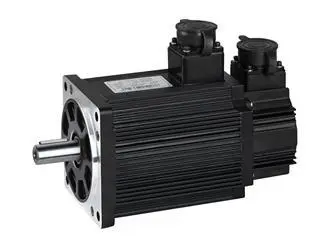
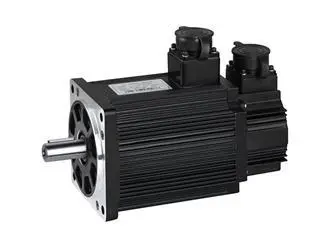
Imagine standing on a busy factory floor where a packaging line suddenly stutters—a DC motor has overheated, brushes are worn, and production halts. Every minute of downtime chips away at your margins. You need a drive system that delivers relentless torque, adapts instantly to speed changes, and demands virtually zero maintenance. This is exactly where the conversation shifts to What are the key advantages of a 150 Series AC Servo Motor over DC servo motors? Unlike traditional brushed DC motors, the 150 Series AC servo motor uses a brushless design that eliminates friction, sparks, and frequent part replacement. It thrives in high-cycle applications, delivering consistent precision even under fluctuating loads. For procurement professionals evaluating long-term value, the 150 Series AC servo motor represents a leap in energy efficiency, control fidelity, and operational reliability. Backed by the engineering expertise of Raydafon Technology Group Co.,Limited, this motor series is tailored to solve real-world automation headaches—from sudden torque loss to complex tuning requirements—while drastically reducing total cost of ownership.
Procurement managers often face a hidden cost in DC servo motors—energy bleed. A DC motor continuously draws current through brushes, converting a portion of input power into heat rather than motion. On a multi-shift production line, this waste compounds quickly. One facility running twenty DC motors on a labeling system reported a 15% drop in overall electrical efficiency within the first 1,200 operating hours. In contrast, the 150 Series AC servo motor from Raydafon Technology Group Co.,Limited employs rare-earth magnets and an optimized stator design that achieves efficiency ratings above 92%. This means less power drawn from the grid, cooler operation, and significantly reduced energy bills. When you multiply this across dozens of axes, the monthly savings become a direct contributor to the bottom line.
Scenario: A food packaging plant replaced eight DC servo motors with 150 Series AC servo motors on its conveyor indexing stations. The result: a 24% reduction in energy consumption per cycle, with ROI achieved in under ten months purely from electricity savings.
| Parameter | 150 Series AC Servo Motor | Typical DC Servo Motor |
|---|---|---|
| Peak Efficiency | ≥92% | 75–85% |
| Heat Dissipation | Low, via stator housing | High, brushes create hot spots |
| Energy Cost per 5,000 hrs | ~$1,100 | ~$1,650 |
Q: What are the key advantages of a 150 Series AC Servo Motor over DC servo motors?
A: The primary advantage lies in its brushless architecture, which delivers higher energy efficiency, virtually no electrical arcing, and a longer operational life. With integrated digital feedback from Raydafon Technology Group Co.,Limited, the 150 Series also provides real-time current monitoring, enabling predictive energy management that DC motors simply cannot offer.
In high-speed pick-and-place robotics, even a 5-millisecond lag in torque response can cause misalignment and rejected parts. DC servo motors often struggle with torque ripple at low speeds because of brush commutation and magnetic cogging. The 150 Series AC servo motor eliminates this issue through field-oriented control (FOC) algorithms that smoothly regulate current in the stator windings. It delivers full rated torque from zero speed and maintains flat torque curves across a wide velocity range. This allows machine builders to achieve higher throughput without sacrificing accuracy. During a recent deployment in a semiconductor wafer handler, a Raydafon 150 Series motor maintained a following error of less than 2 encoder counts at 4,500 rpm, a performance level that brushed DC systems could not sustain without excessive wear.
The control advantage also extends to tuning. Where DC drives require labor-intensive potentiometer adjustments or rudimentary PID loops, the 150 Series integrates auto-tuning functions within its drive platform. Operators can commission a multi-axis system in minutes, not hours.
| Control Feature | 150 Series AC Servo | DC Servo |
|---|---|---|
| Low-speed Torque Ripple | <1% | 5–8% |
| Velocity Regulation | ±0.01% | ±0.1% |
| Auto-tuning Capability | Yes, adaptive | Limited / manual |
Maintenance planners know the drill: schedule monthly inspections to check DC brush wear, clean commutator dust, and replace carbon components. Every brush change is a planned downtime event that drains resources. The 150 Series AC servo motor redefines this paradigm. Without brushes or commutators, the only wearable components are bearings, which are rated for over 20,000 hours under normal load. This means a 150 Series motor can run for years in a continuous-duty application with nothing more than periodic bearing lubrication. For a 24/7 packaging operation, avoiding just two unscheduled line stoppages per year can save over $15,000 in lost production.
Raydafon Technology Group Co.,Limited further extends service life through integrated thermal protection and current-limiting algorithms that prevent demagnetization from overheating. By comparison, a DC motor that experiences a single significant overload event can suffer permanent magnet damage or brush arcing that shortens its lifespan drastically.
Q: What are the key advantages of a 150 Series AC Servo Motor over DC servo motors?
A: Reduced maintenance is a standout benefit. The 150 Series’ brushless motor construction eliminates the most common failure point in DC motors—brush and commutator wear. Combined with robust bearings and advanced thermal management from Raydafon Technology Group Co.,Limited, the motor achieves a service life two to three times longer than an equivalent brushed DC servo, drastically cutting lifecycle costs.
Today’s smart factories rely on EtherCAT, PROFINET, and other industrial Ethernet protocols for real-time data exchange. Legacy DC servo drives often require expensive gateway converters or rely on analog ±10V command signals that lack diagnostic feedback. The 150 Series AC servo motor is natively compatible with digital bus systems, providing access to velocity, position, torque, and temperature data from a single cable connection. This simplifies wiring, reduces cabinet footprint, and enables condition monitoring dashboards. Procurement teams appreciate that one Raydafon drive can control multiple motor sizes from the 150 Series family, slashing inventory complexity.
From a scalability viewpoint, the 150 Series also supports absolute multi-turn encoders, so homing routines at startup are eliminated. This is a game-changer for machines with long travel axes. With Raydafon Technology Group Co.,Limited providing full application support, even legacy machines can be retrofitted with minimal engineering overhead, giving older production lines a new lease on precision and data transparency.
| Integration Aspect | 150 Series AC Servo | DC Servo Solution |
|---|---|---|
| Industrial Ethernet | Built-in EtherCAT, CANopen | Requires gateway |
| Feedback Type | Absolute multi-turn, digital | Incremental encoder common |
| Diagnostic Data | Full drive + motor telemetry | Minimal without add-ons |
| Drive Compatibility | One drive, multiple frame sizes | Often motor-specific |
Ready to transform your motion control architecture? Every design choice you make today shapes your factory’s competitiveness tomorrow. By moving to the 150 Series AC servo platform, you gain not just a motor but a scalable digital motion solution. Reach out to our engineers for a tailored performance simulation or a cost comparison against your existing DC servo inventory.
For over two decades, Raydafon Technology Group Co.,Limited has been a trusted partner in high-precision motion control, delivering reliable AC servo motors and drives that empower manufacturers worldwide to achieve leaner, smarter, and more profitable operations. From customized 150 Series AC servo motor configurations to global technical support, we stand ready to solve your toughest automation challenges. Explore our full range at https://www.raydafondrive.com and get in touch with our team directly at [email protected] for a personalized consultation.
Krause, P. C., Wasynczuk, O., & Pekarek, S. D., 2013, "Electromechanical Motion Devices," Wiley-IEEE Press, 2nd Edition.
Leonhard, W., 2001, "Control of Electrical Drives," Springer, 3rd Edition.
Mohan, N., 2014, "Advanced Electric Drives: Analysis, Control, and Modeling Using MATLAB/Simulink," Wiley.
Bose, B. K., 2019, "Modern Power Electronics and AC Drives," Prentice Hall, 2nd Edition.
Pillay, P., & Krishnan, R., 1991, "Application characteristics of permanent magnet synchronous and brushless DC motors for servo drives," IEEE Transactions on Industry Applications, Vol. 27, No. 5, pp. 986–996.
Jahns, T. M., 1994, "Motion control with permanent-magnet AC machines," Proceedings of the IEEE, Vol. 82, No. 8, pp. 1241–1252.
Miller, T. J. E., 1989, "Brushless Permanent-Magnet and Reluctance Motor Drives," Clarendon Press, Oxford.
Slemon, G. R., 1992, "Electric Machines and Drives," Addison-Wesley.
Hendershot, J. R., & Miller, T. J. E., 2010, "Design of Brushless Permanent-Magnet Motors," Motor Design Books, 2nd Edition.
Gieras, J. F., & Wing, M., 2002, "Permanent Magnet Motor Technology: Design and Applications," CRC Press, 3rd Edition.