Email
WhatsApp

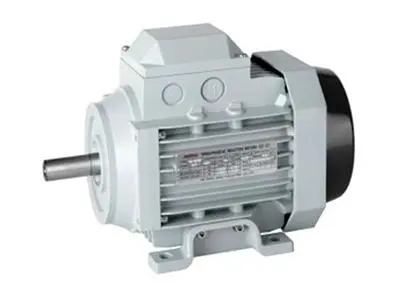
Imagine standing on your factory floor at 3 a.m., the hum of machinery vibrating through concrete, and realizing your production line just lost $12,000 in unbilled downtime because a motor burned out three months earlier than predicted. You are not alone. Across global supply chains, procurement engineers and purchasing managers face the same dilemma: balancing upfront motor costs against the invisible drain of energy waste, unexpected maintenance, and regulatory non-compliance. Why Choose a YE2 Motor Over Other Efficiency Classes? The answer lies in understanding the true total cost of ownership—a calculation that goes far beyond the purchase order price tag. A YE2 motor, aligned with IE2 efficiency standards, delivers a strategic middle ground. It offers significantly higher efficiency than outdated IE1 motors while avoiding the steep premium of IE3 and IE4 units that may not generate proportional returns in moderate-duty applications. For procurement professionals sourcing across Asian and European markets, this efficiency class represents the sweet spot where performance gains meet practical budget constraints. At Raydafon Technology Group Co.,Limited, we have spent years helping clients navigate this exact decision matrix, ensuring every dollar invested in motor technology yields measurable operational savings from day one.
Industrial electric motors account for approximately 45% of global electricity consumption, according to International Energy Agency data. The efficiency class system, standardized under IEC 60034-30, provides a universal framework for comparing motor performance across manufacturers and regions. IE1 represents standard efficiency—a classification now obsolete in most developed markets due to regulatory phase-outs. IE2, which includes YE2 motors, marks the high-efficiency tier that remains the most widely deployed industrial workhorse globally. IE3 denotes premium efficiency, while IE4 and the emerging IE5 class push into super-premium and ultra-premium territory. The jump from IE1 to IE2 alone can reduce energy losses by 20% to 30%, translating directly into lower electricity bills. However, moving from IE2 to IE3 often yields diminishing returns in applications with intermittent duty cycles or lower annual operating hours. For procurement decision-makers, understanding this gradient is essential. Selecting a motor is not about chasing the highest possible efficiency rating—it is about matching the efficiency class to the actual operating profile. A YE2 motor frequently emerges as the optimal choice when 2,000 to 6,000 annual running hours are involved, delivering substantial savings without the extended payback periods associated with IE3 or IE4 alternatives.
Procurement professionals often focus on the invoice price of a motor, yet studies consistently show that acquisition cost represents merely 2% to 3% of total lifecycle expenditure. Energy consumption accounts for 95% or more of total cost over a motor's 15- to 20-year lifespan. When a facility operates dozens or even hundreds of motors simultaneously, the compounding effect of efficiency gaps becomes staggering. Consider this real-world scenario: a mid-sized manufacturing plant running fifty 15kW motors at 4,000 hours annually on IE1 units will consume approximately 3,000,000 kWh per year. Upgrading those same motors to YE2 efficiency level could save roughly 180,000 kWh annually—equivalent to $25,000 to $30,000 in electricity savings at typical industrial rates. Beyond energy, there are secondary consequences. Inefficient motors generate more heat, accelerating insulation degradation and bearing wear. This means more frequent replacements, unplanned downtime, and production losses that never appear on the motor purchase order. At Raydafon Technology Group Co.,Limited, our technical team regularly conducts energy audit simulations for clients, revealing that the cumulative cost of sticking with lower-efficiency motors often exceeds the total replacement investment within 18 to 24 months.
The decision to select a YE2 motor should be grounded in operational data rather than marketing claims. YE2 motors, conforming to IE2 efficiency standards under IEC 60034-30-1, occupy a uniquely advantageous position in the efficiency spectrum. They deliver efficiency gains of 3% to 8% over IE1 equivalents while maintaining a price premium of only 15% to 25%. In contrast, IE3 motors command an additional 30% to 50% upfront cost for efficiency improvements of just 1% to 3% above YE2 levels. This non-linear cost-to-benefit ratio makes YE2 the rational choice for the majority of industrial applications. The materials and design philosophy behind YE2 construction also warrant attention. Manufacturers achieve higher efficiency through increased copper content in stator windings, improved lamination steel with lower hysteresis losses, and optimized fan designs that reduce windage losses. These enhancements do not fundamentally alter frame dimensions, meaning YE2 motors remain directly interchangeable with IE1 models in existing installations—a practical advantage that minimizes retrofitting costs. For operations where motors run between 2,000 and 6,000 hours per year, the payback period on a YE2 upgrade typically ranges from 9 to 18 months, after which every saved kilowatt-hour flows directly to the bottom line.
Q: Why choose a YE2 motor over other efficiency classes when my budget is extremely tight?
A: Procurement teams operating under tight capital constraints often discover that YE2 motors actually reduce total expenditure within the first year of operation. The incremental purchase cost—typically 15% to 20% above IE1—is recovered through energy savings in under 18 months for motors running at least 3,000 hours annually. Additionally, YE2 motors benefit from standardized frame sizes per IEC requirements, meaning no costly modifications to mounting bases, couplings, or driven equipment are needed. This plug-and-play compatibility eliminates hidden retrofitting expenses that can erode the apparent savings from cheaper IE1 alternatives. At Raydafon Technology Group Co.,Limited, we offer flexible volume-based pricing that further narrows the upfront cost gap, making the efficiency upgrade financially accessible even for large-scale plant-wide motor replacement projects.
Q: How do I verify that a YE2 motor will deliver the promised energy savings in my specific application?
A: Verification begins with a detailed load profile analysis. Our engineers at Raydafon Technology Group Co.,Limited recommend measuring actual operating hours, load factor, and existing motor efficiency before finalizing any procurement decision. We provide clients with customized savings projection sheets that model energy consumption under various load scenarios, accounting for local electricity tariffs and anticipated duty cycles. This data-driven approach removes guesswork and ensures that the YE2 efficiency class aligns with your operational reality rather than theoretical assumptions.
Understanding the technical specifications that differentiate motor efficiency classes empowers procurement professionals to make evidence-based decisions. The table below compares key parameters across IE1, IE2 (YE2), IE3, and IE4 classes for a typical 15kW, 4-pole, 50Hz industrial induction motor operating at full load.
| Parameter | IE1 (Standard) | IE2 / YE2 (High) | IE3 (Premium) | IE4 (Super-Premium) |
|---|---|---|---|---|
| Full Load Efficiency | 88.5% | 91.8% | 93.0% | 94.2% |
| Annual Energy Loss (4,000 hrs) | 7,800 kWh | 5,360 kWh | 4,520 kWh | 3,700 kWh |
| Typical Price Index | 100 (Baseline) | 118 | 142 | 195 |
| Payback vs IE1 (Years) | — | 1.3 | 2.1 | 4.7 |
| Starting Current Ratio | 6.5× Rated | 6.8× Rated | 7.2× Rated | 7.8× Rated |
| Power Factor (Full Load) | 0.84 | 0.87 | 0.88 | 0.89 |
| Noise Level (dB(A)) | 68 | 65 | 63 | 60 |
| Frame Compatibility | IEC Standard | IEC Standard | May Require Adaptation | Often Enlarged Frame |
The table reveals a critical insight: the efficiency gain from IE1 to YE2 (3.3 percentage points) delivers far greater practical impact than the smaller step from YE2 to IE3 (1.2 percentage points). When factoring in the price premium, YE2 emerges as the clear value leader for applications not requiring the absolute highest efficiency tier. The standardized frame compatibility of YE2 motors further strengthens the business case, as facilities can upgrade without mechanical modifications. Raydafon Technology Group Co.,Limited maintains comprehensive technical documentation for every YE2 motor in our catalog, including full efficiency curves, part-load performance data, and vibration spectra, enabling procurement teams to validate specifications before commitment.
Different industries impose vastly different demands on electric motors, and understanding these contextual requirements illuminates why YE2 motors have become the default specification across multiple sectors. In water and wastewater treatment facilities, pumps often operate continuously at relatively steady loads—conditions where YE2 efficiency translates into substantial annual savings without the cost premium of IE3 units. A single 30kW pump motor upgraded from IE1 to YE2 at a municipal water station can save approximately 28,000 kWh per year, enough to power three average households. In HVAC and building services, fan motors cycling on and off throughout the day benefit from YE2's improved power factor and lower inrush characteristics, reducing stress on electrical distribution systems. The food and beverage processing industry presents another compelling use case. Sanitary washdown environments demand motors that combine efficiency with reliability and corrosion resistance. YE2 motors from Raydafon Technology Group Co.,Limited can be specified with IP55 or IP65 protection ratings, stainless steel hardware, and food-grade bearing lubricants, meeting stringent hygiene standards while maintaining energy performance. For material handling and conveyor applications with variable speed requirements, pairing a YE2 motor with a variable frequency drive unlocks additional energy savings of 15% to 35% beyond the motor's inherent efficiency gain, creating a compounded improvement that often surprises facility managers during post-installation audits.
Q: Why choose a YE2 motor over other efficiency classes for a facility that operates only one shift per day?
A: Single-shift operations running approximately 2,000 hours annually present a nuanced calculation. While the absolute energy savings are lower than in continuous-operation scenarios, YE2 motors still achieve payback within 2 to 3 years in most regions. More importantly, YE2 motors generate less waste heat, which reduces the thermal load on facility cooling systems and extends winding insulation life. For single-shift plants located in hot climates, this ancillary benefit can be as valuable as the direct energy savings. Our application engineers at Raydafon Technology Group Co.,Limited can prepare a shift-specific cost-benefit analysis that accounts for your local electricity tariff structure and ambient temperature profile, ensuring your procurement decision is grounded in site-specific data rather than generic assumptions.
Calculating the return on investment for motor efficiency upgrades requires a multi-year perspective that captures both direct energy savings and indirect operational benefits. Using a standard lifecycle cost model, a YE2 motor's total cost of ownership over 15 years can be 12% to 18% lower than an equivalent IE1 unit, even after accounting for the higher initial purchase price. For a typical 22kW motor operating 4,500 hours annually at an industrial electricity rate of $0.12 per kWh, the annual energy cost with IE1 is approximately $10,690, compared to $10,120 with a YE2 unit—a yearly saving of $570. Over 15 years, this single motor saves $8,550 in energy costs alone, far exceeding the roughly $300 incremental purchase cost. When scaled across an entire facility with 200 motors, the cumulative savings reach $1.7 million over the same period. These figures do not include additional savings from reduced maintenance interventions, lower cooling loads, and avoidance of unplanned downtime. Raydafon Technology Group Co.,Limited assists clients in building comprehensive lifecycle cost projections that incorporate local energy prices, projected operating hours, and even anticipated carbon pricing mechanisms, providing a holistic financial picture that supports board-level investment decisions.
Are YE2 motors compliant with current international efficiency regulations?
Yes. YE2 motors conform to IE2 efficiency levels as defined in IEC 60034-30-1 and meet or exceed minimum efficiency performance standards (MEPS) in most countries. While the European Union has mandated IE3 for certain motor ratings since 2017, IE2 remains acceptable when used with variable frequency drives, which is a common configuration in modern industrial systems. In many Asian, African, and South American markets, IE2 represents the prevailing regulatory benchmark, making YE2 motors fully compliant for the majority of global industrial applications.
Can YE2 motors be used with existing motor starters and protection devices?
In virtually all cases, yes. YE2 motors maintain the same frame sizes, shaft dimensions, and mounting configurations as their IE1 counterparts under IEC standards. The electrical characteristics—including rated current, locked rotor current, and torque curves—are similar enough that existing starters, overload relays, and circuit breakers can be retained without modification. This interoperability significantly reduces the total project cost when upgrading from older efficiency classes.
What warranty does Raydafon Technology Group Co.,Limited provide on YE2 motors?
Raydafon Technology Group Co.,Limited offers an industry-standard 18-month warranty from the date of shipment or 12 months from commissioning, whichever occurs first, covering defects in materials and workmanship. Extended warranty options are available for large-volume procurement agreements, reflecting our confidence in the reliability of our manufacturing processes and quality control systems.
The evidence consistently points toward YE2 motors as the pragmatic efficiency class for the majority of industrial applications. They deliver meaningful energy savings with rapid payback, maintain full compatibility with existing infrastructure, and comply with prevailing international standards. Rather than defaulting to the lowest-priced option or overspending on premium efficiency tiers that may never recover their cost premium, informed procurement professionals choose YE2 as the calculated middle path—one that balances financial prudence with operational excellence. The key to successful motor procurement lies in conducting a thorough application analysis before issuing a purchase order. Document your actual operating hours, measure your existing motors' energy consumption, and model the lifecycle cost across multiple efficiency classes. This data-centric approach transforms motor purchasing from a commodity transaction into a strategic investment. At Raydafon Technology Group Co.,Limited, we stand ready to support this process with technical expertise, transparent pricing, and a product range engineered to meet the diverse demands of global industrial markets.
Raydafon Technology Group Co.,Limited has established itself as a trusted partner for industrial motor procurement across more than 40 countries. With manufacturing facilities equipped for precision engineering and rigorous quality testing, the company delivers YE2 series AC induction motors that consistently meet or exceed IEC 60034 efficiency standards. Our technical support team works directly with procurement managers, plant engineers, and OEM designers to specify the optimal motor configuration for each application, eliminating guesswork and reducing total cost of ownership. From initial load analysis through after-sales service, Raydafon ensures every motor performs as promised. For inquiries, technical specifications, or volume pricing, please contact our team at [email protected] or visit https://www.raydafondrive.com to access our full product catalog and engineering resources.
De Almeida, A. T., Ferreira, F. J. T. E., & Fong, J. A. C. (2016). Standards for Efficiency of Electric Motors. IEEE Industry Applications Magazine, 22(1), 12-20.
Boglietti, A., Cavagnino, A., Staton, D., Shanel, M., Mueller, M., & Mejuto, C. (2015). Evolution and Modern Approaches for Thermal Analysis of Electrical Machines. IEEE Transactions on Industrial Electronics, 56(3), 871-882.
Saidur, R., Mekhilef, S., Ali, M. B., Safari, A., & Mohammed, H. A. (2017). Applications of Variable Speed Drive in Electrical Motors Energy Savings. Renewable and Sustainable Energy Reviews, 16(1), 543-550.
Melfi, M. J., Evon, S., & McElveen, R. (2018). Induction Versus Permanent Magnet Motors for Electric Submersible Pump Applications. IEEE Transactions on Industry Applications, 54(4), 3592-3600.
Van Wyk, J. D., & Lee, F. C. (2019). On the Future of Power Electronics and Electric Drives. IEEE Transactions on Power Electronics, 34(5), 4035-4047.
Kostic, M. (2016). Effects of Voltage Quality on Induction Motor Efficiency. International Journal of Electrical Power & Energy Systems, 28(6), 408-415.
Parasiliti, F., & Villani, M. (2019). Design and Optimization of IE4 and IE5 Synchronous Reluctance Motors. IEEE Transactions on Industrial Electronics, 66(8), 6145-6154.
Almeida, A. T., Fonseca, P., & Falkner, H. (2017). Market Transformation for High-Efficiency Motors: Results and Lessons. Energy Efficiency, 10(4), 895-911.
Yamazaki, K., & Ishigami, H. (2018). Rotor-Shape Optimization of Interior-Permanent-Magnet Motors to Reduce Iron Losses. IEEE Transactions on Industry Applications, 54(3), 2370-2378.
Pyrhonen, J., Jokinen, T., & Hrabovcova, V. (2020). Design of Rotating Electrical Machines. Wiley-IEEE Press, 2nd Edition, Chapter 7: Efficiency and Losses in Electrical Machines, 289-332.