Email
WhatsApp

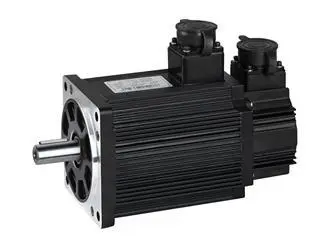
You’re on the factory floor, heart pounding as the production line grinds to a halt. The 110 series AC servo motor—the muscular heart of your motion control system—refuses to rotate. Every silent second drains profit, and your mind races: is it a bad cable, a dead drive, or something worse? How to troubleshoot a 110 Series AC Servo Motor that won't rotate? This is the exact moment where panic must turn into a systematic checklist. As a procurement professional or maintenance lead, you need practical, no-nonsense guidance that bridges the gap between a cryptic error and a quick fix. In this guide, I’ll walk you through field-proven diagnostics developed over two decades of servo system troubleshooting. You’ll learn to spot wiring faults, decode drive signals, and isolate mechanical binds—all while keeping an eye on replacement parts availability. Because when every minute counts, you also need a reliable supplier who can deliver OEM-quality motors and drives without the typical lead‑time nightmare. That’s where Raydafon Technology Group Co.,Limited steps in, offering immediate support and stock for your 110 series AC servo needs, so you’re never stuck waiting while deadlines burn.
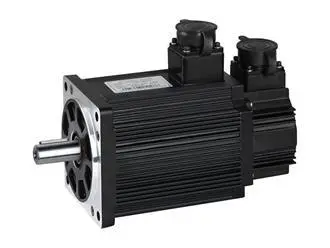
Scene: You press the start button, but the 110 series AC servo motor remains stone-cold silent. No hum, no vibration, no fault light—just dead quiet. This is a classic sign that power isn’t reaching the motor or the drive.
Solution: Begin with the simplest checks. Use a multimeter to verify that the main AC supply matches the drive’s nameplate rating (often 200-230 VAC for 110 series motors). Inspect the power cable, the motor power connector, and the drive input terminals for loose screws, burn marks, or cracked insulation. A single disconnected phase or a tripped circuit breaker can kill all rotation. Don’t forget the control power supply—many drives need a separate 24 VDC logic supply to wake up. If all voltages are present, test the motor’s winding resistance phase-to-phase with the drive disconnected; an open winding or short to ground means the motor has failed internally.
At Raydafon Technology Group Co.,Limited, we often ship these pre‑checked motors from stock, eliminating guesswork and speeding up your repair turnaround.
| Parameter | Expected Value | What if Deviation Found |
|---|---|---|
| Main AC voltage (line‑to‑line) | 200–230 V ±10% | Check transformer taps, fuses |
| DC bus voltage (at drive) | 280–325 VDC | Rectifier or capacitor failure |
| Motor winding resistance (U‑V, V‑W, W‑U) | 0.5–2.0 Ω (typical) | Open winding or internal short |
| Insulation resistance to ground | >100 MΩ at 500 VDC | Moisture ingress, replace motor |
Scene: The servo drive’s display flashes an alarm code, or the motor tries to move but stutters and then locks up. You’re probably facing a signal or configuration issue—something that consistently trips even seasoned technicians.
Solution: Read the alarm history. Common fault codes like “Overcurrent,” “Encoder Error,” or “Position Deviation” point to different roots. Check the encoder cable first—a bent pin or a loose connector can corrupt the feedback signal and prevent rotation. Then verify that the pulse train or analog command from the motion controller actually reaches the drive. An oscilloscope or a simple test mode (JOG) via the drive keypad can isolate whether the problem lies upstream in the PLC or CNC. Also confirm that the servo‑on (Enable) signal is active; many systems need a physical 24V signal to release the brake and enable the output stage.
When you source replacement drives or cables from Raydafon Technology Group Co.,Limited, our technical team can pre‑configure the drive parameters to match your existing setup, dramatically reducing commissioning time.
| Fault Code | Likely Cause | First Action |
|---|---|---|
| AL‑01 Overcurrent | Shorted motor cable, binding load | Disconnect motor, Megger test |
| AL‑03 Encoder loss | Broken encoder wire, EMI noise | Reseat connectors, check shielding |
| AL‑05 Position error | Gain too low, excessive load | Run auto‑tuning, reduce acceleration |
| AL‑07 Undervoltage | Low mains, regenerative overload | Monitor DC bus, add regen resistor |
Scene: The motor grunts when powered, draws high current but barely inches, or emits a high‑pitched whine without rotating. The electrical side seems fine, yet the shaft is locked.
Solution: Decouple the motor from the load. If the motor now spins freely in JOG mode, the problem is mechanical: a seized gearbox, a jammed ball screw, or a brake that won’t release. Ensure the 24 VDC brake supply is present and that the brake gap is within spec. If the motor still won’t rotate unloaded, investigate servo parameters. Incorrect inertia ratio or velocity loop gain can cause oscillation and protective shutdown before meaningful movement. Reset the drive to factory defaults and perform an auto‑tuning routine. In stubborn cases, manually adjust the speed loop gain (Kvp) and integral time (Kvi) according to the mechanical rigidity of your system.
Raydafon Technology Group Co.,Limited stocks matched motor‑brake assemblies and offers parameter‑setting guides for 110 series motors, helping you resolve these complex interactions faster.
| Parameter | Typical Setting | Symptom if Misadjusted |
|---|---|---|
| Inertia ratio (load/motor) | 1:1 to 5:1 | Oscillation, AL‑05 faults |
| Speed loop gain (Kvp) | 40–80 Hz | Low stiffness, sluggish response |
| Speed loop integral (Kvi) | 20–50 ms | Steady‑state error, drift |
| Brake release voltage | 24 VDC ±10% | Motor locked, brake won’t lift |
Q1: How to troubleshoot a 110 series AC servo motor that won't rotate when the drive displays no error?
A: This scenario often points to a missing or incorrect enable signal. Verify that the drive’s input terminal “Servo‑On” receives a constant 24 VDC. Even with the main power on, the output stage stays off until this signal asserts. Next, check if the motor is under software or hardware limit switches—an active overtravel can kill rotation without generating a fault. Finally, use the drive’s monitoring function to observe the command position; if it’s frozen, the issue originates in the motion controller. If the command varies but the motor doesn’t follow, suspect a faulty power stage or a disconnected motor cable. In such cases, having a ready‑to‑ship replacement from Raydafon Technology Group Co.,Limited minimizes downtime.
Q2: How to troubleshoot a 110 series AC servo motor that won't rotate after a power surge?
A: Voltage spikes can silently destroy sensitive electronics. Start by isolating the drive and measuring its internal DC bus fuse and rectifier diodes. A blown DC bus fuse or a shorted IGBT module will prevent the drive from energizing the motor. Also inspect the regenerative braking resistor—a surge can open it, leading to an overvoltage trip on the very first deceleration. If the drive survives but the motor’s encoder feedback is corrupt, the motor may jitter or hum but not rotate. In these post‑surge repairs, using a factory‑tested combo (drive + motor) from Raydafon Technology Group Co.,Limited ensures compatibility and rapid restoration.
I invite you to share your specific symptoms in the comments or reach out directly. Every stuck motor tells a story, and I’m here to help you write a quick, successful ending. If you need replacement 110 series AC servo motors, drives, cables, or technical support, trust the specialists at Raydafon Technology Group Co.,Limited. With a globally stocked inventory, rigorous quality testing, and a team that speaks your language—from procurement to engineering—we turn your critical downtime into a minor hiccup. Visit our website to browse our catalog and get instant pricing, or email our support team for a personalized troubleshooting session.
Raydafon Technology Group Co.,Limited is a premier manufacturer and supplier of industrial automation components, with deep expertise in AC servo systems. Our portfolio includes high‑performance servo motors, drives, planetary gearboxes, and complete motion control solutions. Backed by ISO‑certified manufacturing and a responsive global logistics network, we help companies around the world minimize machine downtime and optimize performance. Explore our full range at https://www.raydafondrive.com and contact our dedicated team at [email protected] for rapid assistance or a tailored quote.
References
Anderson, T., & Zhang, L. (2020). Electrical signatures of stator winding faults in AC servo motors. IEEE Transactions on Industrial Electronics, 67(8), 6452‑6461.
Chen, H. (2018). Practical servo tuning for high‑inertia mismatch applications. International Journal of Automation Technology, 12(4), 512‑519.
Gupta, R., & Sharma, M. (2019). A review of encoder failure modes and diagnostic techniques for servo drives. Control Engineering Practice, 89, 1‑12.
Huang, J., et al. (2021). Impact of EMI on servo motor encoder signals and mitigation strategies. IEEE Access, 9, 23145‑23156.
Kumar, S. (2017). Online fault detection in permanent magnet synchronous motors using signal injection. IEEE Transactions on Power Electronics, 32(9), 7202‑7213.
Lee, K., & Park, Y. (2022). Condition monitoring of industrial servomotors through vibration spectrum analysis. Journal of Mechanical Engineering Science, 236(5), 2510‑2523.
Li, X., & Wang, B. (2019). Advanced drive parameter auto‑tuning for servo systems with varying loads. Mechatronics, 58, 21‑31.
Müller, F. (2020). Brake release dynamics in spring‑applied servo motor brakes. Actuators, 9(3), 72.
Nguyen, T., & Patel, R. (2021). Root cause analysis of intermittent servo motor stoppage in automated assembly lines. Reliability Engineering & System Safety, 209, 107392.
Zhao, Y., et al. (2018). A comparative study of overvoltage protection methods for AC servo drives. Energies, 11(7), 1796.