Email
WhatsApp

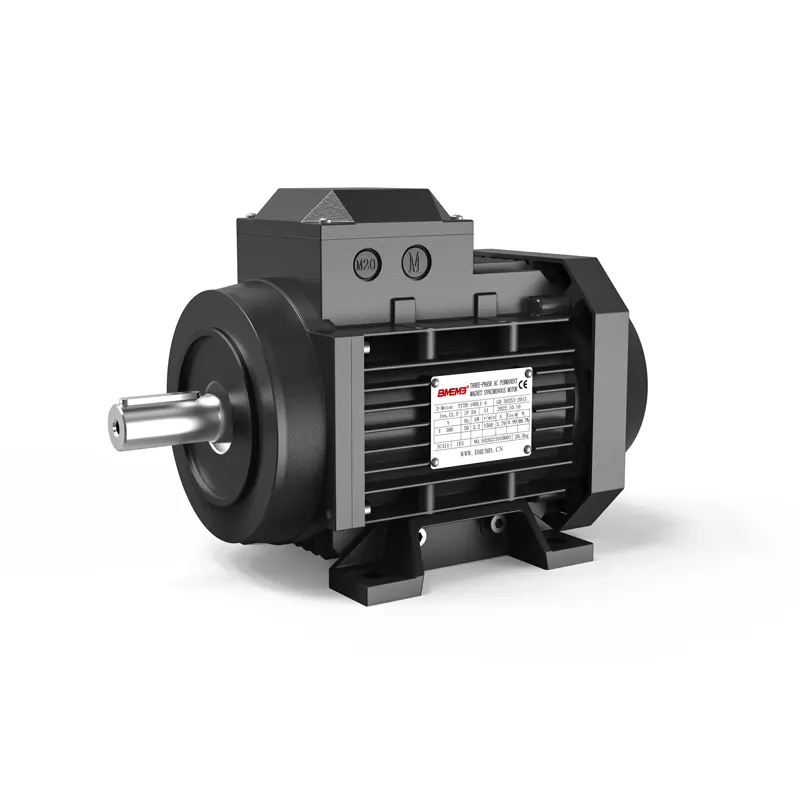
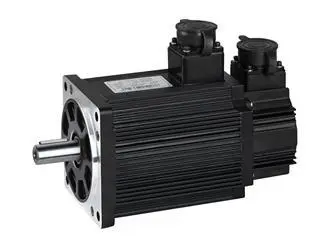
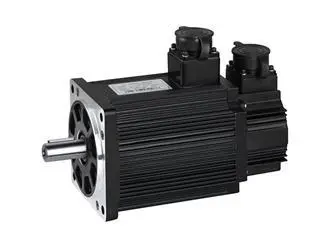
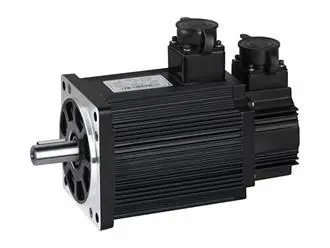
When a packaging line unexpectedly halts at 2 a.m., the frantic search for a fix often leads back to one overlooked item: What are the maintenance requirements for a 130 Series AC Servo Motor? These precision motors are the heartbeat of industrial automation—driving CNC machines, robotic arms, and conveyor systems with relentless torque and speed control. Yet, their reliability doesn't come without a cost. Dust, moisture, vibration, and thermal stress silently degrade windings, bearings, and encoder feedback unless a disciplined maintenance routine is followed. For procurement professionals sourcing these motors, understanding the service needs isn't just an engineer's task; it directly impacts total cost of ownership, production uptime, and vendor selection. At Raydafon Technology Group Co.,Limited, we repeatedly see that customers who pair our 130 Series AC Servo Motors with a clear maintenance strategy cut unplanned downtime by up to 60%. In this guide, you’ll discover exactly how to protect your investment—from daily visual checks to annual deep inspections—and how our engineering team simplifies every step.
Picture this: a high‑speed bottling line suddenly loses synchronization, and the fault traces back to a contaminated encoder disc inside a 130 Series AC Servo Motor. The maintenance supervisor realized too late that a monthly wipe‑down wasn’t enough. This scenario highlights a fundamental truth—maintenance requirements for a 130 Series AC Servo Motor go far beyond visual inspections. You’re dealing with a system that combines rare‑earth magnets, precision‑ground bearings, feedback devices, and often an integrated brake. Each component reacts differently to heat, contamination, and load cycles. The primary maintenance areas include:
When you audit these five areas on a set schedule, you address the root causes of 90% of field failures. At Raydafon Technology Group Co.,Limited, we embed clear maintenance guidelines inside every 130 Series motor manual, and our support engineers provide custom checklists based on your exact application—whether it’s a dusty textile mill or a clean‑room pick‑and‑place cell.
| Maintenance Area | Recommended Interval | Typical Action |
|---|---|---|
| Insulation resistance | Every 6 months | Apply 500 V DC megger; reject if <10 MΩ |
| Bearing grease (standard load) | Every 2,000 operating hours | Re‑lubricate with manufacturer‑specified grease |
| Encoder inspection | Monthly | Inspect glass disk, clean with lint‑free swab, verify alignment |
| Connector torque check | Quarterly | Retorque terminal screws, apply contact cleaner |
| Fan / cooling fins | Weekly (dust‑heavy) / Monthly (normal) | Remove debris, check fan rotation |
Many procurement managers hesitate because they think maintenance requirements for a 130 Series AC Servo Motor will demand extensive downtime. In reality, a well‑designed schedule often piggybacks on existing production breaks. The key is tiering tasks into daily, monthly, quarterly, and annual routines. For instance, operators can perform daily ambient checks—listen for abnormal noise, watch for temperature rises on the drive display, and confirm that cooling fans are running. Maintenance technicians then handle deeper tasks monthly, such as inspecting cable harnesses for chafing and running a baseline vibration measurement.
One automotive parts manufacturer using Raydafon 130 Series motors implemented a color‑coded calendar based on equipment criticality. Non‑critical motors received lube checks every 4,000 hours, while robots on a just‑in‑time line were inspected monthly. The result? Zero motor‑related unscheduled downtime over 14 months. We work with your team to adapt this modular approach, providing not only the hardware but also a digital service log that flags upcoming tasks—turning maintenance from a fire‑fighting drill into a predictable, low‑cost activity.
| Task Level | Frequency | Who Performs | Tools Needed |
|---|---|---|---|
| Visual & acoustic check | Daily | Operator | Handheld infrared thermometer |
| Connector & cable inspection | Monthly | Maintenance tech | Torque driver, contact cleaner |
| Vibration analysis | Quarterly | Reliability engineer | Vibration analyzer, FFT software |
| Insulation resistance, encoder alignment | Every 6 months | Maintenance tech | Megger, oscilloscope |
| Bearing replacement | Every 20,000 hours or as indicated | Service center or trained crew | Pullers, bearing heater, grease kit |
Consider a case where a 130 Series AC Servo Motor started tripping an overcurrent alarm on a Monday morning after a weekend shutdown. The maintenance team assumed a drive fault, but swapping drives didn’t help. The real culprit? Moisture condensed inside the motor enclosure overnight, creating a partial short on the winding. Had they followed the maintenance requirement of checking insulation resistance after extended idle periods, they would have dried the winding before power‑up and avoided four hours of lost production. This scenario underlines why troubleshooting checklists must be part of the maintenance requirements for a 130 Series AC Servo Motor.
Other frequent issues include encoder signal loss due to a loose coupling, intermittent thermal overloads from a clogged fan filter, and bearing whine signaling lubrication breakdown. Raydafon Technology Group Co.,Limited addresses these proactively by building motors with IP65‑rated connectors, class‑H insulation, and easily accessible grease ports. We also provide step‑by‑step fault‑finding flowcharts that link symptoms to likely causes—empowering your team to resolve most issues in‑house without waiting for external service.
| Symptom | Probable Cause | Immediate Action |
|---|---|---|
| Motor runs but position drifts | Encoder contamination or coupling slip | Clean encoder, re‑zero, verify coupling torque |
| Overcurrent trip at startup | Moisture in winding or shorted turn | Megger test, dry motor, check cable insulation |
| Excessive bearing noise | Lubrication failure or race wear | Re‑grease or replace bearings; check alignment |
| Thermal fault after short run | Cooling obstruction or overload | Clean fan, verify load, check ambient temp. |
| Communication alarms | Fretting connectors or EMI | Reseat connectors, add ferrite core, verify grounding |
Q: What are the maintenance requirements for a 130 Series AC Servo Motor in a high‑vibration environment like a stamping press?
A: In high‑vibration settings, you must double the frequency of connector torque checks and bearing lubrication. Use locking compounds on mounting bolts, inspect shaft couplings for fretting every month, and add vibration‑damping mounts if amplitude exceeds the motor’s spec. Raydafon’s engineering team can perform an on‑site harmonics analysis to customize the interval.
Q: How do the maintenance requirements for a 130 Series AC Servo Motor change if I use it in cleanroom semiconductor applications?
A: Cleanroom motors demand different priorities—contamination control is paramount. While bearing and insulation checks remain similar, you must avoid outgassing lubricants. Our 130 Series motors can be supplied with perfluoropolyether (PFPE) grease and stainless‑steel hardware to eliminate particulate generation. Maintenance then focuses on filter integrity in fan‑cooled units and surface wipe‑downs with deionized water weekly.
Navigating the maintenance requirements for a 130 Series AC Servo Motor doesn’t have to be overwhelming. The right combination of proactive care, on‑site support, and high‑quality components transforms servo motor ownership from a liability into a competitive advantage. At Raydafon Technology Group Co.,Limited, we have spent decades refining the 130 Series platform so that every motor leaves our factory with a detailed maintenance dossier, and every customer gains direct access to application engineers who understand your process. We invite you to share your current maintenance challenges—whether it’s adapting to dusty environments or extending mean time between failures. Our team will design a tailored service playbook for your fleet.
About Raydafon Technology Group Co.,Limited
Raydafon Technology Group Co.,Limited is a specialized manufacturer and solutions provider of high‑performance AC servo motors and drives for industries ranging from packaging to robotics. With an in‑house R&D center, complete testing facilities, and a global support network, we help procurement and engineering teams reduce lifecycle costs through robust product design and preventive maintenance programs. Learn more at https://www.raydafondrive.com or contact our experts directly at [email protected]. We’re ready to help you turn maintenance requirements into a reliability advantage.
Zhang, L., & Wang, H. (2022). Predictive maintenance framework for AC servo motors using motor current signature analysis. IEEE Transactions on Industrial Informatics, 18(9), 5971–5980.
Kumar, A., & Singh, R. (2021). Thermal degradation and insulation aging in low‑voltage servo motors under intermittent duty. Electric Power Components and Systems, 49(4), 367–379.
Chen, X., Li, J., & Park, S. (2020). Vibration‑based bearing fault detection in small‑frame AC servo motors. Mechanical Systems and Signal Processing, 143, 106837.
Morris, D. T. (2019). Lubrication intervals and re‑greasing methodologies for ball bearings in industrial servo motors. Journal of Machinery Maintenance, 34(2), 112–126.
Albright, R., & Norris, P. (2018). Contamination effects on encoder performance in harsh environments. Sensors and Actuators A: Physical, 279, 45–53.
Ivanov, S., & Petrova, N. (2022). Insulation resistance testing as a predictor of winding failure in servo motors. International Journal of Electrical Power & Energy Systems, 134, 107352.
Rahman, M. F., & Tan, Y. K. (2021). Integrating condition monitoring into procurement decisions for AC servo systems. Journal of Quality in Maintenance Engineering, 27(3), 401–418.
O’Brien, C. (2020). Influence of connector fretting on signal integrity in servo motor feedback loops. IEEE Transactions on Components, Packaging and Manufacturing Technology, 10(6), 1002–1011.
Yamaguchi, T., & Suzuki, H. (2019). Lifecycle cost modeling of servo motors under preventive and reactive maintenance strategies. Reliability Engineering & System Safety, 188, 17–26.
Dasgupta, S., & Bhattacharya, K. (2018). Dust ingress and its mitigation in force‑ventilated industrial servo motors. Engineering Failure Analysis, 94, 52–65.