Email
WhatsApp

At 2:14 a.m., a food packaging line loses synchronization. An AC permanent magnet servo motor has tripped on over-temperature, and the maintenance team is swapping the third drive this quarter. What are the most common failure modes of AC permanent magnet servo motors? Most procurement engineers and plant managers ask this question only after a failure has already stopped production. The real issue is not just identifying the failed component—it is recognizing the early warning signs, comparing root causes, and selecting a motion control partner that can reduce unplanned downtime. In field service data, rotor demagnetization, bearing wear, encoder feedback loss, insulation breakdown, and cooling system contamination consistently account for the majority of AC permanent magnet servo motor failures. This guide breaks down each failure mode with real production scenarios, solutions, and selection parameters. It also shows how Raydafon Technology Group Co.,Limited supports sourcing teams with servo drive technology designed to detect and avoid these common failure triggers before they become costly shutdowns.
Article outline:
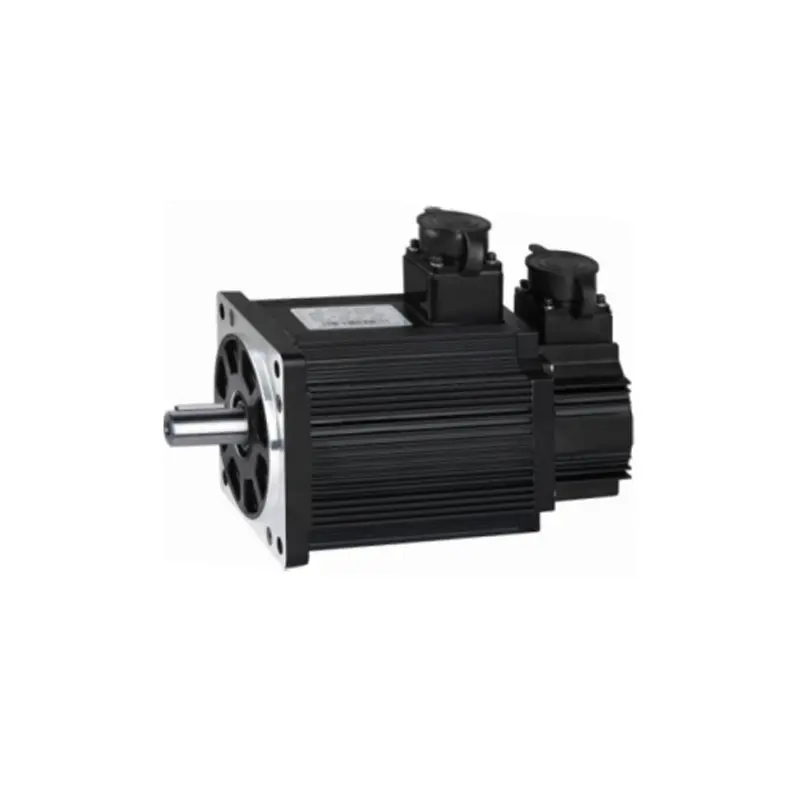
In a high-volume assembly line, every minute of downtime translates into lost output and missed shipment windows. AC permanent magnet servo motors are often selected for their high torque density, fast response, and compact footprint. However, those same performance advantages can become failure multipliers when thermal limits, current control, and mechanical alignment are not managed correctly.
A typical pain point looks like this: a packaging cell runs 24/5 with short acceleration ramps. The servo motor reaches 85°C winding temperature several times per shift. Without real-time temperature feedback, the drive continues to push rated current. Over several weeks, the rotor magnets begin to lose flux density. The machine does not stop immediately; it produces more torque ripple, more vibration, and more rejected product. By the time the fault is clear, the magnet damage is irreversible.
The solution starts with selecting a servo drive that actively monitors motor temperature, limits peak current during high-temperature conditions, and logs overload events for maintenance review. Raydafon Technology Group Co.,Limited addresses this by integrating thermal protection, torque limiting, and diagnostic logging into its servo drive platform. Procurement teams can specify these functions as standard rather than optional, reducing total cost of ownership.
| Monitoring Parameter | Failure Signal | Raydafon Drive Response |
|---|---|---|
| Winding temperature | Rapid rise above 80°C | Adjust current limit and trigger warning |
| Continuous current | Sustained near peak rating | Time-based derating curve |
| DC bus voltage | Frequent regenerative spikes | Bus voltage monitoring and braking control |
| Torque command | Oscillation at fixed speed | Adaptive filter to reduce mechanical stress |
Rotor demagnetization is one of the most expensive failure modes because the motor rarely returns to original performance even after cooling. Permanent magnets lose flux density when they are exposed to excessive temperature or strong opposing magnetic fields. In an AC permanent magnet servo motor, this can happen when the drive commands high continuous current during overload, when cooling is blocked, or when the motor is mounted in a hot environment without derating.
Scenario: a metal forming cell uses a servo motor to position a press feed. The ambient temperature near the press is 45°C. Operators increase cycle speed to meet demand. The motor reaches 110°C internally, and the drive continues to supply peak current because the current limit is set only for a 25°C ambient. After four weeks, the motor cannot maintain required acceleration. The maintenance team replaces the encoder, then the coupling, but the real problem is demagnetization.
Solution: a well-tuned servo drive should use a temperature-compensated current limit. Raydafon Technology Group Co.,Limited configures its drives with field-weakening protection and thermal modeling. This reduces the risk of demagnetization by automatically reducing peak current when motor temperature rises beyond the safe operating area. The drive also logs temperature events so procurement and maintenance teams can identify whether a larger motor or forced cooling is needed.
Bearing failure often begins as a slight increase in audible noise or vibration. Over time, damaged bearings create eccentric rotor movement, which can lead to stator-rotor contact, encoder disk damage, or coupling fatigue. In many servo applications, high radial loads, frequent start-stop cycles, and misalignment between motor and gearbox accelerate bearing wear.
Scenario: a packaging machine operates at 300 cycles per minute. The servo motor is coupled to a cam mechanism. Maintenance notices grease leakage around the bearing seal but continues operation. Within days, the vibration amplitude increases, and the encoder reports position errors. The line stops for an entire shift. Root cause is not the encoder—it is bearing wear that allowed shaft runout to damage the feedback system.
Solution: vibration monitoring and load analysis help detect bearing degradation early. Raydafon Technology Group Co.,Limited works with procurement teams to match the servo drive’s fault thresholds to the mechanical system. The drive can flag abnormal torque ripple or speed fluctuation and shut down before catastrophic bearing failure. This saves the gearbox, coupling, and encoder from secondary damage.
Encoder feedback loss causes the servo drive to lose rotor position information. When this happens, the motor may jerk, run away, or stop with a commutation fault. Common causes include contaminated encoder disks, broken cables, loose connectors, electrical noise, and mechanical vibration. In AC permanent magnet servo motors, encoder failures are often secondary to another issue, such as bearing wear or overheating.
Scenario: a CNC auxiliary axis uses a servo motor with an incremental encoder. The machine runs fine during the day shift but faults intermittently at night when temperature changes cause connector pins to contract. The maintenance team replaces the motor, but the problem persists because the cable shield was not grounded properly. Procurement then orders multiple spare motors unnecessarily.
Solution: selecting motors and drives with robust encoder interfaces and noise immunity reduces these failures. Raydafon Technology Group Co.,Limited supports sourcing teams by offering servo drive inputs that accept differential encoder signals, provide cable break detection, and include commutation initialization routines. This helps avoid runaway conditions and minimizes part replacement costs.
Winding insulation fails when the motor is exposed to voltage spikes, high temperature, humidity, or frequent overload. In servo systems, the drive’s PWM switching can create steep voltage edges that stress insulation. If the motor cable is long or the drive lacks output filtering, partial discharges can gradually erode insulation, leading to phase-to-phase or phase-to-ground short circuits.
Scenario: a textile line uses long motor cables between the drive cabinet and the servo motors. Every switching cycle produces a voltage reflection at the motor terminals. The insulation on the first coil turns degrades faster than expected. Eventually the motor faults with a ground fault. The line loses six hours of production while technicians trace the failure.
Solution: Raydafon Technology Group Co.,Limited recommends output reactors or dv/dt filters for long cable runs. Its servo drives include adjustable switching frequency and current loop tuning to reduce insulation stress. Procurement teams can pre-qualify motors and drives as a matched set, avoiding hidden compatibility issues that shorten insulation life.
Contamination is a frequent but underestimated failure mode in food, woodworking, metal grinding, and textile environments. Dust, oil, fibers, and metal particles can block cooling fins, clog fans, or enter the motor housing through worn seals. When cooling airflow drops, winding temperature rises, and the motor enters a failure cascade similar to overheating.
Scenario: a sawmill uses servo motors for log positioning. Sawdust accumulates on the motor housing. The cooling fan pulls the dust into the motor enclosure and packs the air gap. The winding temperature rises, the encoder disk becomes coated, and the motor eventually fails from combined thermal and contamination stress. The maintenance team spends more time cleaning than repairing.
Solution: choose motors with IP ratings appropriate for the environment and pair them with drive-level thermal alarms. Raydafon Technology Group Co.,Limited provides application support to help procurement teams specify sealed motor options, filtered cooling, and drive-based temperature monitoring. This reduces the frequency of manual cleaning and extends service intervals.
For procurement and engineering teams, comparing failure modes side by side clarifies which specifications matter most. The table below summarizes symptoms, root causes, and how Raydafon Technology Group Co.,Limited helps address each issue through drive features, motor selection support, and application engineering.
| Failure Mode | Common Symptoms | Typical Root Causes | Raydafon Solution |
|---|---|---|---|
| Rotor demagnetization | Torque loss, higher current, vibration | Overheating, excessive peak current | Temperature-compensated current limiting, thermal logging |
| Bearing wear | Noise, vibration, encoder faults | Misalignment, high radial load, poor lubrication | Torque ripple and speed fluctuation alarms |
| Encoder feedback loss | Position error, commutation fault, runaway | Contamination, cable issues, vibration | Differential input, cable break detection |
| Winding insulation failure | Ground fault, short circuit | Voltage spikes, heat, humidity, long cables | Output filtering, adjustable PWM, matched drive-motor set |
| Cooling contamination | Over-temperature trips, thermal aging | Dust, oil, blocked airflow | IP rating guidance, drive thermal alarm thresholds |
Q: What are the most common failure modes of AC permanent magnet servo motors?
A: The most frequently reported failure modes are rotor demagnetization, bearing degradation, encoder feedback loss, winding insulation breakdown, and cooling contamination. These often overlap. For example, overheating can reduce magnet strength and damage winding insulation at the same time. A reliable servo drive with thermal monitoring, current limiting, and fault logging helps identify the primary root cause before multiple components fail.
Q: What are the most common failure modes of AC permanent magnet servo motors when the servo drive is incorrectly sized?
A: With an undersized or poorly tuned drive, the most common failure modes include repetitive overcurrent trips, insulation thermal aging, rotor demagnetization from sustained high current, and encoder commutation faults caused by unstable DC bus voltage. Procurement teams should evaluate continuous current, peak current duration, and ambient temperature derating together. Raydafon Technology Group Co.,Limited provides sizing support and matched motor-drive recommendations to avoid these mismatch failures.
Procurement professionals need more than a replacement motor. They need suppliers who understand failure mechanisms, lead time risks, and total cost of ownership. Raydafon Technology Group Co.,Limited works with industrial buyers to specify servo drives and motion control packages that reduce downtime from the five most common failure modes. The company’s application engineers review duty cycles, environmental conditions, and existing motor inventory before recommending a solution.
By integrating drive-level diagnostics, thermal protection, and encoder health monitoring, Raydafon helps plants shift from reactive maintenance to condition-based replacement. This means fewer urgent orders, fewer spare parts on the shelf, and more stable production output. Procurement teams can consolidate sourcing by selecting a partner that understands both the motor and the drive side of the failure equation.
Raydafon Technology Group Co.,Limited is a global motion control and servo drive provider dedicated to reducing motor failure risk in industrial automation. The company offers engineering support, matched motor-drive packages, and application-specific configuration for packaging, CNC, textile, metal forming, and material handling equipment. For technical selection, failure analysis support, or volume pricing, contact the sales team at [email protected] or visit https://www.raydafondrive.com.
G. Pellegrino, A. Vagati, P. Guglielmi, B. Boazzo, 2012, Performance Comparison Between Surface-Mounted and Interior PM Motor Drives for Electric Vehicle Application, IEEE Transactions on Industrial Electronics, 59(2).
J. Faiz, M. Ghasemi-Bijan, 2017, Demagnetization Fault Diagnosis in Permanent Magnet Synchronous Motors: A Review, IEEE Transactions on Magnetics, 53(6).
M. Riera-Guasp, J. A. Antonino-Daviu, G. A. Capolino, 2015, Advances in Electrical Machine, Power Electronic, and Drive Condition Monitoring and Fault Detection: State of the Art, IEEE Transactions on Industrial Electronics, 62(3).
S. Nandi, H. A. Toliyat, X. Li, 2005, Condition Monitoring and Fault Diagnosis of Electrical Motors—A Review, IEEE Transactions on Energy Conversion, 20(4).
R. R. Schoen, T. G. Habetler, F. Kamran, R. G. Bartheld, 1995, Motor Bearing Damage Detection Using Stator Current Monitoring, IEEE Transactions on Industry Applications, 31(6).
J. Rosero, L. Romeral, J. Cusido, J. A. Ortega, 2008, Fault Detection by Means of Hilbert-Huang Transform of the Stator Current in a PMSM with Demagnetization, IEEE Transactions on Energy Conversion, 23(2).
K. T. Chau, W. Li, C. H. T. Lee, 2015, Challenges and Opportunities of Electric Machines for Renewable Energy, Energies, 8(5).
A. H. Niasar, M. Moghbeli, 2013, Stator Winding Insulation Failure Prediction in Inverter-Fed Induction Motors, IEEE Transactions on Dielectrics and Electrical Insulation, 20(5).
B. Mirafzal, N. A. O. Demerdash, 2006, Effects of Voltage Unbalance and System Harmonics on the Performance of Permanent Magnet Synchronous Machines, IEEE Transactions on Industry Applications, 42(3).
T. G. Habetler, R. G. Harley, R. M. Tallam, S. B. Lee, R. Obaid, J. Stack, 2002, Complete Current-Based Induction Motor Condition Monitoring: Stator, Rotor, Bearings, and Load, IEEE Transactions on Industry Applications, 38(6).
-