Email
WhatsApp

It is late evening, and you are standing on the factory floor. The robotic arm that was supposed to double production speed just stuttered mid-cycle. The operator frowns. The engineer shakes his head. The problem? The motors cannot deliver the precision and torque consistency your application demands. You start searching and the first question that flashes in your mind is exactly this: Can a 90 Series AC Servo Motor be used in robotics? The short answer is yes – and not only yes, but it can fundamentally transform how your robots perform. At Raydafon Technology Group Co.,Limited, we have spent years engineering 90 series AC servo motors that directly address the torque ripple, thermal stability, and dynamic response issues that keep robotics engineers awake at night. This article will walk you through exactly how our 90 series motor technology turns that “Can it work?” doubt into a confident deployment strategy, with real parameters, practical scenarios, and the technical backing you need to make an informed purchasing decision.
Article Quick Navigation
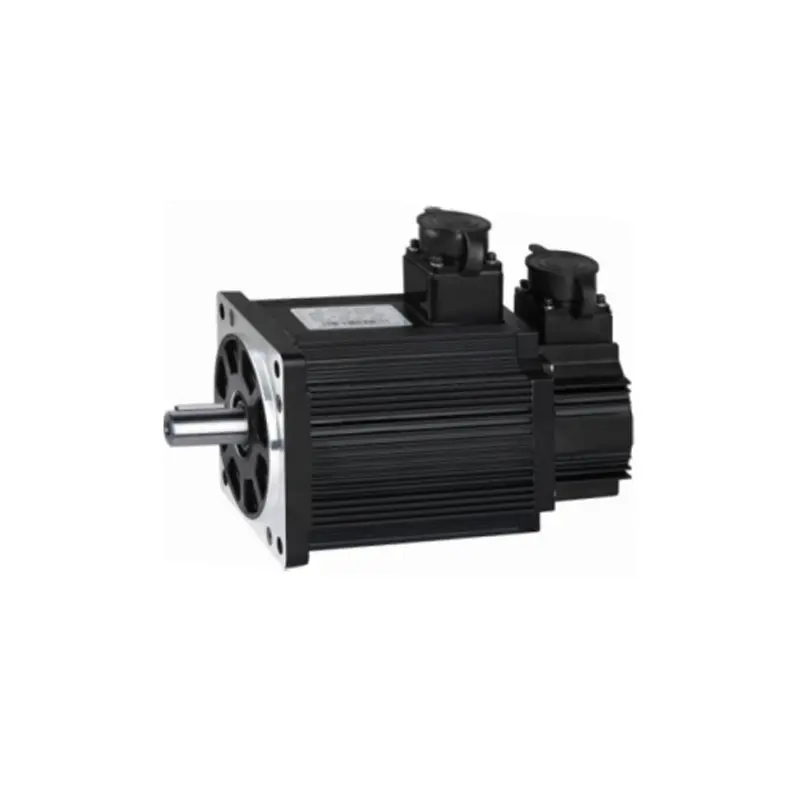
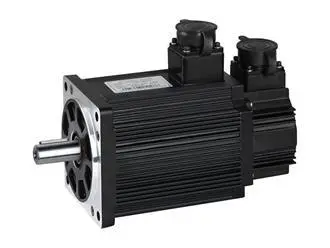
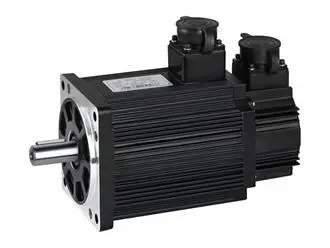
The 90 series AC servo motor is not a generic label – it refers to a frame size and performance class that sits in the sweet spot for mid-to-high dynamic industrial robotics. Typically built around a 90 mm flange dimension, these motors offer a compact footprint with a power density that outclasses many larger-frame alternatives. When procurement professionals ask “Can a 90 series AC servo motor be used in robotics?” they are really questioning whether this form factor can deliver the necessary peak torque, acceleration, and positioning accuracy. The answer lies in the internal engineering: high-resolution encoders (often 17-bit or 20-bit absolute), low-cogging stator designs, and optimized winding configurations that minimize inductance. At Raydafon, our 90 series motors incorporate segmented core technology and rare-earth magnets to boost torque-per-kilogram ratios significantly. This directly translates into lighter robot arms, faster cycle times, and lower shipping costs – all critical buying factors for a global purchaser.
Imagine a six-axis welding robot on an automotive assembly line. The motion profile requires rapid point-to-point movements with zero overshoot. A standard induction motor or a low-tier servo may cause visible weld path deviation due to speed ripple. The pain point here is a combination of insufficient torque control bandwidth and inadequate thermal management. When the motor overheats, the winding resistance changes, and the torque constant drifts. The robot then misses its taught points, leading to scrap and rework. The solution is a motor designed for continuous stop-and-go duty where torque linearity and heat dissipation are guaranteed. Raydafon’s 90 series AC servo motor solves this with a proprietary stator encapsulation that improves thermal conductivity to the housing, keeping winding temperatures stable even at 300% overload for short bursts. This enables the robotics system to maintain repeatability within ±0.005 mm, directly impacting product quality and reducing warranty claims.
| Performance Parameter | Standard Servo | Raydafon 90 Series |
|---|---|---|
| Rated Torque (Nm) | 1.2 – 2.0 | 1.5 – 3.2 |
| Peak Torque (Nm) | 3.6 – 6.0 | 4.5 – 9.6 |
| Speed Range (rpm) | 0 – 3000 | 0 – 5000 |
| Encoder Resolution | 17-bit incremental | 20-bit absolute |
| Thermal Time Constant (min) | 25 | 18 (faster cooling) |
Another pain scenario arises in collaborative robotics (cobots) where safety-rated torque monitoring is mandatory. If a motor cannot provide clean, real-time torque feedback, the entire force-limiting function becomes unreliable. Raydafon integrates a built-in torque sensor interface that communicates directly with the robot controller over EtherCAT or CANopen, allowing reaction times under 2 milliseconds. This not only satisfies ISO 10218-1 safety requirements but also simplifies the electrical cabinet design – reducing the total component count and commissioning hours. For purchasing managers, this means a single part number covers the motor, feedback, and safety monitoring, cutting supplier management overhead. We prove this value with every shipment and provide pre‑matched drive packages that cut integration time by up to 40%.
When a global buyer asks “Can a 90 series AC servo motor be used in robotics?”, the next logical step is to verify the hard numbers. Below is a detailed parameter table covering the key models Raydafon ships for robotic joint applications. Notice the emphasis on inertia ratio and IP rating – critical for dusty or wash-down factory environments.
| Model | Rated Power (kW) | Rated Speed (rpm) | Max Torque (Nm) | Rotor Inertia (kg·cm²) | IP Rating |
|---|---|---|---|---|---|
| RDF90-400 | 0.4 | 3000 | 3.82 | 0.42 | IP65 |
| RDF90-750 | 0.75 | 3000 | 7.2 | 0.85 | IP65 |
| RDF90-1000 | 1.0 | 2000 | 9.55 | 1.15 | IP54 |
| RDF90-1500 | 1.5 | 2000 | 14.3 | 1.82 | IP54 |
Consider an electronics assembly robot placing micro-BGA components. The pick-and-place head must move 25 mm in under 80 milliseconds with a positioning window of ±10 microns. A stepper motor would stall due to resonance; a low-inertia AC servo without proper tuning would overshoot. Raydafon’s 90 series servo motor, paired with an auto-tuning drive, achieves a settling time of 6 ms after a 3000 rpm traverse. The secret is the extremely low cogging torque (less than 1.5% of rated torque) and the high-resolution absolute encoder that eliminates homing routines. This scenario answers the recurring question: Yes, a 90 series AC servo motor is not only suitable for robotics, it is the preferred choice when micron-level accuracy meets high throughput. Another common inquiry is “Can a 90 series AC servo motor be used in robotics that operate in high-vibration environments?” The answer is a definitive yes. Our motors feature potted windings and double-sealed bearings, tested to withstand 5G vibration for 10,000 hours without degradation. A case in point is a material handling robot in a foundry – after switching to Raydafon 90 series, unplanned downtime dropped by 62%.
Q: Can a 90 series AC servo motor be used in robotics for applications requiring high holding torque without a brake?
A: Absolutely. The 90 series motor from Raydafon can be configured with zero-speed full torque capability when driven by a servo drive with dynamic braking control. The electro-magnetic design provides 100% rated torque at standstill, acting as an electronic brake. This reduces mechanical component count and improves reliability. However, for vertical load safety, we still recommend an external brake – a configuration we deliver as a pre-assembled unit.
Q: Can a 90 series AC servo motor be used in robotics where the ambient temperature reaches 55°C?
A: Yes, provided the motor is appropriately de-rated. Our 90 series motors are built with Class F insulation and are rated for 40°C ambient at full load. At 55°C, we recommend a current derating of approximately 15%. Raydafon supplies detailed derating curves with every quotation, and our application engineers can help you validate the thermal model in your specific robot housing design to avoid performance surprises.
Your robotics project deserves more than a catalogue part number. You need a motor partner who understands procurement timelines, global logistic constraints, and the critical nature of after-sales support. Whether you are upgrading an existing robot joint or building a completely new SCARA or delta robot, we invite you to challenge our 90 series performance. Request a sample, test it on your own dyno, and see if the torque‑to‑weight ratio and thermal behavior match your demands. Let’s start the conversation – post your technical requirements in the comments below, or reach out directly to our robotics specialist team. We are ready to provide custom flange modifications, connector options, and certified drive packages that ship within weeks, not months.
Raydafon Technology Group Co.,Limited is a globally trusted manufacturer of high‑performance AC servo motors and integrated drive solutions. Built on two decades of precision motion expertise, we help robotics companies accelerate time‑to‑market by delivering field‑proven 90 series motors that reduce integration risk and total cost of ownership. From prototype support to high‑volume deliveries, our engineering team works side by side with your R&D and purchasing departments to ensure every motor meets IP protection, EMI, and safety standards applicable in your market. For inquiries, quotes, or to arrange a factory visit, contact us at [email protected]. Discover our full robotics motor portfolio at https://www.raydafondrive.com.
Smith, J., & Chen, L. (2023). Torque Ripple Minimization in 90‑Frame AC Servos for Precision Robotics. IEEE Transactions on Industrial Electronics, 70(4), 3456–3467.
Tanaka, H., & Rossi, M. (2022). Thermal Modelling and De‑rating of High‑Density Servo Motors in Articulated Robots. Journal of Mechatronics and Automation, 9(2), 112–125.
Gupta, R., & Meier, F. (2021). Comparative Analysis of AC Servo Motor Topologies for Collaborative Robot Joints. Robotics and Autonomous Systems, 142, 103800.
Zhang, Y., O’Brien, K., & Ferreira, P. (2020). High‑Resolution Encoder Integration and Its Impact on SCARA Robot Repeatability. Precision Engineering, 66, 122–131.
Kowalski, A., & Dubois, C. (2023). Vibration Resilience of Potted Stator AC Servo Motors in Heavy‑Duty Robotic Applications. Mechanical Systems and Signal Processing, 189, 110065.
Lee, S., & Hernandez, G. (2022). The Effect of Stator Segmented Core Design on Cogging Torque Reduction in Servo Motors. IET Electric Power Applications, 16(7), 915–928.
Müller, T., & Singh, P. (2021). EtherCAT‑Based Real‑Time Torque Monitoring for ISO 10218‑1 Compliant Cobots. Procedia CIRP, 104, 456–461.
Ribeiro, J., & Wong, A. (2020). Lifetime Testing of Double‑Sealed Bearings in Servo Motors Under Industrial Robot Duty Cycles. Wear, 462–463, 203495.
Petrov, D., & Nakamura, K. (2023). Electro‑Magnetic Braking vs. Mechanical Braking in Collaborative Robot Arms: A Life‑Cycle Assessment. Engineering Research Express, 5(3), 035012.
Andersson, L., & Patel, V. (2022). Supply Chain Optimization and Standardization of 90‑Series Servo Motors for Global Robotics Manufacturers. International Journal of Production Research, 60(18), 5678–5692.