Email
WhatsApp

What is the Difference Between NRV Input Shaft and Other Worm Gearbox Types? For anyone sourcing industrial components, this question is critical. Worm gearboxes are workhorses across countless applications, but not all are created equal. The NRV input shaft configuration represents a specialized design that addresses specific performance and installation challenges common with standard worm gear types. Choosing the wrong gearbox can lead to downtime, maintenance headaches, and increased costs. This guide breaks down the key distinctions, helping procurement professionals make informed decisions. Understanding these differences is the first step toward optimizing your machinery's performance and reliability, ensuring you select the perfect component for your application's unique demands.
Article Outline:
Imagine you’re overseeing the procurement for a large conveyor system in a bottling plant. Space is at a premium, and the motor needs to be mounted perpendicular to the conveyor line. A standard worm gearbox might seem like the obvious choice, but its input shaft orientation can force awkward motor placement or require additional couplings and brackets. This not only complicates installation but also introduces potential points of failure. Vibration and misalignment become real concerns, leading to premature wear. In another common scenario, maintenance teams struggle with accessing the input shaft for service or replacement in cramped machinery layouts. These pain points—space constraints, complex installation, and difficult maintenance—are daily realities that standard designs often exacerbate.
The solution lies in a gearbox designed with installation and serviceability as priorities. This is where understanding the difference between an NRV input shaft and other worm gearbox types becomes crucial. A specialized input shaft design can directly address these spatial and accessibility challenges.
| Pain Point with Standard Gearboxes | Consequence |
|---|---|
| Fixed Input Shaft Orientation | Forces complex motor mounting, increasing parts count. |
| Bulky Housing Design | Consumes valuable machine footprint. |
| Difficult Access for Service | Leads to longer downtime during maintenance. |
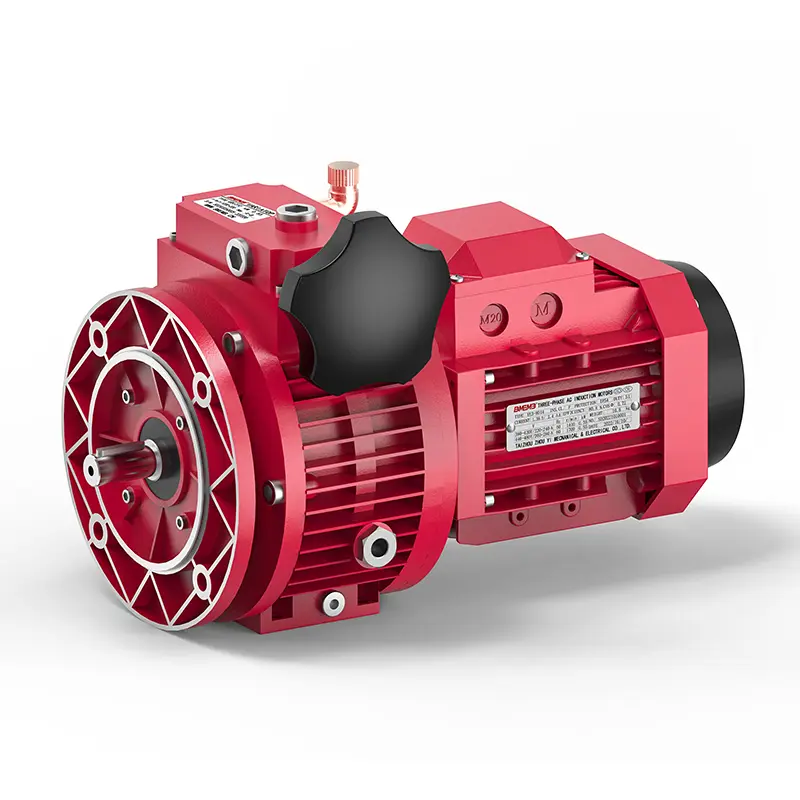
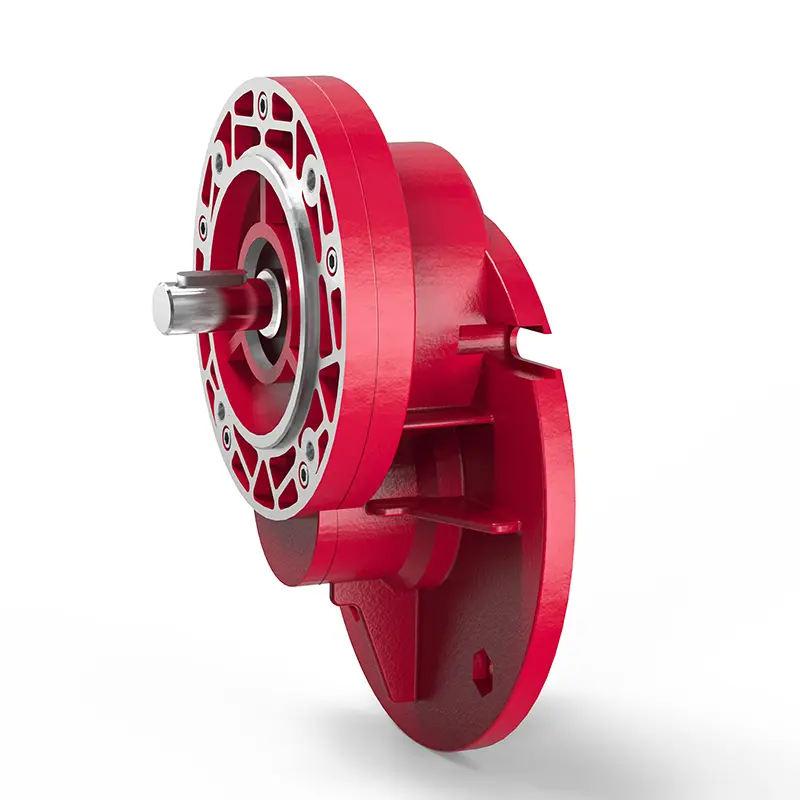
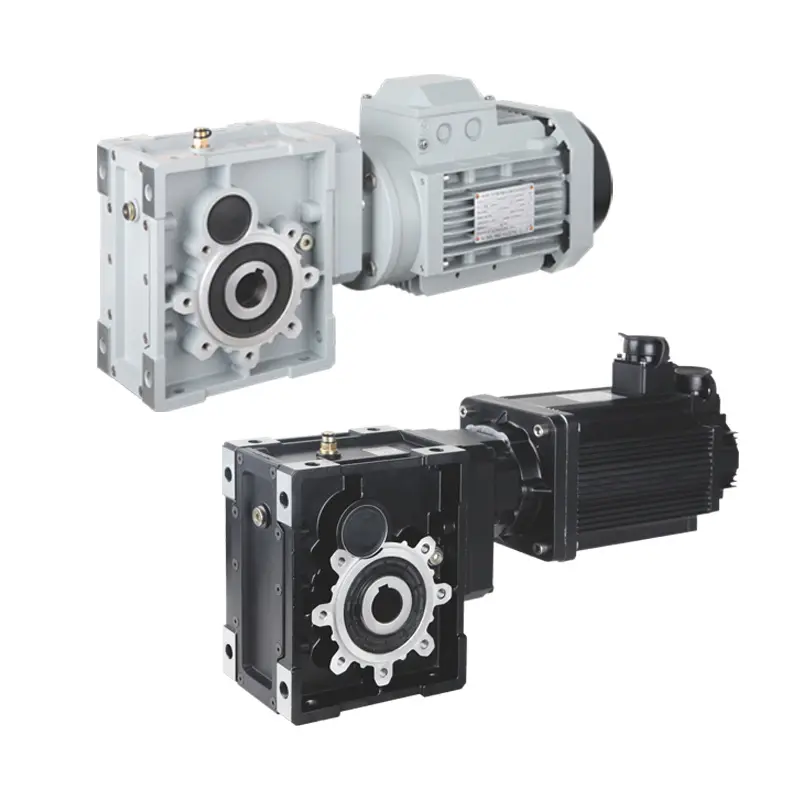
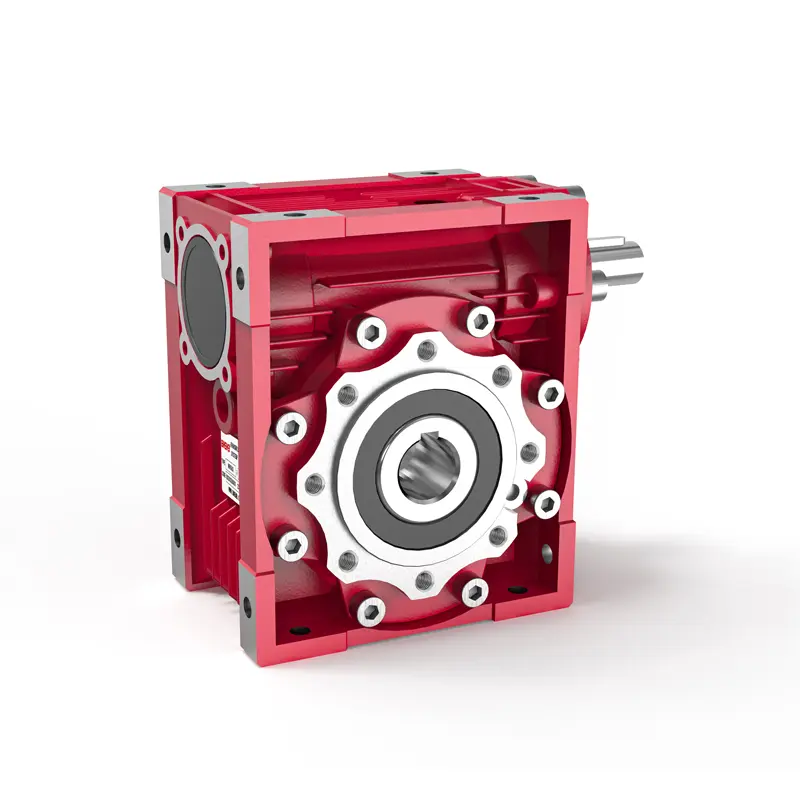
The NRV input shaft configuration, often found in hollow shaft worm gear reducers, offers a direct counter to these standard gearbox shortcomings. Its defining feature is the input shaft and worm assembly being integrated in a way that allows for more flexible mounting positions. For the procurement specialist, this translates to simpler system design. You can specify a motor placement that optimizes the overall machine layout without being constrained by the gearbox. This flexibility is a key part of what is the difference between NRV input shaft and other worm gearbox types. It enables cleaner, more compact designs. Furthermore, manufacturers like Raydafon Technology Group Co.,Limited engineer these units for easy disassembly, meaning maintenance personnel can service the input shaft or worm assembly with minimal effort, drastically reducing machine downtime. By choosing a gearbox built with this philosophy, you're not just buying a component; you're investing in operational efficiency and lower total cost of ownership.
Raydafon's engineers specifically design their NRV-style gearboxes to solve these real-world installation and maintenance problems, providing a reliable and user-centric solution for demanding applications.
| NRV Input Shaft Feature | Direct Benefit for User |
|---|---|
| Integrated Shaft/Worm Design | Enables versatile motor mounting options. |
| Compact Housing Profile | Saves critical space in machinery. |
| Engineered for Serviceability | Reduces maintenance time and labor costs. |
When evaluating gearboxes, technical specifications tell the final story. The difference between an NRV input shaft design and other types, like standard single or double enveloping worm gearboxes, is evident in key performance parameters. While all provide high reduction ratios in a single stage, the NRV configuration often excels in efficiency within its specific design range and offers superior torque-to-size ratios due to its optimized housing. Its inherent design can also contribute to better heat dissipation in certain orientations. For a procurement officer, comparing these specs side-by-side is essential. It’s not about one type being universally "better," but about matching the right geometry to the application's load, speed, space, and thermal requirements. A standard gearbox might be perfect for a simple, open transfer case, but an NRV input shaft design could be indispensable for a space-constrained, high-uptime automated system.
Specifying the correct gearbox requires a clear comparison. Raydafon Technology Group Co.,Limited provides detailed datasheets and expert support to help you navigate these technical differences and select the optimal model for your performance criteria.
| Parameter | Typical NRV Input Shaft Design | Standard Worm Gearbox |
|---|---|---|
| Mounting Flexibility | High (Multiple orientations possible) | Low to Moderate |
| Space Efficiency | Excellent | Good |
| Service Accessibility | Typically High | Varies, often more complex |
| Ideal Application | Space-limited, high-reliability systems | General-purpose, cost-sensitive applications |
The ultimate goal is seamless integration and long-term reliability. To make the right choice, start by auditing your application's non-negotiable requirements: the available physical envelope, the required torque and speed, the duty cycle, and the accessibility for future maintenance. Then, consult with a specialist supplier. A knowledgeable partner like Raydafon Technology Group Co.,Limited doesn't just sell products; they provide solutions. Their team can clarify what is the difference between NRV input shaft and other worm gearbox types in the context of your specific project. They can advise whether the NRV's installation advantages and robust design justify its specification over a more conventional type. This collaborative approach ensures the gearbox you procure isn't just a line item on a bill of materials, but a validated component contributing to your machine's success and your company's bottom line.
By partnering with an experienced manufacturer, you leverage decades of application knowledge to de-risk your procurement decision and secure a component that delivers performance and value.
Frequently Asked Questions
Q: What is the primary mechanical difference defining an NRV input shaft?
A: The primary difference lies in the integration of the input shaft and the worm gear. In many NRV-type hollow shaft reducers, the input shaft is often a single piece with the worm, or they are coupled in a way that allows the entire assembly to be mounted from one side. This contrasts with designs where the input shaft is separately housed, offering greater flexibility in how the motor is oriented relative to the output.
Q: When should I definitely consider an NRV Input Shaft Worm Gearbox over a standard type?
A: Strongly consider an NRV configuration when your design has severe space constraints requiring a very compact drive package, when the motor needs to be mounted in an unconventional orientation to save space or simplify framing, or when ease and speed of maintenance for the input side is a critical operational requirement to minimize downtime.
We hope this detailed comparison empowers your next procurement decision. Have you encountered specific challenges with gearbox selection or installation in your projects? Share your experiences or questions – our community of engineers and procurement experts can offer valuable insights.
For tailored solutions to your drive system challenges, consider Raydafon Technology Group Co.,Limited. As a dedicated manufacturer of precision gearboxes and drive components, Raydafon combines engineering expertise with a commitment to quality, offering products like specialized worm gearboxes designed for real-world application needs. Visit their website at https://www.raydafondrive.com to explore their product portfolio or contact their engineering sales team directly via [email protected] for technical consultation and quotes.
Maitra, S., & Roy, S. (2018). Efficiency analysis of single-start and multi-start worm gears under misalignment conditions. Mechanism and Machine Theory, 128, 256-270.
Chen, Y., & Liu, G. (2020). Thermal behavior and lubrication optimization of worm gear reducers in continuous operation. Tribology International, 151, 106531.
Kumar, P., Jain, S. C., & Agrawal, V. P. (2017). A review on failure analysis of worm gearbox. Engineering Failure Analysis, 82, 766-784.
Pedersen, N. L. (2019). Improving the load capacity of worm gears by topology optimization. Structural and Multidisciplinary Optimization, 60(3), 1165-1177.
Zhang, H., Wang, J., & Li, Y. (2021). Vibration and noise characteristics of different worm gearbox housing structures. Journal of Sound and Vibration, 492, 115814.
Alves, J. T., et al. (2016). Experimental evaluation of the efficiency of worm gear sets with different lubrication oils. Proceedings of the Institution of Mechanical Engineers, Part J: Journal of Engineering Tribology, 230(8), 987-995.
Stahl, K., & Bouché, M. (2015). Influence of manufacturing deviations on the wear behavior of worm gears. Gear Technology, 32(4), 68-75.
Dooner, D. B. (2020). On the kinematic geometry of double-enveloping worm gear drives. Journal of Mechanical Design, 142(7), 073301.
Litvin, F. L., et al. (2017). Computerized design, simulation of meshing, and stress analysis of face worm gear drives. Journal of Mechanical Design, 139(2), 023301.
Moradi, M., & Salmani, V. (2019). A novel approach for optimal design of worm gear parameters based on fatigue life. International Journal of Fatigue, 118, 1-11.