Email
WhatsApp

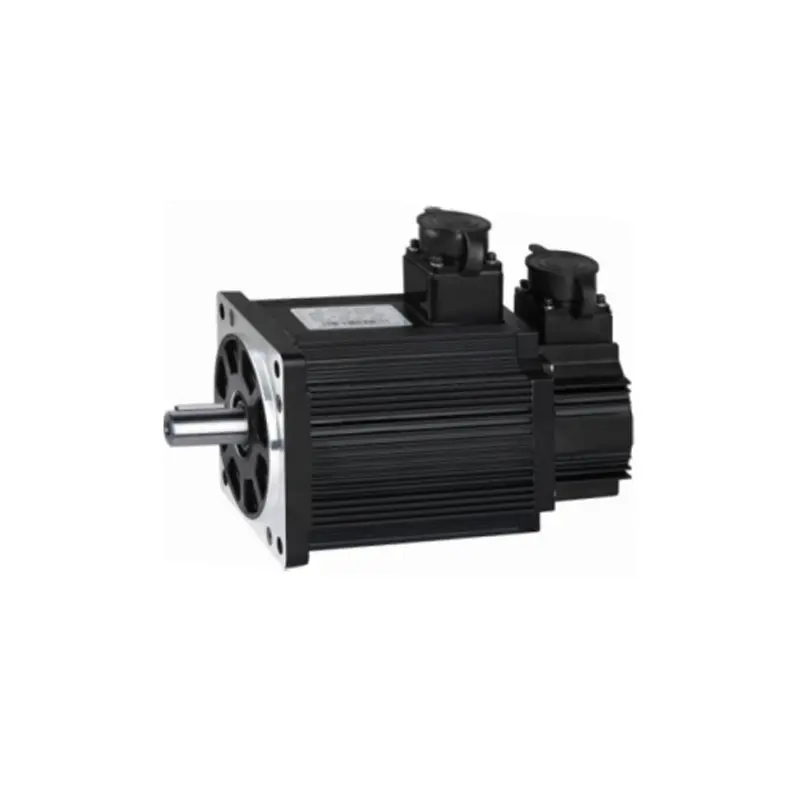
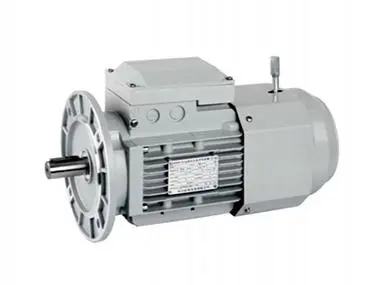
If you're sourcing motors for a high-precision automation project, you've probably hit this wall: the spec sheets all look the same, but the performance isn't. Now you're staring at two options— AC Servo Motor and induction motor—and the question keeps coming up: What is the difference between AC servo motor and induction motor? It's not just a matter of price. The wrong pick can leave your machine missing positional accuracy by millimeters, or it can quietly bleed your energy budget while barely delivering the torque you need. We've seen engineers order standard induction motors for indexing conveyors, only to find the stop position drifts after twenty cycles. Then they scramble for external encoders and brake systems, adding cost and complexity that a properly spec'd servo system from Raydafon Technology Group Co., Limited could have eliminated from the start. This guide strips away the jargon. You'll see exactly where the two motor types diverge, how that impacts your production line, and where an investment in Raydafon servo solutions pays for itself in reduced downtime and higher throughput. By the time you finish, you'll be able to choose with confidence, without second-guessing your decision.
Imagine you run a pick-and-place cell that must land components within ±0.02 mm. An induction motor with a VFD can spin the shaft, but without a feedback loop, it doesn't "know" where it is. You add an encoder, a brake, and maybe a PLC with closed-loop logic—suddenly the cost climbs, and the failure points multiply. Here, the answer to What is the difference between AC servo motor and induction motor? becomes brutally practical. The servo integrates a high-resolution encoder natively. Every millisecond, the drive adjusts current to keep the rotor exactly on trajectory. Over 100,000 cycles, that repeatability stays rock-solid. Induction motors suffer slip: the rotor speed always lags the synchronous field, so even with an encoder the control response is sluggish.
Solution: The Raydafon AC servo motor family uses 23-bit absolute encoders that eliminate homing routines after power loss. Combined with our auto-tuning drive, you get plug-and-play accuracy without external compensation.
| Parameter | Typical AC Servo Motor | General-Purpose Induction Motor |
|---|---|---|
| Speed regulation | ±0.01% with closed loop | 2-5% slip dependent on load |
| Positioning accuracy | Arc-minute level with encoder | Not rated for positioning natively |
| Stop repeatability | Excellent, zero-angle drift | Poor, requires external brake |
A ventilation fan running 24/7 at 1450 RPM doesn't care about torque ripple. An induction motor excels here: robust, cheap, and happy at steady state. But the moment you need rapid acceleration, instant reverse, or high torque at near-zero speed, the induction motor's limitations explode into view. At low speeds, its internal fan becomes ineffective, heat builds up, and torque collapses. To counter this, you oversize the motor, which wastes energy and space. For a CNC router performing 30 rapid traverses per minute, the servo's permanent-magnet rotor delivers 300% rated torque for short bursts without overheating. This is where Raydafon Technology Group Co., Limited bridges the gap: our servo solutions provide high torque density in compact NEMA and IEC frames, letting you downsize the mechanical footprint while boosting dynamic response.
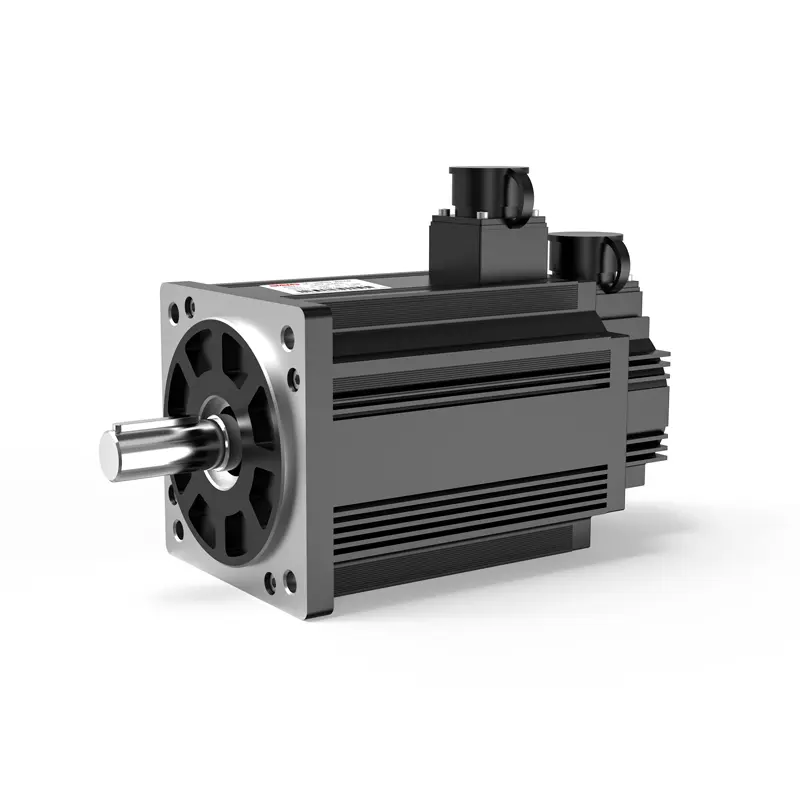
The practical implication? A packaging machine builder switched from a 2.2 kW induction motor + gearbox to a 1.5 kW Raydafon servo direct-drive axis. Cycle time dropped 18% and energy per bag fell 22%.
| Motion Requirement | Induction Motor Performance | AC Servo Motor Performance |
|---|---|---|
| Continuous torque at 0-50 RPM | Severe derating, often requires auxiliary blower | Full torque, coolant optional |
| Peak acceleration torque | 150-180% nominal, limited by slip | 300% nominal for 3 seconds or more |
| Reversing accuracy | Backlash and inertia mask precision | Zero-backlash capable, sub-cycle settling |
A common hidden cost lurks in the motor’s efficiency curve. Induction motors achieve reasonable efficiency only above 75% load; below 50% load, efficiency plummets. If your application runs at part load often—think variable-speed dosing pumps or intermittent web tensioning—the motor becomes a furnace that wastes heat into the control cabinet. You then invest in cabinet cooling, further increasing total system cost. Meanwhile, an AC servo motor with rare-earth magnets maintains high efficiency across a broad speed range, especially when paired with a regenerative drive that returns braking energy to the mains. For a multi-axis textile machine, this difference can trim electricity consumption by 15-30%, often qualifying for local energy-efficiency incentives.
Raydafon's intelligent servo drives feature built-in regenerative braking and STO safety, reducing panel clutter while slashing energy bills. Ask our engineers for a load-analysis report to quantify potential savings for your specific duty cycle.
When you are a purchasing manager juggling uptime targets, support calls matter. An induction motor with a general-purpose VFD typically needs manual tuning for each speed reference, and the VFD may trip on overcurrent during sudden load changes. Troubleshooting eats hours. A servo system drastically simplifies this. Raydafon’s drives include adaptive notch filters and vibration suppression algorithms that self-tune in under 60 seconds. Autotuning means end-users can swap a motor without calling an integrator, and the built-in data logging allows remote diagnostics before dispatching a technician.
The long-term maintenance story also tilts: induction motors need regular bearing checks, and their windings are vulnerable to moisture if not operated frequently. Encoder-less servos from Raydafon even eliminate sensor failure modes in washdown environments, giving you a truly rugged solution.
Q: So what is the difference between AC servo motor and induction motor in simple cost terms?
A: Induction motor hardware is cheaper upfront, but once you add an encoder, precision gearhead, and possibly a closed-loop VFD, the total installed cost often exceeds a servo package. Servo's edge comes from higher uptime, lower energy consumption, and reduced mechanical complexity. Over a five-year lifecycle, a Raydafon servo axis usually breaks even within 8-14 months.
Q: Can I just replace an induction motor with a servo motor directly?
A: Mechanically, you may need an adapter plate and shaft coupling, but the real gain is in control. If the machine requires tight synchronisation or fast start-stop, the servo pays back immediately. Raydafon provides frame-compatible motors that drop into many standard mounts, and our application team assists with validation to prevent any surprises.
Ready to move beyond the guesswork? Whether you’re retrofitting legacy equipment or designing a new high-speed line, the right motor decision cascades into every performance metric that matters. Don't let a generic spec sheet push you toward a suboptimal choice. Tap into the expertise at Raydafon Technology Group Co., Limited. We engineer complete motion solutions—from compact servo motors and drives to integrated gear units—designed to solve the exact challenge you face today. Explore our range at https://www.raydafondrive.com and discuss your technical requirements with our team directly at [email protected]. One conversation can make your next project simpler, faster, and profoundly more reliable.
Hughes, A., & Drury, B. (2019). Electric Motors and Drives: Fundamentals, Types and Applications (5th ed.). Newnes.
Krishnan, R. (2017). Permanent Magnet Synchronous and Brushless DC Motor Drives. CRC Press.
Pillay, P., & Krishnan, R. (1991). Application characteristics of permanent magnet synchronous and brushless DC motors for servo drives. IEEE Transactions on Industry Applications, 27(5), 986-996.
Jahns, T. M. (1994). Motion control with permanent-magnet AC machines. Proceedings of the IEEE, 82(8), 1241-1252.
Lorenz, R. D. (1999). Robotics and automation applications of drives and motion control. IEEE Industry Applications Magazine, 5(3), 26-34.
Slemon, G. R. (1992). Electric Machines and Drives. Addison-Wesley.
Mohan, N. (2014). Advanced Electric Drives: Analysis, Control, and Modeling Using MATLAB/Simulink. Wiley.
Fitzgerald, A. E., Kingsley, C., & Umans, S. D. (2018). Electric Machinery (7th ed.). McGraw-Hill.
Sen, P. C. (2014). Principles of Electric Machines and Power Electronics (3rd ed.). Wiley.
Bose, B. K. (2020). Modern Power Electronics and AC Drives (2nd ed.). Prentice Hall.