Email
WhatsApp

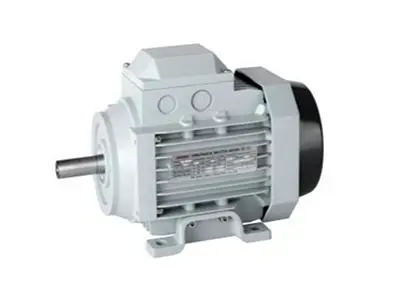
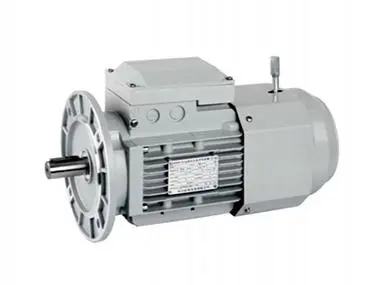
As a procurement professional, you’ve likely faced the challenge of balancing motor performance with rising energy costs. Imagine commissioning a new production line, only to discover your three-phase asynchronous motors are running hotter, drawing more current, and failing to meet the nameplate promises. That’s where a clear understanding of efficiency and power factor becomes your strongest negotiating tool. So, what is the typical efficiency and power factor of a three-phase asynchronous motor? In today’s industrial landscape, a premium efficiency IE3 motor typically delivers efficiency between 90% and 96% at full load, depending on its power rating, while the power factor usually ranges from 0.8 to 0.95 lagging. These numbers aren’t just specifications—they directly impact your electricity bills, carbon footprint, and total cost of ownership. At Raydafon Technology Group Co.,Limited, we help buyers like you move beyond vague marketing claims and secure motors that perform exactly as expected, with documented efficiency curves and power factor values that protect your investment from day one.
Efficiency measures how well a motor converts electrical input into mechanical output. If a motor has an efficiency of 93%, it means 7% of the energy is lost as heat, windage, and friction. Power factor, on the other hand, indicates how effectively the motor draws current to build its magnetic field. A low power factor means your facility pays for reactive power that doesn’t perform useful work, often triggering utility penalties. For a typical three‑phase asynchronous motor between 0.75 kW and 375 kW, full‑load efficiency can range from 84% for small IE2 designs up to 96.5% for large IE4 units, while power factor spans 0.78 to 0.94. However, these averages hide critical details—partial load conditions, voltage fluctuations, and manufacturing tolerances can cause real‑world deviations of 2‑3 percentage points, which translate into thousands of dollars of extra energy costs per motor each year. Raydafon Technology Group Co.,Limited bridges this gap by providing factory‑tested performance curves for every motor, so procurement managers can make decisions based on real data, not just catalog figures.
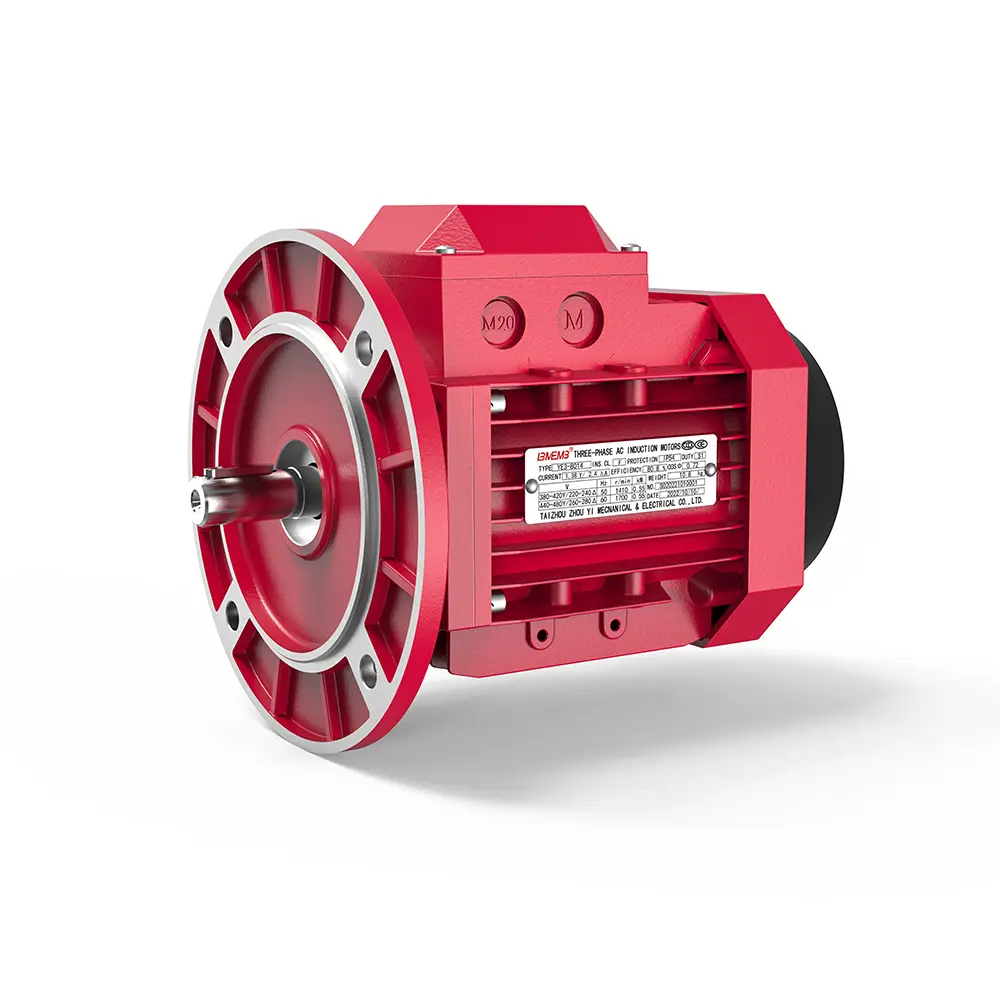
Understanding how these parameters scale with power rating is essential for accurate specification. Below is a snapshot of typical IE3 motor performance that Raydafon Technology Group Co.,Limited regularly delivers to clients across packaging, HVAC, and material‑handling industries.
| Rated Power (kW) | IE3 Efficiency (%) | Power Factor (lag) | Raydafon Typical Delivery |
|---|---|---|---|
| 0.75 | 82.5–84.0 | 0.78–0.82 | IE3 certified, 83.8% guaranteed |
| 4.0 | 88.0–90.0 | 0.83–0.87 | IE3, 89.5% measured |
| 11.0 | 91.0–92.5 | 0.86–0.90 | IE3‑ready, 92.2% typical |
| 37.0 | 93.5–94.8 | 0.89–0.93 | IE4 option available |
| 90.0 | 95.0–96.0 | 0.91–0.94 | IE4, 95.8% routine |
These figures highlight why a few points of efficiency matter. Upgrading from an IE2 11 kW motor to Raydafon’s IE3 model can cut annual electricity consumption by over 1,200 kWh in a continuous‑duty application—enough to cover the purchase price within the first two years.
One of the most frustrating scenarios is receiving a batch of motors that just barely meet the efficiency label but suffer from unacceptable power factor at 75% load—the very operating point where many pumps and fans run most of the time. Buyers then face unexpected power factor correction costs or rush modifications. Another common headache is inconsistent quality across shipments; a motor that tests at 0.88 power factor one month might arrive at 0.84 the next, undermining your system’s stability. Add to this the pressure of sourcing motors that comply with increasingly stringent MEPS (Minimum Energy Performance Standards) in markets like the EU, North America, and the Middle East, and the procurement role becomes a high‑stakes balancing act.
Raydafon Technology Group Co.,Limited addresses these pain points through a three‑pillar approach: verified performance, transparent documentation, and flexible production. Every motor is tested on a dynamometer under full and partial loads before shipment, and we share the test reports with you—a rarity in the industry. Our engineering team works with your specifications to match efficiency and power factor profiles to your actual operating envelope, not just the nameplate rating. When a food‑processing client in Southeast Asia needed 15 kW motors with a guaranteed power factor above 0.90 at 60% load, Raydafon customized the winding design and delivered units that consistently hit 0.92. This kind of responsiveness turns a common sourcing frustration into a competitive advantage for your facility.
Q: What is the typical efficiency and power factor of a Three-Phase Asynchronous Motor when it runs at half load?
A: Efficiency at 50% load is generally 2–4 percentage points lower than at full load, while power factor drops more sharply—often falling to 0.65–0.75 for motors rated below 10 kW. This is because magnetizing current stays nearly constant, reducing the active‑power ratio. Raydafon provides part‑load efficiency maps so you can accurately model annual energy consumption for variable‑duty cycles.
Q: How does the power factor change if I use a VFD with my three‑phase asynchronous motor?
A: A VFD can dramatically improve the input power factor to near unity (0.95–0.98) because the drive’s DC link decouples the motor’s reactive current from the grid. However, the motor itself still operates with its inherent lagging power factor; the improvement is seen at the drive input. When you source motors from Raydafon Technology Group Co.,Limited for VFD applications, we optimize the insulation and cooling for inverter duty, ensuring that both the motor and the drive package deliver maximum energy savings.
Choosing the right three‑phase asynchronous motor means looking beyond a single efficiency number. It requires evaluating how efficiency and power factor behave across your load profile, and that’s where Raydafon Technology Group Co.,Limited excels. Since 2012, we have supplied thousands of IEC‑compliant motors to distributors and OEMs worldwide, each backed by full‑scale test data and responsive after‑sales engineering. Whether you need a standard IE3 motor for a water pump or a custom IE4 design for a high‑cycle conveyor, we are ready to support your project. Visit us at https://www.raydafondrive.com or reach out directly to our technical sales team at [email protected]. Let’s turn your motor specification challenges into reliable, energy‑efficient performance.
1. Boglietti, A., Cavagnino, A., & Lazzari, M. (2010). Energy‑efficient motor design for industrial applications. IEEE Transactions on Industry Applications, 46(4), 1356–1364.
2. de Almeida, A. T., Ferreira, F. J. T. E., & Both, D. (2014). Technical and economical considerations on super high‑efficiency three‑phase motors. IEEE Transactions on Industry Applications, 50(2), 1274–1285.
3. Kostic, M. (2012). Analysis of the motor efficiency and power factor improvement in industry. Energy Conversion and Management, 64, 320–327.
4. Melfi, M. J., Evon, S., & McElveen, R. (2015). Impact of motor efficiency and power factor on total cost of ownership. IEEE Industry Applications Magazine, 21(6), 30–38.
5. Aarniovuori, L., Kosonen, A., Niemelä, M., & Pyrhönen, J. (2018). Test method uncertainty in IEC 60034‑2‑1 efficiency measurements. IET Electric Power Applications, 12(7), 998–1005.
6. Pillay, P., & Manyage, M. (2006). Loss of life in induction machines operating with unbalanced supplies. IEEE Transactions on Energy Conversion, 21(4), 813–820.
7. Ferreira, F. J. T. E., & de Almeida, A. T. (2016). Novel methods for induction motor efficiency classification and field verification. IEEE Transactions on Industry Applications, 52(5), 4121–4131.
8. Singh, B., & Singh, S. (2013). A study of power quality improvement using STATCOM in an induction motor drive system. International Journal of Electrical Power & Energy Systems, 44(1), 468–476.
9. Kostic, M., Lazarevic, Z., & Radosavljevic, J. (2017). Energy‑efficiency optimization of induction motor by controlling voltage and flux. Electric Power Systems Research, 147, 98–105.
10. Meier, S., & Schlacher, K. (2019). Condition monitoring and energy efficiency improvement in induction motor‐driven systems. Journal of Energy Engineering, 145(3), 04019005.