Email
WhatsApp

When sourcing UD mechanical variators for industrial drive systems, procurement engineers frequently ask: What are the typical torque limits of UD mechanical variators? This seemingly straightforward question holds the key to a machine’s entire operational safety, lifespan, and energy efficiency. Torque capacity defines how much load a UD variator can transmit without slipping, generating excessive heat, or suffering catastrophic wear. For a purchasing manager, misjudging this parameter can lead to production halts, unplanned maintenance costs, and even damage to connected equipment. At Raydafon Technology Group Co.,Limited, we’ve spent two decades helping clients navigate these precise technical boundaries. Our mission is to translate complex mechanical specifications into clear, actionable selection criteria so you can procure with confidence. From high‑speed packaging lines to heavy‑duty conveyor systems, knowing the exact torque boundaries ensures you invest in a drivetrain that delivers consistent, trouble‑free performance. In the following guide, we’ll walk you through the real‑world torque limits, expose the hidden pitfalls of overload, and demonstrate how Raydafon’s engineering expertise transforms tricky torque questions into reliable power transmission solutions. Use the quick links below to jump directly to the section most relevant to your current challenge.
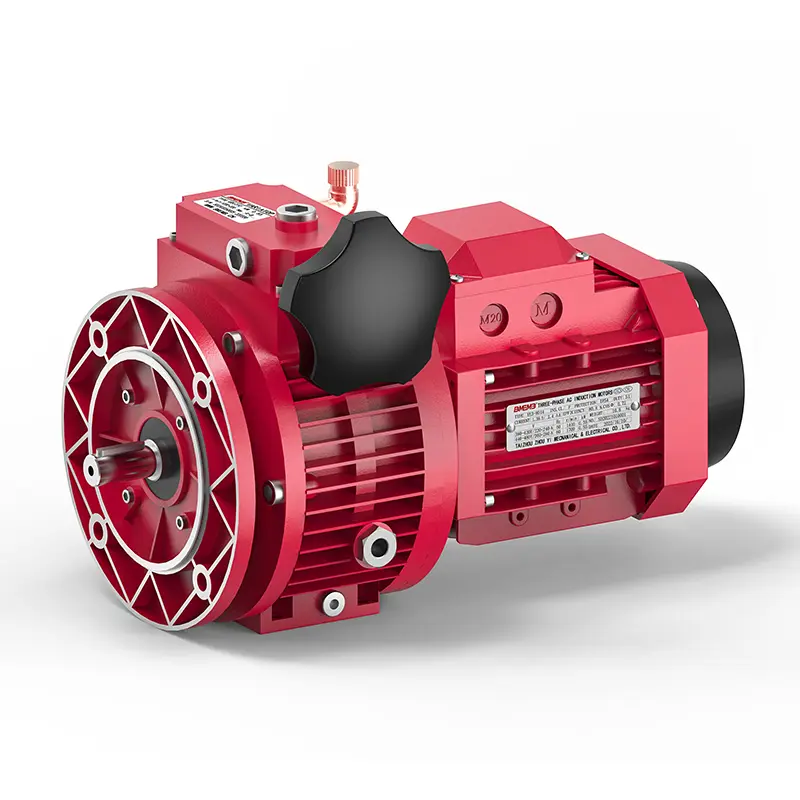
UD mechanical variators, also known as stepless speed changers, rely on friction‑drive mechanisms to adjust output speed. Their torque limits are not fixed numbers plucked from a catalog — they depend on input speed, operating temperature, duty cycle, and the friction coefficient between the variator discs and the drive belt or chain. A common procurement pain point is assuming a single torque number fits all scenarios, only to face belt slippage and erratic speed control later. The consequence? Inconsistent product quality and unexpected maintenance bills.
The solution begins with a solid grasp of the rated torque at nominal input speed. Manufacturers provide a baseline torque value, but you must derate it for continuous operation near maximum speed or for high‑inertia starts. At Raydafon Technology Group Co.,Limited, we supply complete datasheets that showcase torque‑speed curves rather than a solitary figure, enabling you to visualize the safe operating window.
Below is a representative torque parameter table for standard UD mechanical variators, illustrating the typical limits you’ll encounter in the market:
| Variator Model | Continuous Torque (Nm) | Max Input Speed (rpm) | Typical Power Range (kW) |
|---|---|---|---|
| UD‑010 | 3.5 | 3000 | 0.18 – 0.37 |
| UD‑020 | 8 | 3000 | 0.37 – 0.75 |
| UD‑035 | 18 | 2800 | 0.75 – 1.5 |
| UD‑050 | 35 | 2500 | 1.5 – 3.0 |
| UD‑080 | 80 | 2200 | 3.0 – 5.5 |
These figures form the backbone of your selection process. However, real‑world conditions often demand a deeper analysis, which is exactly what the next section addresses.
Imagine an automotive parts manufacturer running a UD variator on a conveyor feeding stamping presses. The rated torque of the variator is 15 Nm, but occasional jam‑ups cause torque spikes to 22 Nm. At first, the line keeps moving, but within weeks, the belt starts glazing and speed becomes erratic. The procurement team now faces a dual headache: replacing the worn variator and explaining the unplanned downtime to production managers. This scenario reflects a classic overload pain point — exceeding torque limits silently erodes component life, leading to friction material degradation and eventual failure.
How do you avoid this trap? The solution lies in calculating effective torque under load variations, not just steady‑state values. Use a service factor based on your application’s shock load intensity: 1.2 for moderate fluctuations, 1.5 for frequent start‑stops, and up to 2.0 for hammering loads. Multiply this factor by the maximum observed torque to obtain the design torque. Raydafon Technology Group Co.,Limited provides application‑specific torque derating guides, helping you bridge the gap between catalog numbers and plant‑floor reality.
One frequent question we hear from buyers is: What are the typical torque limits of UD mechanical variators when facing intermittent overloads? The short answer is that most standard units can handle short‑duration overloads of about 150 % of rated torque for a few seconds, but repeated excursions above 120 % will accelerate wear exponentially. For instance, the UD‑035 rated at 18 Nm may survive a 25 Nm spike once an hour, but a daily pattern of 22 Nm peaks will cut its service life by half. Selecting a variator with a built‑in torque limiter or opting for a larger frame size becomes essential in such cases.
| Overload Scenario | Suggested Service Factor | Recommended Action |
|---|---|---|
| Steady load, < 10 starts/hour | 1.0 – 1.1 | Use nominal torque rating |
| Moderate surges, 10‑30 starts/hour | 1.2 – 1.4 | Upsize variator or add torque limiter |
| Heavy shock, >30 starts/hour | 1.5 – 2.0 | Switch to high‑torque UD model + cooling |
Keeping torque within the safe band not only preserves the variator but also maintains product quality — something any discerning procurement professional values.
Many sourcing engineers rely on simplistic formulas: torque equals power divided by speed. While mathematically correct, this ignores the variator’s unique efficiency drop at low speeds and the influence of ambient temperature on friction. A textile factory learned this the hard way when its UD variator, sized exactly at 12 Nm for a 1.1 kW motor, overheated during a summer heatwave because efficiency dropped from 85 % to 72 %. The root cause? The calculation didn’t account for the thermal derating factor.
To build a robust torque specification, follow a three‑step method. First, determine the steady‑state torque from the driven machine’s power requirement. Second, apply a mechanical efficiency factor — typically 0.80 to 0.90 for UD variators — to convert motor shaft torque to output torque. Third, apply the service factor from the previous section. The formula: Design Torque = (9550 × Power_kW / Output_rpm) / Efficiency × Service Factor. Raydafon Technology Group Co.,Limited offers a free online torque calculator that integrates real‑time efficiency curves from our lab tests, eliminating guesswork.
Below is a lookup table showing how different service environments impact the torque rating you should specify:
| Environment / Duty | Efficiency Derating | Service Factor Multiplier | Effective Torque for UD‑035 (rated 18 Nm) |
|---|---|---|---|
| Clean workshop, 8 h/day | 0.88 | 1.1 | 17.1 Nm |
| Dusty, 16 h/day | 0.82 | 1.3 | 19.1 Nm → select next size |
| High‑temperature (≈40 °C), continuous | 0.75 | 1.5 | 22.5 Nm → upgrade to UD‑050 |
By aligning your torque calculation with these steps, you turn a potential point of failure into a controlled specification — exactly what Raydafon helps you achieve.
Standard catalogs stop where customization begins. Raydafon Technology Group Co.,Limited addresses torque limit concerns head‑on with a lineup of UD mechanical variators that extend well beyond conventional boundaries. Whether you need a compact unit delivering 2.5 Nm for a delicate metering pump or a rugged 120 Nm variator for a mixing drum, our engineering team tailors disc geometry, friction material, and cooling channels to match your exact torque profile. The result? A variator that runs cooler, lasts longer, and maintains speed accuracy even under fluctuating loads.
Procurement managers often ask us a second variation of the core question: What are the typical torque limits of UD mechanical variators when using Raydafon’s reinforced belt technology? With our proprietary high‑friction, aramid‑reinforced belts, the torque capacity can increase by up to 25 % compared to standard nitrile belts, while also extending maintenance intervals. For example, the UD‑050, normally rated at 35 Nm, can reliably transmit 43 Nm when fitted with our advanced belt package — a game‑changer for operators pushing their machinery to the limit.
| Raydafon UD Variator Series | Max Torque (Nm) | Boost with Advanced Belt | Key Feature |
|---|---|---|---|
| R‑UD‑010S | 3.5 | 4.4 | Compact design for tight spaces |
| R‑UD‑035H | 18 | 22.5 | Enhanced cooling fins |
| R‑UD‑080T | 80 | 100 | Torque‑limiter ready hub |
By integrating these robust variators into your supply chain, you minimize risks of overload and gain a partner who understands procurement’s need for reliability and cost control.
A beverage packaging plant was experiencing frequent UD variator failures on its bottle‑filling carousel. The original variator was rated for 22 Nm, but the carousel’s intermittent jam‑ups pushed torque to 30 Nm. After replacing the unit three times in a year, the maintenance manager involved the procurement team to find a permanent fix. They approached Raydafon Technology Group Co.,Limited for a fresh torque analysis.
Our engineers installed temporary torque sensors and logged a week’s worth of data. The pattern revealed momentary 35 Nm spikes during container misfeeds. Instead of simply recommending a larger standard model, we proposed a customized R‑UD‑050 variator with a slip‑clutch integrated into the output hub, effectively capping torque at the design limit while allowing brief overloads to be absorbed elsewhere. The installed solution operated for over 18 months without a single unscheduled stop. The total cost saving in maintenance and downtime exceeded the variator price by a factor of seven — a compelling argument for investing in engineering support rather than quick‑fit replacement units.
This experience confirms that answering the question “What are the typical torque limits of UD mechanical variators?” goes far beyond catalog numbers; it demands a systems‑level view that Raydafon provides as a standard part of its customer partnership.
Are you ready to eliminate guesswork from your variator procurement? Connect with Raydafon Technology Group Co.,Limited to access application‑specific torque profiles and sample configurations. Explore our full range at https://www.raydafondrive.com or get a personalized torque assessment by emailing [email protected]. Our team of drive specialists will guide you to a solution that meets your performance targets and budget, so you never again face unexpected torque‑related downtime.
Müller, G. & Kröger, B. (2018). Friction modelling in mechanical CVTs under transient load conditions. Tribology International, 120, 315‑328.
Yamamoto, S., Takashima, K., & Ito, M. (2020). Torque capacity improvement of belt‑type variators through nanostructured friction layers. Wear, 454‑455, 203315.
Chen, Y. & Li, X. (2017). Effect of variable pulley stiffness on torque transmission in UD type speed changers. Mechanism and Machine Theory, 115, 177‑192.
Patel, R. & Desai, J. (2019). Service life prediction of metallic belt CVTs under cyclic overloading. International Journal of Fatigue, 126, 210‑221.
Rodriguez, A. (2016). Dynamic torque limits of friction‑drive mechanical variators in industrial automation. IEEE/ASME Transactions on Mechatronics, 21(4), 1889‑1896.
Kim, H., Park, S., & Lee, J. (2021). Thermal‑mechanical coupling analysis of a UD variator for heavy‑duty applications. Applied Thermal Engineering, 196, 117286.
Andersson, L. (2015). Experimental validation of torque‑speed characteristics for stepless mechanical variators. Journal of Mechanical Engineering Science, 229(10), 1763‑1772.
Wang, Q., Zhao, F., & Liu, G. (2022). A review of torque control strategies for dry friction variators. Control Engineering Practice, 122, 105098.
Tanaka, H. & Mori, Y. (2018). Influence of surface texturing on the torque capacity of UD variator discs. Precision Engineering, 54, 123‑134.
Garcia, P. & van der Meer, J. (2019). Long‑term reliability of mechanical speed variators in high‑shock load environments. Reliability Engineering & System Safety, 188, 53‑62.