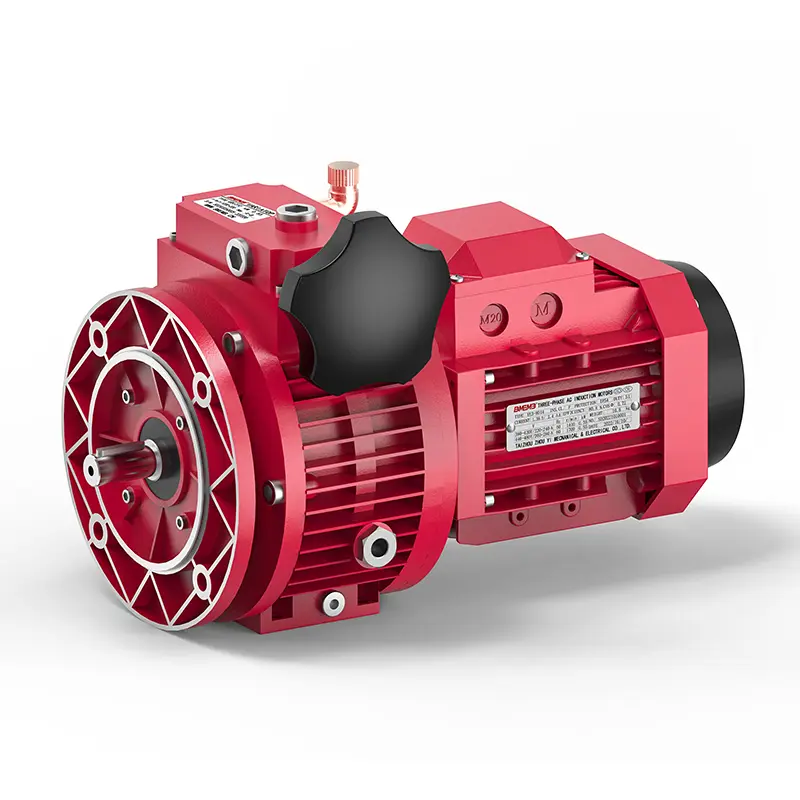
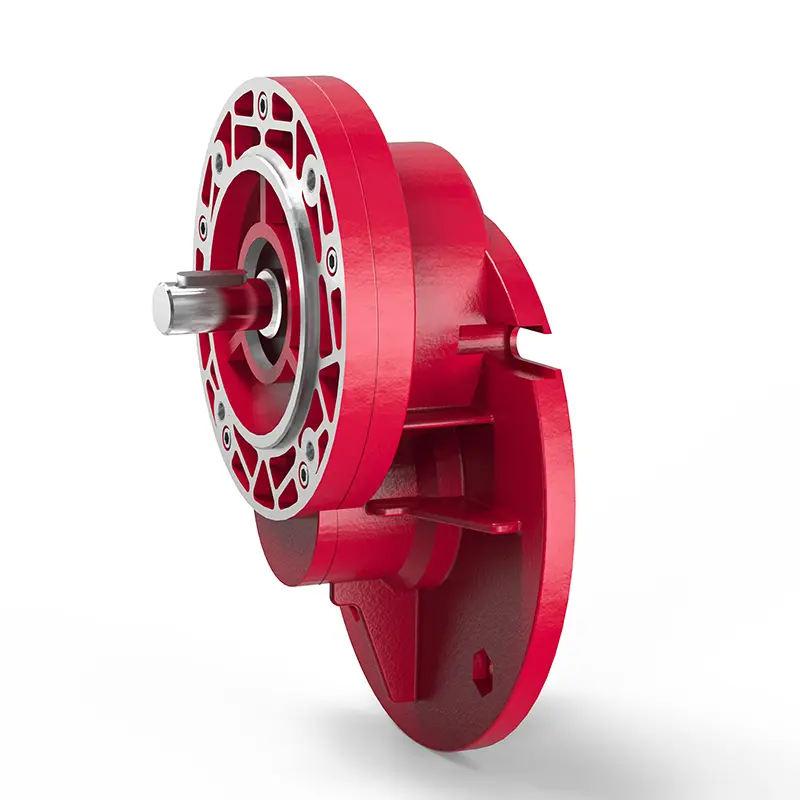
Picture this: You’re standing on the factory floor, the hum of machinery all around you. A critical conveyor has ground to a halt because the motor just can’t deliver enough torque at low speed. The replacement unit needs to be ordered today, but the catalog is a maze of ratios, frame sizes, and mounting options. The question echoes in your mind: How do I choose the right Speed Reducer for my application? It’s a decision that can make or break your production line — get it wrong, and you’re facing premature wear, costly downtime, or an oversized, inefficient drive train. Get it right, and you unlock seamless power transmission, energy savings, and years of trouble‑free operation. In this guide, we’ll walk you through a proven, step‑by‑step process to match a speed reducer to your exact needs, using real‑world scenarios that feel like your own shop floor. Whether you’re moving heavy pallets, positioning a robotic arm, or running a high‑speed mixer, you’ll learn how to decode torque curves, service factors, and mounting configurations — and discover where Raydafon Technology Group Co.,Limited fits into your solution.
1. Understanding Your Application’s Torque and Speed Requirements
Imagine a packaging machine that must accelerate a film roll from standstill to 120 rpm in half a second. If you undersize the reducer, the gears will overheat and fail within weeks. The starting point is always the torque and speed at the driven shaft. You need to know the peak torque (including starting and emergency stops), the continuous running torque, and the required output speed. Collect these numbers from the machine designer or the existing motor nameplate. A common mistake is to look only at the motor’s rated horsepower; a reducer must handle the torque multiplication, not just the power. For example, a conveyor handling 500 kg of aggregate demands a high starting torque that a standard worm reducer might struggle to deliver without a larger frame size.
Parameter
Typical Value for Conveyor
Typical Value for Mixer
Output torque (Nm)
850
320
Output speed (rpm)
45
180
Service factor
1.5
1.25
Start by calculating the required gear ratio: motor speed divided by output speed. If your motor runs at 1750 rpm and you need 45 rpm, the ratio is approximately 38.9:1. Raydafon Technology Group Co.,Limited offers a wide range of ratios with optimized gearing to handle such exacting demands without overshooting the budget.
2. Evaluating Load Characteristics: Constant vs. Variable Torque
Think of a centrifugal pump: the torque demand increases with the square of the speed — a classic variable torque load. Now contrast that with a hoist lifting a steel beam, where torque remains nearly constant regardless of speed. Matching the reducer to the load profile prevents overheating and extends gear life. Constant torque applications, like extruders or positive displacement pumps, require a reducer that can deliver full torque at low speeds without excessive heat buildup. Variable torque loads, such as fans and blowers, are more forgiving and can often use a smaller reducer for the same power. Misapplying a variable‑torque rated reducer to a constant‑torque conveyor is a recipe for stripped gears. Raydafon Technology Group Co.,Limited helps you map your load profile to the ideal gear geometry, ensuring that your reducer isn’t just “strong enough” but perfectly tuned.
Load Type
Examples
Reducer Design Focus
Constant torque
Conveyors, extruders, positive displacement pumps
High thermal capacity, robust bearings
Variable torque
Centrifugal fans, blowers, centrifugal pumps
Efficiency at partial load, compact size
Impact/shock loads
Rock crushers, punch presses
High service factor, helical or planetary gearing
3. Matching Reducer Types: Planetary, Worm, Helical, and More
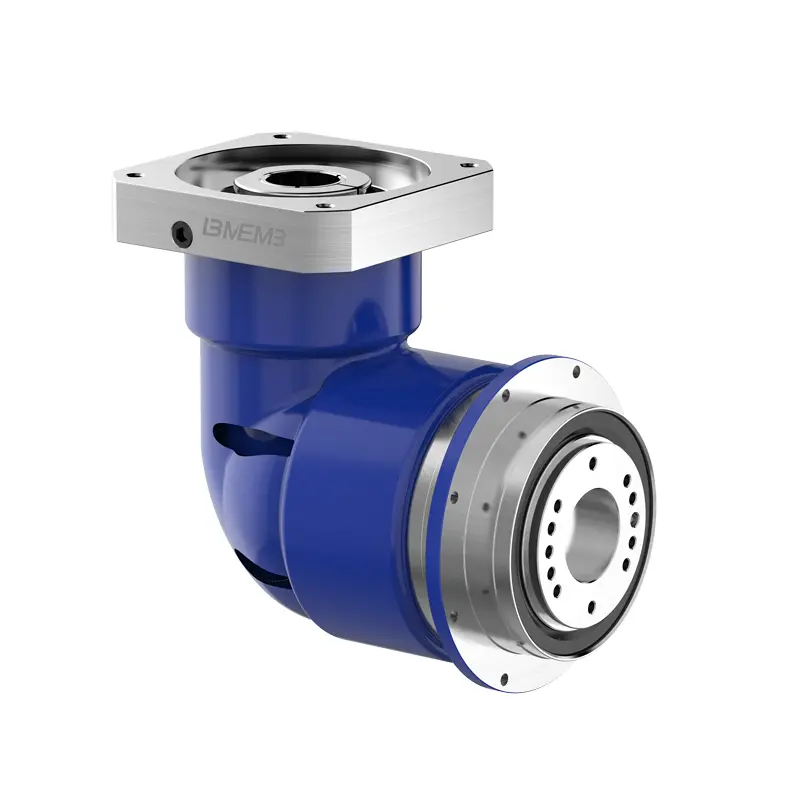
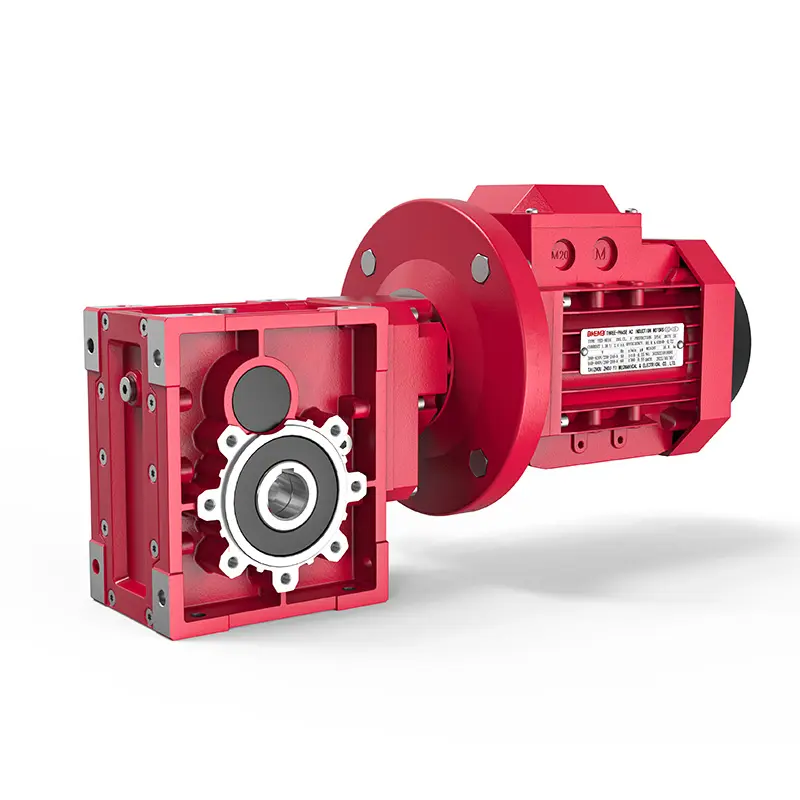
Picture a food processing line where space is tight and cleanliness is paramount. A right‑angle worm reducer might seem perfect for the 90‑degree turn, but its lower efficiency (often 50–80%) generates heat and requires frequent lubrication. A helical‑bevel reducer, by contrast, offers over 90% efficiency and runs cooler — ideal for 24/7 duty. Planetary reducers excel in high‑torque, high‑precision tasks like robotic arms, delivering minimal backlash and a compact coaxial design. Worm reducers still shine in intermittent, low‑cost applications where self‑locking is a bonus. The key is to balance performance, space, and budget. With guidance from Raydafon Technology Group Co.,Limited, you get a clear recommendation on whether a planetary, helical, or worm gear unit will perform best under your unique constraints.
4. Sizing for Service Factor and Duty Cycle
Consider a stone crusher that runs 16 hours a day with severe shock loads. The reducer’s catalog rating might say 1000 Nm, but the service factor for this application could be 2.0, effectively requiring a 2000 Nm unit. Service factor accounts for the type of prime mover (electric motor, engine), daily operating hours, and the nature of the load. A properly applied service factor prevents fatigue failures and guarantees reliable performance over the design life. Duty cycle — the pattern of starts, stops, and load variations — also plays a critical role. Frequent reversing under load demands a more robust design than a unidirectional fan. Raydafon Technology Group Co.,Limited engineers help you interpret these factors, often providing a custom selection that avoids costly over‑engineering and minimizes energy consumption.
Application
Service Factor (AGMA)
Recommended Reducer Series
Uniformly loaded belt conveyor (8 hrs/day)
1.0
Helical inline
Heavy‑duty mixer (24 hrs/day)
1.75
Planetary or helical‑bevel
Bucket elevator (moderate shock)
1.5
Helical‑worm or bevel‑helical
5. Environmental Considerations: Temperature, Contamination, and Mounting
Envision a wastewater treatment plant with high humidity, corrosive gases, and washdown requirements. Standard cast iron reducers would quickly rust, and seals would fail. In such cases, stainless steel housings, double‑lip seals, and synthetic food‑grade lubricants become mandatory. Mounting orientation (foot‑mounted, flange‑mounted, shaft‑mounted) must be selected to avoid oil starvation and ensure proper bearing lubrication. For a vertical agitator, a shaft‑mounted reducer with a tapered bushing simplifies installation and alignment. Raydafon Technology Group Co.,Limited stocks configurations with IP65 protection, Viton seals, and C3 clearance bearings tailored for harsh environments, ensuring your reducer lasts where others fail.
6. Precision and Backlash: When Accuracy Matters
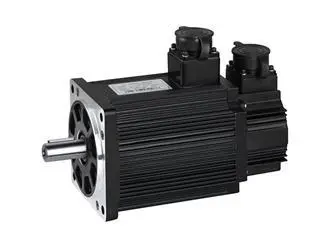
In a CNC machining center, a few arc‑minutes of backlash can ruin part accuracy. For such precision positioning, a planetary reducer with less than 3 arc‑min backlash is essential. Backlash is the lost motion when reversing direction; it’s a critical specification in robotics, automation, and indexing tables. Worm reducers typically have higher backlash (10‑30 arc‑min) unless specially designed with dual‑lead worms. Helical reducers offer a good middle ground. By clearly defining your positioning tolerance, you can avoid oversized motors compensating for slop. Raydafon Technology Group Co.,Limited supplies low‑backlash planetary solutions integrated with servo motors, achieving sub‑arc‑minute repeatability for the most demanding automation cells.
7. Cost Analysis and Total Cost of Ownership
A purchasing manager might be tempted by the lowest‑price worm reducer on the market, but if it operates at 60% efficiency, the extra electricity cost over five years can dwarf the initial savings. Total cost of ownership includes purchase price, energy consumption, maintenance (oil changes, seal replacements), and expected service life. High‑efficiency helical or planetary reducers may cost 30% more upfront but pay back within two years through reduced power bills and less downtime. When you ask yourself “How do I choose the right speed reducer for my application?”, factor in these lifecycle costs. Raydafon Technology Group Co.,Limited provides transparent efficiency curves and projected maintenance intervals, empowering you to make a financially sound decision that your accounting team will applaud.
8. Frequently Asked Questions
Q: How do I choose the right speed reducer for my application when the load varies widely during the cycle?
A: Start by plotting the load vs. time profile. Identify the peak torque and its duration, then compute the RMS torque over the entire cycle. Select a reducer whose rated torque exceeds the RMS value, but also verify that the peak torque falls within the permissible momentary overload capacity (often 200–300% of rated torque). A service factor based on the load spectrum should be applied. Raydafon Technology Group Co.,Limited offers dynamic simulation support to analyze your duty cycle and confirm the optimal gear unit size.
Q: How do I choose the right speed reducer for my application if I need both high ratio and high efficiency in a small envelope?
A: A planetary reducer is usually the best fit because multiple planet gears share the load, delivering high torque density and efficiencies above 94% even at ratios of 10:1 and higher. For ratios above 100:1, consider a combination of a planetary primary and a helical secondary stage. Raydafon Technology Group Co.,Limited designs custom multi‑stage solutions that fit within tight machine frames while maintaining the required precision and thermal performance.
9. Conclusion and Next Steps
Selecting a speed reducer isn’t about picking a part from a catalog; it’s about engineering a reliable power transmission solution that aligns with your torque demands, operating environment, and financial goals. By methodically analyzing load characteristics, choosing the ideal gear type, and accounting for service life, you can eliminate costly trial‑and‑error. Whenever the question “How do I choose the right speed reducer for my application?” arises, remember that Raydafon Technology Group Co.,Limited stands ready with application engineers who translate your requirements into a tailor‑made drive solution. With our broad product range — from high‑efficiency planetary gearboxes to robust helical‑bevel units — and a commitment to fast, knowledgeable support, we help procurement professionals like you secure the perfect reducer for every line, every time. Don’t let an undersized gearbox become your bottleneck. Reach out today and let’s discuss your project.
For more information about how Raydafon Technology Group Co.,Limited can help you select and source the ideal speed reducer, visit https://www.raydafondrive.com or contact our sales team directly at [email protected]. We supply a complete range of planetary, worm, helical, and special‑purpose gear reducers backed by certified performance data and responsive after‑sales service. Let us be your partner in power transmission excellence.
Radzevich, S. P. (2012). Gear Cutting Tools: Fundamentals of Design and Computation. CRC Press.
Dudley, D. W. (1994). Handbook of Practical Gear Design. McGraw‑Hill.
Litvin, F. L., & Fuentes, A. (2004). Gear Geometry and Applied Theory. Cambridge University Press.
Townsend, D. P. (1991). Dudley’s Gear Handbook: The Design, Manufacture, and Application of Gears. McGraw‑Hill.
Maitra, G. M. (2004). Handbook of Gear Design. Tata McGraw‑Hill Education.
AGMA 6011‑J14 (2014). Specification for High Speed Helical Gear Units. American Gear Manufacturers Association.
AGMA 6023‑A88 (1988). Design Manual for Enclosed Epicyclic Gear Drives. American Gear Manufacturers Association.
Höhn, B. R., & Michaelis, K. (2004). Influence of oil temperature on gear failures. Tribology International, 37(2), 103–109.
Xu, H., & Kahraman, A. (2007). Prediction of mechanical efficiency of parallel‑axis gear pairs. Journal of Mechanical Design, 129(1), 58–68.
Niemann, G., & Winter, H. (1983). Maschinenelemente, Band II: Schaltung der Zahnradgetriebe. Springer‑Verlag.
We use cookies to offer you a better browsing experience, analyze site traffic and personalize content. By using this site, you agree to our use of cookies. Privacy Policy