E-mail
WhatsApp

What are the environmental and temperature operating limits for these motors? As a critical factor in industrial application success, this question often keeps procurement professionals up at night. Selecting a motor that cannot withstand its operating environment leads to premature failure, costly downtime, and project delays. The right motor isn't just about power and torque; it's about resilience. From freezing cold storage facilities to scorching foundry floors, environmental extremes test the limits of your machinery. Understanding these specifications is the first step toward ensuring reliability and longevity in your automation projects. This guide breaks down the key environmental and temperature factors for industrial motors, providing clear, actionable insights for your procurement decisions.
Article Outline:
Imagine a motor powering a conveyor in a food processing plant. It's routinely sprayed down for cleaning, exposing it to high-pressure water and steam. A standard motor would quickly succumb to moisture ingress, leading to winding failure and a production halt. This scenario highlights the gap between catalog specifications and real-world conditions. Procurement specialists must look beyond basic IP ratings to understand the complete environmental profile. Factors like thermal cycling, condensation, and exposure to washdown chemicals all contribute to a motor's operational limits. A failure here isn't just a parts replacement; it's lost revenue and compromised safety.
This is where partnering with an experienced provider makes all the difference. Raydafon Technology Group Co.,Limited specializes in motors engineered for durability. By focusing on robust sealing technologies and material science, Raydafon's solutions directly address these harsh operational realities, turning a potential weak point into one of reliability.
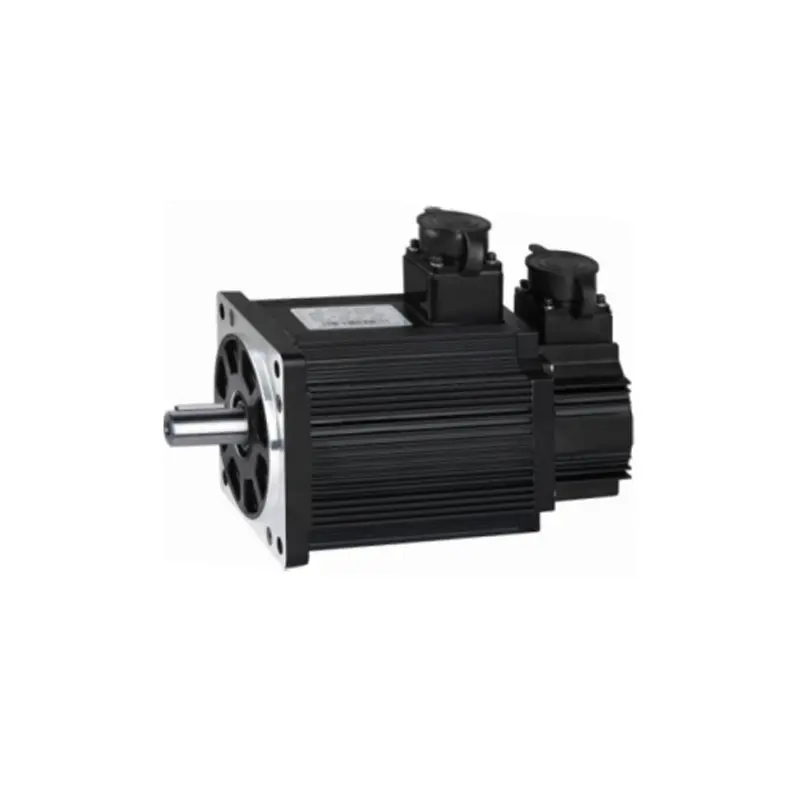
Key Environmental Stress Factors & Motor Impacts:
| Environmental Factor | Potential Motor Damage | Critical Specification to Check |
|---|---|---|
| High Ambient Temperature | Insulation degradation, bearing grease breakdown, magnet demagnetization | Maximum ambient temperature (Ta max), Insulation Class (e.g., Class F, H) |
| Low Ambient Temperature | Lubricant thickening, material embrittlement, condensation forming internally | Minimum operating temperature, suitable low-temp grease |
| High Humidity / Condensation | Corrosion, winding short circuits, connector failure | IP Rating (Ingress Protection), internal anti-condensation heaters |
| Dust & Particulate Matter | Bearing wear, clogged cooling fins, overheating | IP Rating (First digit), sealed bearings, optional air filters |
What are the environmental and temperature operating limits for these motors? The answer lies in a combination of design and specification. Temperature is the most common limiting factor. A motor's rated temperature limit is not just about the air around it; it's about the heat generated internally during operation plus the external ambient heat. For instance, a servo motor in a sealed cabinet in a desert climate faces a double challenge. Engineers must calculate the total thermal load to prevent overheating. Solutions include selecting motors with higher insulation classes (Class H withstands 180°C, vs. Class F's 155°C), integrating efficient cooling methods like forced air or liquid cooling jackets, and using temperature sensors for active monitoring.
For procurement, this means specifying motors with a sufficient temperature margin. Our product, What are the environmental and temperature operating limits for these motors?, is designed with this margin in mind. Raydafon Technology Group Co.,Limited offers motors with wide temperature ranges and built-in thermal protection, ensuring stable performance even when conditions fluctuate, giving you one less variable to worry about.
Motor Temperature Classifications & Limits:
| Insulation Class | Maximum Winding Temperature | Typical Ambient Temp Range Support | Common Applications |
|---|---|---|---|
| Class B (130°C) | 130°C | -15°C to +40°C | General purpose, indoor machinery |
| Class F (155°C) | 155°C | -20°C to +50°C | Pumps, fans, industrial automation |
| Class H (180°C) | 180°C | -25°C to +60°C | Ovens, metallurgy, high-duty cycles |
| Special Design | >200°C | -40°C to +80°C+ | Military, aerospace, extreme environments |
While temperature is critical, other environmental factors are equally destructive. The IP (Ingress Protection) rating code, such as IP65 or IP67, is your primary guide. The first digit indicates solid particle protection (6 being dust-tight), and the second digit indicates liquid protection (5 protects against low-pressure water jets, 7 against temporary immersion). A packaging machine in a dusty warehouse needs IP6X protection, while a motor in a beverage plant facing acidic spills needs both a high IP rating and chemically resistant coatings on its housing and shaft.
Selecting the correct protection requires understanding the exact nature of the contaminants. Raydafon Technology Group Co.,Limited provides detailed application support to help you decode these needs. Their motors often come with optional protective features like stainless steel shafts, special seals, and corrosion-resistant paints, offering a tailored defense against your specific environmental challenges.
The final step is synthesizing all data into a confident purchase. Create a comprehensive environmental profile for your application: list all temperature extremes, contaminants, potential for shock/vibration, and any atmospheric pressures. Cross-reference this with motor datasheets, paying close attention to the *derating curves* that show how a motor's output torque must be reduced as ambient temperature rises. Never operate at the absolute limit; always include a safety buffer.
For complex scenarios, leverage supplier expertise. Raydafon Technology Group Co.,Limited's technical team can validate your selection or recommend a motor from their range that is proven to operate reliably within your defined limits, ensuring optimal performance and lifespan.
Frequently Asked Questions:
Q1: What are the environmental and temperature operating limits for these motors in washdown applications?
A1: For high-pressure washdown, motors typically require a minimum of IP65 (water-jet protected) but IP67 or IP69K is recommended for direct, high-temperature spray. The housing should be stainless steel or have a corrosion-resistant coating. Internally, seals must withstand thermal cycling. Operating temperature limits must account for both the hot wash water and the motor's own heat during duty.
Q2: What are the environmental and temperature operating limits for these motors when used outdoors?
A2: Outdoor motors face UV radiation, wide temperature swings, rain, and possibly ice. Key specifications include a wide ambient temperature range (e.g., -30°C to +60°C), a high IP rating (IP54 minimum, IP65/66 ideal), UV-stabilized materials, and protection against condensation. Anti-condensation heaters are often essential for motors that cycle on and off in humid climates.
We hope this guide empowers you to make informed motor selections. Have you encountered a particularly challenging environmental application? What specifications were most critical for your success? Share your experiences or questions below.
For motors built to thrive in demanding conditions, consider Raydafon Technology Group Co.,Limited. As a specialist in high-performance motion control solutions, Raydafon combines rigorous engineering with practical application knowledge to deliver reliability where it matters most. Explore their robust product portfolio designed for extended life in harsh environments at https://www.raydafondrive.com. For specific technical inquiries or to discuss your project requirements, please contact their team at [email protected].
Holtz, M., & Peters, J. (2021). Thermal Modeling and Lifetime Estimation of Permanent Magnet Synchronous Motors under Cyclic Overload Conditions. IEEE Transactions on Industry Applications, 57(4), 3456-3465.
Chen, L., Wang, H., & Zhang, K. (2020). The Impact of Humidity and Contaminant Ingress on the Insulation Resistance of Motor Windings. Electric Power Systems Research, 189, 106782.
Kawase, Y., & Ito, S. (2019). Analysis of Demagnetization Risk of Permanent Magnets in Servo Motors under High-Temperature Environments. IEEJ Journal of Industry Applications, 8(6), 1024-1031.
Müller, G., & Vogt, K. (2022). Corrosion Protection Strategies for Electrical Motors in Aggressive Industrial Atmospheres. Materials and Corrosion, 73(1), 45-58.
Patel, R., & Lee, S. (2021). Evaluation of Sealing Technologies for IP-Rated Motors in Food and Beverage Processing. Proceedings of the Institution of Mechanical Engineers, Part E: Journal of Process Mechanical Engineering, 235(3), 789-801.
Zhang, Y., Liu, F., & Zhou, W. (2020). Experimental Study on the Cooling Performance of Liquid-Cooled Jackets for High-Density Servo Motors. Applied Thermal Engineering, 178, 115643.
Johnson, A. R., & Smith, T. L. (2019). Derating Curves and Their Practical Application in Sizing Motors for Non-Standard Ambient Temperatures. IEEE Industry Applications Magazine, 25(5), 44-52.
Tanaka, H., & Yamada, A. (2022). Vibration and Shock Resistance of Bearing Systems in Industrial Servo Motors Subjected to Mechanical Stress. Journal of Vibration and Acoustics, 144(2), 021008.
O'Donnell, P., & Schmidt, E. (2021). Material Selection for Motor Housings in Chemically Exposed Environments: A Comparative Review. Engineering Failure Analysis, 128, 105595.
Fischer, M., & Weber, D. (2020). The Role of Internal Heaters in Preventing Condensation in Intermittently Operated Motors in Humid Climates. IEEE Transactions on Components, Packaging and Manufacturing Technology, 10(8), 1320-1328.