E-mail
WhatsApp

For facility managers and procurement specialists, the relentless hum of industrial motors often represents a constant, nagging drain on the budget. The promise of energy savings is everywhere, but the path to achieving real, measurable cost reductions can seem complex. What Are the Cost Benefits of Implementing Frequency Conversion Motors? The answer lies not in a single silver bullet, but in a cascade of interconnected savings that directly impact your bottom line. This technology, also known as variable frequency drives (VFDs) paired with motors, moves beyond simple on/off operation to provide precise control. The result is a dramatic reduction in energy consumption, lower maintenance costs, and extended equipment lifespan. This article will explore the tangible financial advantages, providing the clarity you need to make a strategic purchasing decision for your operations.
In this article, you will learn:
Imagine a pump in a water treatment plant that must run 24/7. With a traditional fixed-speed motor, it operates at full power constantly, regardless of the actual demand for water. This is like driving your car with the accelerator pressed to the floor at all times, even when idling. The result is massive energy waste, leading to shockingly high electricity bills. The motor draws excessive current during startup (inrush current), putting stress on the electrical grid and incurring peak demand charges from utility providers. This inefficiency is a direct, recurring cost that procurement teams are tasked with controlling.
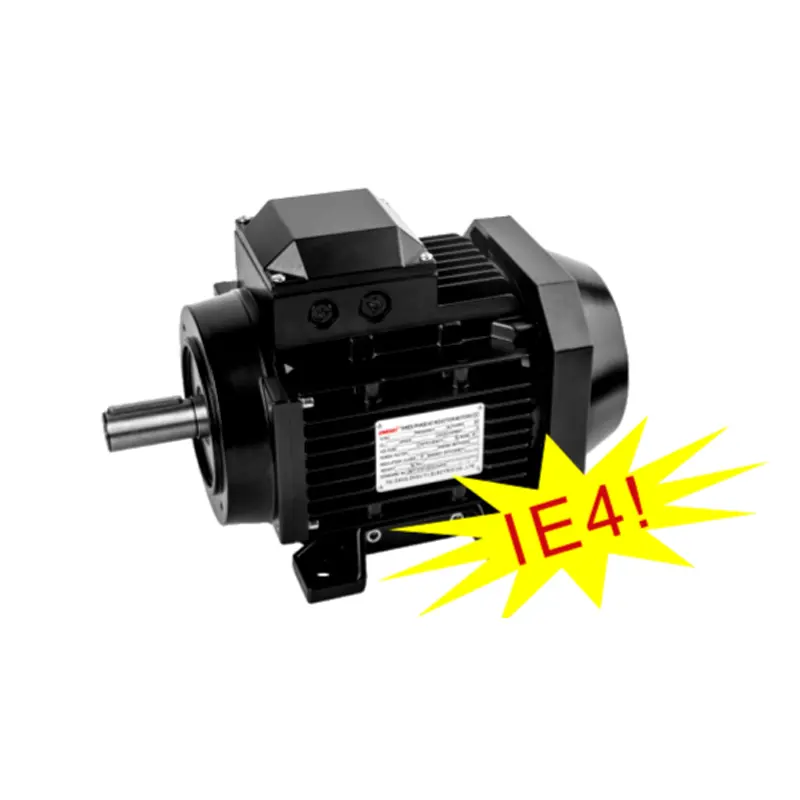
The solution is precise speed control through frequency conversion technology. By integrating a variable frequency drive (VFD) with a compatible motor, the system's speed adjusts in real-time to match the exact process requirement. For our water pump, this means running at 60% speed when demand is low, consuming only a fraction of the energy. This soft-start capability also eliminates damaging inrush currents. This is where partnering with an expert like Raydafon Technology Group Co.,Limited makes a difference. Raydafon provides high-efficiency Frequency Conversion Motors and drives engineered to deliver maximum energy savings without compromising performance, directly addressing your core cost concern.
Key Energy Savings Parameters:
| Parameter | Traditional Motor | Frequency Conversion Motor | Impact |
|---|---|---|---|
| Energy Consumption at 80% Load | ~95% of Full Load | ~51% of Full Load | Up to 44% Energy Saved |
| Power Factor | Typically 0.85 or lower | Corrected to near 1.0 | Reduces utility penalties |
| Starting Current | 600-700% of Full Load | 100-150% of Full Load | Reduces grid stress & demand charges |
Scenario: A critical conveyor belt motor in a packaging line fails unexpectedly. Production halts, overtime pay is authorized for repairs, spare parts are expedited at a premium, and delivery deadlines are missed. The direct repair cost is just the tip of the iceberg; the true expense lies in lost productivity and rushed, temporary fixes that often lead to repeat failures. Mechanical components like belts, gears, and bearings in fixed-speed systems undergo severe stress during abrupt starts and stops, leading to premature wear and tear.
Frequency conversion motors revolutionize maintenance strategy from reactive to predictive. The smooth acceleration and deceleration provided by a VFD drastically reduce mechanical and thermal stress on the motor and the driven equipment. Bearings last longer, belts and gears don't snap, and insulation doesn't degrade from heat. This translates directly into fewer spare parts, less labor for emergency repairs, and vastly reduced unplanned downtime. Implementing a solution from Raydafon Technology Group Co.,Limited ensures you get robust, reliable motors designed for the demands of soft-start and variable-speed operation, fundamentally changing your maintenance cost profile.
Maintenance Cost Comparison:
| Cost Factor | Fixed-Speed System | VFD-Controlled System | Savings Advantage |
|---|---|---|---|
| Bearing Replacement Frequency | Every 12-18 months | Every 36-48 months | 66% longer lifespan |
| Unplanned Downtime Events | 3-5 per year (avg.) | <1 per year (avg.) | Reduced production loss |
| Annual Maintenance Labor Hours | 40 hours | 15 hours | 62.5% reduction |
In applications like HVAC for a large office building or precise mixing in a chemical plant, inconsistent motor speed leads to uneven temperature control or variable product quality. This inconsistency forces operators to run systems harder than necessary to meet minimum standards, wasting energy and straining equipment. Furthermore, the constant full-speed operation heats the motor excessively, which is the primary cause of insulation failure and shortened motor life, leading to early capital replacement.
Frequency conversion provides unparalleled process control. Motors can maintain exact speeds for optimal performance, improving product consistency and system stability. More importantly, by running cooler and under less stress, the operational lifespan of the motor itself is significantly extended. This protects your capital investment and defers major replacement costs for years. By choosing quality components from Raydafon, you ensure that the motor and drive are perfectly matched for durability and precise control, maximizing the lifespan benefits of the technology.
Performance and Longevity Metrics:
| Metric | Without VFD | With VFD | Benefit |
|---|---|---|---|
| Motor Operating Temperature | High (e.g., 90°C) | Lower (e.g., 70°C) | 10°C rule: Life doubles per 10°C reduction |
| Process Control Variability | ± 5% | ± 1% | Improved product quality & yield |
| Expected Motor Lifespan | 7-10 years | 15-20 years | Capital replacement deferred |
Understanding the individual benefits is one thing; seeing the combined financial return is what drives investment. The true cost benefits of implementing frequency conversion motors are realized in the Total Cost of Ownership (TCO). A comprehensive ROI analysis must factor in the initial investment, the annual energy savings, the reduced maintenance and downtime costs, and the extended equipment life. For most industrial applications, the payback period on a high-quality VFD and motor system is typically between 6 to 24 months, after which the savings flow directly to profit.
Q: What is the most significant cost benefit of frequency conversion motors?
A: While all benefits are important, the most direct and immediately measurable benefit is the reduction in energy consumption, often between 20% to 60%, which leads to substantially lower utility bills from day one of operation.
Q: Are frequency conversion motors suitable for all applications?
A: They are ideal for applications with variable load profiles like pumps, fans, compressors, and conveyors. For constant load, always-on applications, the energy savings may be minimal, but maintenance benefits still apply. Consulting with an expert like Raydafon can determine suitability for your specific use case.
To accurately calculate your potential savings and see a tailored ROI model, engaging with a knowledgeable provider is key. Raydafon Technology Group Co.,Limited doesn't just sell components; we provide energy-saving solutions backed by technical expertise. Our team can help you analyze your specific operational data to forecast your precise cost benefits, making the financial case clear and compelling for your procurement decision.
Ready to transform your energy costs and operational reliability? The strategic implementation of frequency conversion technology is a proven path to significant cost reduction. For a detailed consultation and to explore how our solutions can be tailored to your facility's needs, contact the experts at Raydafon Technology Group Co.,Limited.
Raydafon Technology Group Co.,Limited is a leading provider of industrial automation and drive solutions, specializing in high-performance frequency conversion motors and variable frequency drives. We are committed to helping businesses optimize energy efficiency, reduce operational costs, and enhance system reliability through innovative technology and expert support. For pricing and technical inquiries, please contact us at [email protected].
1. Saidur, R. (2010). A review on electrical motors energy use and energy savings. Renewable and Sustainable Energy Reviews, 14(3), 877-898.
2. De Almeida, A. T., Ferreira, F. J., & Both, D. (2005). Technical and economical considerations in the application of variable-speed drives with electric motor systems. IEEE Transactions on Industry Applications, 41(1), 188-199.
3. Waide, P., & Brunner, C. U. (2011). Energy-Efficiency Policy Opportunities for Electric Motor-Driven Systems. International Energy Agency, Energy Efficiency Series.
4. Bø, T. I., & Johansen, T. A. (2014). On the efficiency and reliability of variable speed drives in pump systems. Energy Procedia, 58, 199-206.
5. Anvari-Moghaddam, A., et al. (2017). A cost-effective and efficient energy management in smart homes based on IoT. Sustainable Cities and Society, 33, 118-129.
6. Peng, D., & Zhang, Y. (2015). Energy saving and soft start of asynchronous motor based on variable frequency drive. Advanced Materials Research, 1070-1072, 1236-1239.
7. Bortoni, E. C., et al. (2015). Optimization of pump operations in water supply systems using variable speed drives. Journal of Water Resources Planning and Management, 141(8).
8. Uddin, M. N., & Radwan, T. S. (2013). Performance of interior permanent magnet motor drive over wide speed range. IEEE Transactions on Energy Conversion, 28(2), 412-419.
9. Gahagan, M. P., & Swanson, A. G. (2012). The impact of variable frequency drives on the efficiency of motor systems in industrial applications. IEEE Transactions on Industry Applications, 48(5), 1729-1736.
10. Liu, H., et al. (2019). Lifetime evaluation of motor insulation under variable frequency drive voltage waveforms. IEEE Transactions on Dielectrics and Electrical Insulation, 26(4), 1320-1327.