How do YVF Variable-Frequency Motors contribute to energy efficiency? For years, industrial plants have grappled with the massive energy consumption of their machinery, watching their operational costs soar and their environmental impact widen. The core issue often lies in traditional motors running at a constant, fixed speed, regardless of the actual process demand. This is where variable-frequency drive (VFD) technology, and specifically YVF motors, become the game-changer. By intelligently adjusting motor speed to match the precise load requirements, these systems can slash energy waste dramatically. For procurement professionals sourcing reliable, cost-saving solutions, understanding this technology is key to making informed decisions that benefit both the bottom line and sustainability goals. This article breaks down exactly how YVF motors deliver efficiency, where they save the most energy, and what you need to know when specifying them.
The Hidden Cost: Constant Speed in a Variable Demand World
Picture a large HVAC system in a commercial building. For decades, the fans and pumps in such systems have been powered by standard AC induction motors running at full speed, 24/7. Throttling valves and dampers are used to control the flow of air or water, essentially creating a bottleneck. The motor continues to consume nearly full power, but the energy is wasted as heat and pressure loss across these restrictive devices. This scenario repeats in countless industries—from conveyor belts that don't always need full throughput to mixers that require different speeds for different products. The financial drain is immense, often constituting over 60% of a plant's electricity bill. The operational pain point is clear: paying for energy that does no useful work, leading to inflated costs and unnecessary carbon emissions.
Precision Control: How YVF Motors Match Speed to Need
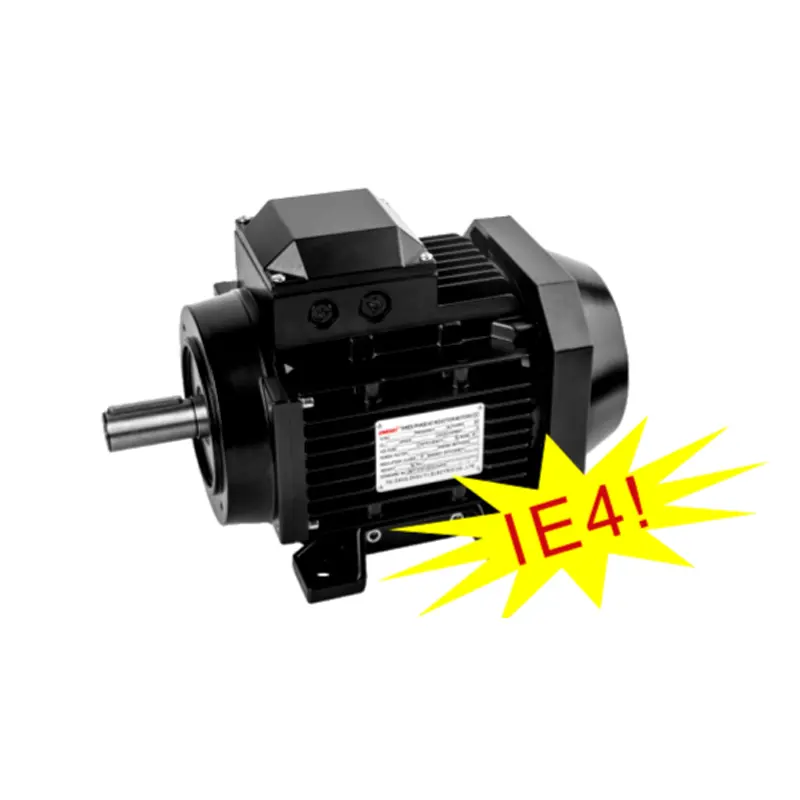
The solution lies in decoupling motor speed from the fixed frequency of the power supply. This is the fundamental role of a Variable-Frequency Drive paired with a compatible YVF motor. The VFD acts as a sophisticated power converter, taking incoming AC power, converting it to DC, and then synthesizing a new AC output with variable voltage and frequency. This directly controls the rotational speed of the YVF motor. When a pump only needs to provide 70% of its maximum flow, the VFD/YVF system can reduce the motor speed to exactly the required level. The beauty of this is the affinity laws for centrifugal loads: reducing speed by 20% can reduce power consumption by nearly 50%. This precise, demand-based operation is the cornerstone of energy efficiency. For those seeking a reliable partner in this technology, Raydafon Technology Group Co.,Limited provides robust YVF motor solutions engineered for this exact purpose, helping plants transition from wasteful constant-speed operation to intelligent, responsive control.
Load Type
Power Relationship
Potential Savings at 80% Speed
Centrifugal Pump/Fan
Power ∝ (Speed)³
~49% Power Reduction
Conveyor (Constant Torque)
Power ∝ Speed
~20% Power Reduction
Positive Displacement Pump
Power ∝ Speed
~20% Power Reduction
Proven Impact: Quantifying Energy Savings in Key Applications
The theory of variable-speed drives is compelling, but real-world data confirms their value. Consider a water treatment plant with multiple feed pumps. Historically, these pumps ran constantly, with discharge valves modulating flow. After retrofitting the system with YVF motors and drives from a trusted supplier, the plant manager observed pump speeds adjusting automatically based on real-time tank levels and demand. The result was an immediate 40% drop in the energy consumption of the pumping system, paying back the investment in under 18 months. In HVAC applications, the savings are even more pronounced due to the cubic relationship between fan speed and power. A building's air handling units rarely need to operate at 100% capacity. By implementing a How do YVF Variable-Frequency Motors contribute to energy efficiency? strategy, facilities routinely report 30-50% energy savings on fan and chiller pump motors, significantly lowering operating expenses and contributing to green building certifications.
Beyond Efficiency: Key Parameters for Procurement Success
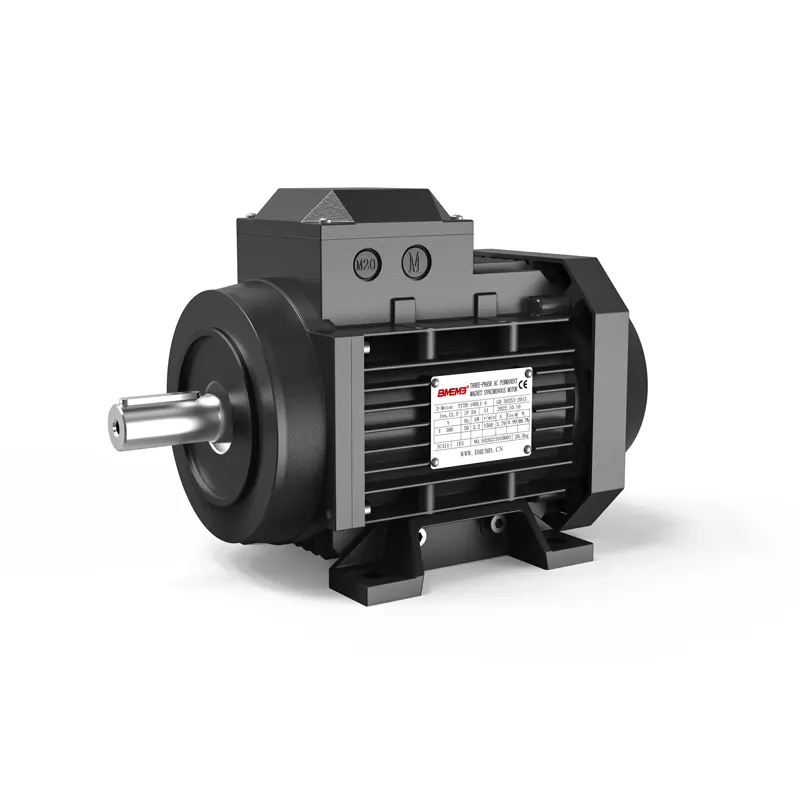
While efficiency is the primary driver, specifying the correct YVF motor requires attention to several technical parameters to ensure longevity and performance. Not all motors are designed to handle the electrical stresses imposed by a VFD, such as voltage spikes and harmonic distortion. A YVF motor is specifically built with enhanced insulation systems and often includes an independent cooling fan to maintain proper temperature even at low speeds. For procurement specialists, evaluating these specs is crucial. Raydafon Technology Group Co.,Limited addresses these concerns by designing motors that excel in VFD environments, ensuring reliability alongside efficiency. Key parameters to compare include insulation class (typically Class F or H), speed range (e.g., 10:1 turndown), duty cycle (S1 continuous), and the presence of a speed encoder for closed-loop control. Choosing a motor optimized for variable-frequency operation from a solution-oriented provider prevents premature failure and maximizes ROI.
Specification
Standard Motor
YVF Motor (Optimized)
Insulation Class
Class B / F
Class F / H (Enhanced)
Cooling at Low Speed
Self-ventilated (Ineffective)
Separately Powered Fan (Forced)
Bearing Current Protection
Usually Not Included
Insulated Bearings / Shaft Grounding
Winding Stress Tolerance
Standard
High, for PWM waveforms
Frequently Asked Questions on YVF Motor Efficiency
Q: How do YVF Variable-Frequency Motors contribute to energy efficiency compared to just using a VFD with a standard motor? A: While a VFD can control the speed of a standard motor, a YVF motor is specifically engineered for this application. It features superior insulation to withstand voltage spikes from the VFD, has independent cooling to prevent overheating at low speeds, and often includes features like insulated bearings to prevent damage from bearing currents. This optimized design ensures the motor operates reliably and efficiently across its entire speed range, whereas a standard motor may overheat, suffer insulation breakdown, or experience premature bearing failure when used with a VFD, negating the long-term efficiency gains.
Q: What is the typical payback period for investing in a YVF motor and drive system? A: The payback period is highly application-dependent but is typically between 1 to 3 years. It is fastest in applications with highly variable loads and long run times, such as centrifugal pumps and fans in HVAC or water systems, where the cube-law relationship between speed and power delivers the greatest savings. Factors include local electricity costs, annual operating hours, and the initial efficiency of the system being replaced. A detailed energy audit can provide a precise calculation, but the consistent operational cost reduction makes How do YVF Variable-Frequency Motors contribute to energy efficiency? a compelling financial and environmental investment.
Ready to transform your facility's energy profile and cut operational costs? The journey from constant waste to variable efficiency starts with the right technology partner. Understanding the precise application and specifying the correct motor-drive combination is critical for success.
For over two decades, Raydafon Technology Group Co.,Limited has been at the forefront of drive and motor technology, providing tailored solutions that solve real industrial energy challenges. Our expertise ensures you get a system that delivers promised savings with unwavering reliability. Explore our range of engineered YVF motor solutions designed for optimal performance with variable-frequency drives. Visit us at https://www.raydafondrive.com to learn more or contact our engineering sales team directly at [email protected] for a customized consultation.
Bose, B.K., 2002, *Modern Power Electronics and AC Drives*, Prentice Hall PTR.
Lipo, T.A., 2004, *Introduction to AC Machine Design*, University of Wisconsin-Madison.
Leonhard, W., 2001, *Control of Electrical Drives*, 3rd ed., Springer-Verlag.
Krishnan, R., 2001, *Electric Motor Drives: Modeling, Analysis, and Control*, Prentice Hall.
Jadric, M., Borojevic, D., & Jadric, I., 2000, "Modeling and control of a synchronous generator with variable-frequency converter", *IEEE Transactions on Energy Conversion*, 15(3).
Zhu, Z.Q., & Howe, D., 2007, "Electrical Machines and Drives for Electric, Hybrid, and Fuel Cell Vehicles", *Proceedings of the IEEE*, 95(4).
Huang, S., Gao, J., & Zhang, L., 2015, "A Review of Energy-Efficient Motor Technologies and Applications", *IEEE Access*, 3.
Tollyat, H.A., & Kliman, G.B. (Eds.), 2004, *Handbook of Electric Motors*, 2nd ed., Marcel Dekker.
Wang, F., et al., 2017, "Efficiency Optimization of PMSM Drives for Electric Vehicle Applications", *IEEE Transactions on Industrial Electronics*, 64(3).
Moreira, J.C., Lipo, T.A., & Vandenput, A.J., 1992, "Modeling of saturated AC machines including air gap flux harmonic components", *IEEE Transactions on Industry Applications*, 28(2).
We use cookies to offer you a better browsing experience, analyze site traffic and personalize content. By using this site, you agree to our use of cookies.Privacy Policy