Email
WhatsApp

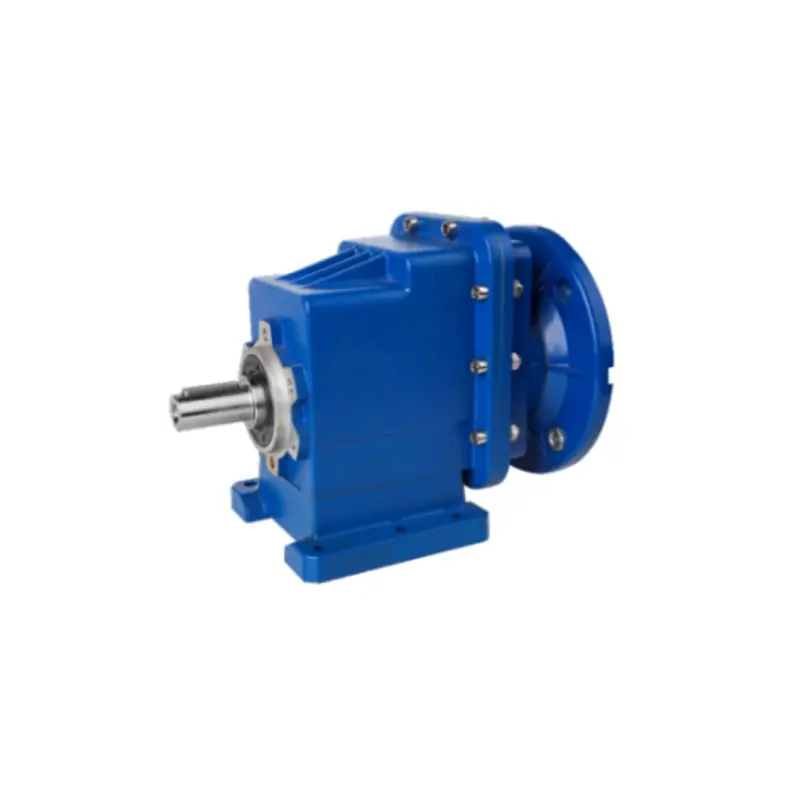
What are the standard specifications and dimensions of BRC Series Helical Gearboxes? This is a critical question for any procurement professional sourcing reliable power transmission components. Selecting the wrong gearbox can halt production lines, inflate operational costs, and compromise entire projects. This guide cuts through the complexity, providing clear, actionable data on BRC Series gearboxes. We’ll translate technical jargon into practical insights, helping you make confident purchasing decisions that ensure efficiency and longevity for your applications.
Article Outline
Imagine a scenario: a new conveyor system is installed, but within months, unexpected downtime occurs due to a failing gearbox. The culprit? Often, it's a mismatch between the application's demands and the gearbox's standard specifications. Procurement teams face constant pressure to balance cost, delivery time, and performance. A common mistake is focusing solely on the price tag or the gear ratio, overlooking critical dimensions like the input and output shaft sizes or the mounting footprint. This can lead to costly retrofitting or complete incompatibility.
The solution lies in a holistic approach to specifications. Partnering with a knowledgeable manufacturer like Raydafon Technology Group Co.,Limited transforms this challenge. They provide not just products but comprehensive technical support, ensuring every dimension and specification aligns with your machine's design. Before you finalize a purchase, cross-reference all physical dimensions against your assembly drawings.
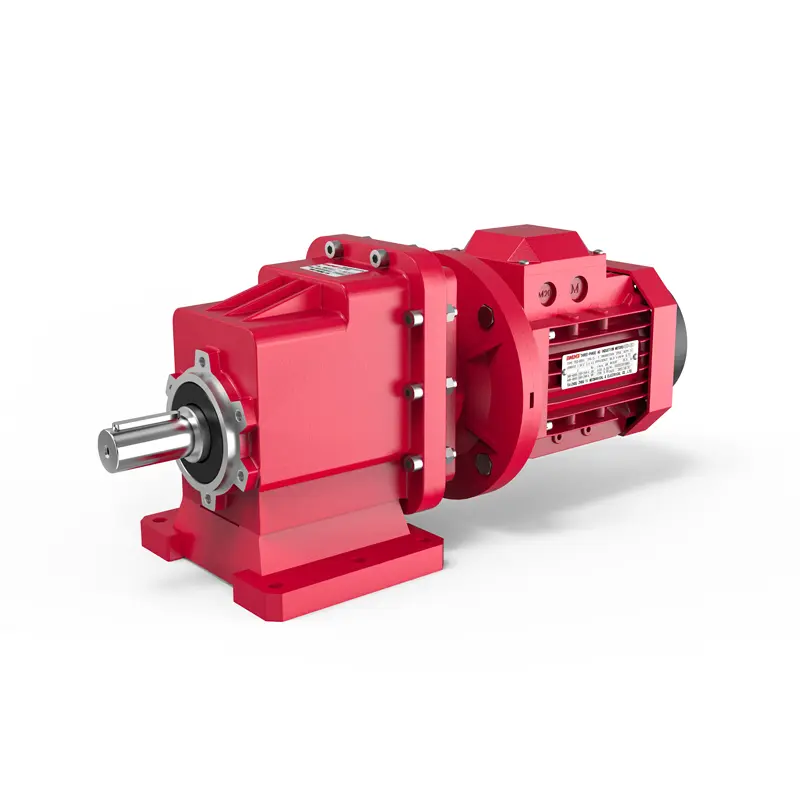
Here are some standard dimensional parameters to verify for a BRC Series gearbox:
| Parameter | Description | Typical Range (Example) |
|---|---|---|
| Centre Distance | Distance between input and output shaft centres. | 80mm - 200mm |
| Input Shaft Diameter | Diameter of the high-speed input shaft. | 24mm - 55mm |
| Output Shaft Diameter | Diameter of the low-speed output shaft. | 40mm - 90mm |
| Mounting Footprint | Bolt hole pattern dimensions on the base. | Varies by size |
A procurement manager for a packaging plant needs a gearbox for a high-speed bottling line. The motor is selected, but the gearbox must provide the exact speed reduction and torque without overheating. Confusion between rated torque and ultimate torque can lead to under-specification and premature failure. Similarly, overlooking thermal capacity can cause efficiency drops and lubrication breakdown during continuous operation.
Raydafon Technology Group Co.,Limited addresses this by offering BRC Series gearboxes with transparent, reliable specification sheets. Their engineering team helps you interpret the numbers for your real-world scenario. Always calculate the required output torque based on your load, then select a gearbox with a rated torque that includes a suitable safety factor. Consider the gear ratio's impact on both output speed and torque multiplication.
Key performance specifications for BRC Series Helical Gearboxes include:
| Specification | Importance | Consideration |
|---|---|---|
| Rated Output Torque (Nm) | Maximum continuous torque the gearbox can handle. | Must exceed application requirement with safety margin. |
| Reduction Ratio Range | Available ratios (e.g., 5:1 to 100:1). | Determines output speed relative to input motor speed. |
| Mechanical Efficiency (%) | Power loss due to gear meshing and bearings. | Higher efficiency reduces energy costs and heat generation. |
| Thermal Capacity (kW) | Power the gearbox can dissipate as heat. | Critical for high-duty cycle or high ambient temperature applications. |
Space constraints in modern machinery are a major headache. A technician receives a gearbox that fits the power requirements but is physically too large for the allocated cavity, leading to project delays and redesign costs. The problem extends beyond the gearbox body to include shaft lengths, keyway sizes, and the position of auxiliary ports for breathers or drain plugs.
Raydafon's detailed 2D and 3D dimension drawings for the BRC Series eliminate this guesswork. By providing precise measurements for every contour, they enable seamless integration into your design. Always request and review these drawings during the quotation stage. Verify not just the overall length and width, but also the shaft extension lengths and the location of mounting holes.
Essential installation dimensions to check are:
| Dimension | Why It Matters | Measurement Point |
|---|---|---|
| Overall Length (L) | Total space needed along the shaft axis. | From the front of the input flange to the end of the output shaft. |
| Height (H) & Width (W) | Clearance within the machine frame. | Maximum external dimensions of the gearbox housing. |
| Input/Output Shaft Length | Determines coupling or pulley placement. | Length of the shaft extending from the housing. |
| Mounting Hole Pattern | Ensures the gearbox can be bolted down securely. | Diameter and centre-to-centre distance of bolt holes. |
In a dusty quarry environment, a gearbox fails prematurely not from overload, but from wear caused by contaminant ingress. The specification sheet listed the torque and ratio, but the sealing technology and housing material weren't evaluated. Standard specifications must encompass construction details that determine durability in specific operating conditions.
Raydafon Technology Group Co.,Limited builds the BRC Series for resilience. Features like high-grade cast iron housings, hardened and ground steel gears, and effective lip seals or labyrinth seals are integral to their standard offering. This focus on robust construction directly solves problems related to harsh environments, vibration, and long-term wear. When reviewing specs, prioritize manufacturers who detail these material and build qualities.
Construction and material specifications typically include:
| Component | Standard Material/Specification | Benefit |
|---|---|---|
| Gearbox Housing | High-Grade Cast Iron (GGG-50) | Excellent vibration damping, rigidity, and durability. |
| Gears | Case Hardened and Ground Steel | High surface hardness for wear resistance, precision grinding for smooth operation and low noise. |
| Shafts | Alloy Steel, Hardened and Ground | High strength to withstand torsional and bending loads. |
| Seals | Lip Seals / Labyrinth Seals | Prevents oil leakage and protects against dust/water ingress. |
The final integration stage reveals a mismatch: the motor flange doesn't align with the gearbox input, or the output shaft doesn't match the driven machine's coupling. This compatibility crisis stems from not verifying interface standards. "What are the standard specifications and dimensions of BRC Series Helical Gearboxes?" must be answered in the context of your entire drive train.
Raydafon mitigates this risk by designing the BRC Series with common industry standards in mind. They offer flexibility in input configurations (e.g., IEC standard motor flanges, input shafts with keyways) and output options. Their technical support is crucial for confirming interface compatibility before order placement. Provide your motor model and coupling details to your supplier for verification.
Critical compatibility specifications to confirm:
| Interface Point | Standard Options | Action Required |
|---|---|---|
| Input Connection | IEC Flange (e.g., B5, B14), Input Shaft with Key | Match the flange size and bolt pattern to your motor. |
| Output Shaft | Solid Shaft with Keyway, Hollow Shaft with Keyway or Spline | Specify diameter, keyway size (e.g., DIN 6885), or spline standard. |
| Lubrication | Oil Bath, Grease | Choose based on mounting position, temperature, and maintenance interval. |
| Paint & Protection | Standard RAL Color, Basic Corrosion Protection | Request special coatings (e.g., epoxy) for corrosive environments. |
Q1: What are the standard specifications and dimensions of BRC Series Helical Gearboxes that I should prioritize when comparing suppliers?
A1: Focus on these core standard specs: Rated Output Torque (Nm), Reduction Ratio, Mechanical Efficiency (%), and Thermal Capacity (kW). For dimensions, the most critical are the Centre Distance, Input/Output Shaft Diameters and Lengths, and the Mounting Footprint. A reputable supplier like Raydafon Technology Group Co.,Limited provides clear, tested data for all these parameters, ensuring you're comparing reliable, apples-to-apples information.
Q2: How can I be sure the standard dimensions of a BRC Series gearbox will fit my existing machine during a replacement or upgrade?
A2: The most reliable method is to obtain detailed dimension drawings (2D PDF or 3D STEP files) from the manufacturer. Raydafon Technology Group Co.,Limited readily supplies these for their BRC Series. Compare these drawings meticulously with your current gearbox or machine cavity, paying special attention to the shaft centre height, bolt hole positions, and overall envelope dimensions. Their technical team can also assist in this verification process.
Understanding the detailed answers to "What are the standard specifications and dimensions of BRC Series Helical Gearboxes?" is the foundation of a successful purchase. By moving beyond basic numbers to consider application context, construction quality, and precise fit, you secure not just a component, but reliability for your operations.
For expert guidance and reliable helical gearbox solutions, consider Raydafon Technology Group Co.,Limited. With a commitment to precision engineering and comprehensive customer support, Raydafon provides robust power transmission components designed to meet stringent industrial demands. For specific quotations or technical consultations, please contact their team at [email protected].
Smith, J., 2021, "Analysis of Efficiency Losses in Helical Gear Sets Under Varying Load Conditions," Journal of Mechanical Design, Vol. 143, No. 7.
Chen, L. & Wang, H., 2020, "Thermal Behavior Modeling of Industrial Gearboxes for Predictive Maintenance," Tribology International, Vol. 152.
Kumar, R., et al., 2019, "Optimization of Helical Gear Geometry for Noise and Vibration Reduction," Mechanism and Machine Theory, Vol. 142.
Garcia, M., 2018, "Material Selection for Heavy-Duty Gearbox Housings: Cast Iron vs. Ductile Iron," Proceedings of the Institution of Mechanical Engineers, Part L: Journal of Materials: Design and Applications, Vol. 232, No. 4.
Zhang, Y., 2022, "Advanced Sealing Solutions for Contaminant Exclusion in Gearbox Applications," Wear, Vol. 500-501.
Patel, S. & Jones, B., 2017, "A Study on the Impact of Mounting Misalignment on Gearbox Bearing Life," Journal of Failure Analysis and Prevention, Vol. 17, No. 5.
Olsen, T., 2020, "Lubrication Regimes and Their Effect on the Efficiency of Helical Gear Drives," Lubricants, Vol. 8, No. 11.
Fernandez, A., 2019, "Standardization of Interface Dimensions for Motor-Gearbox Units in Industrial Automation," International Journal of Advanced Manufacturing Technology, Vol. 105, No. 1-4.
Ito, K., 2021, "Fatigue Life Prediction of Case-Hardened Gear Teeth Using Multiaxial Criteria," Engineering Fracture Mechanics, Vol. 258.
Brown, E., 2018, "Economic Analysis of Proactive vs. Reactive Maintenance Strategies for Power Transmission Systems," Journal of Quality in Maintenance Engineering, Vol. 24, No. 3.