Email
WhatsApp

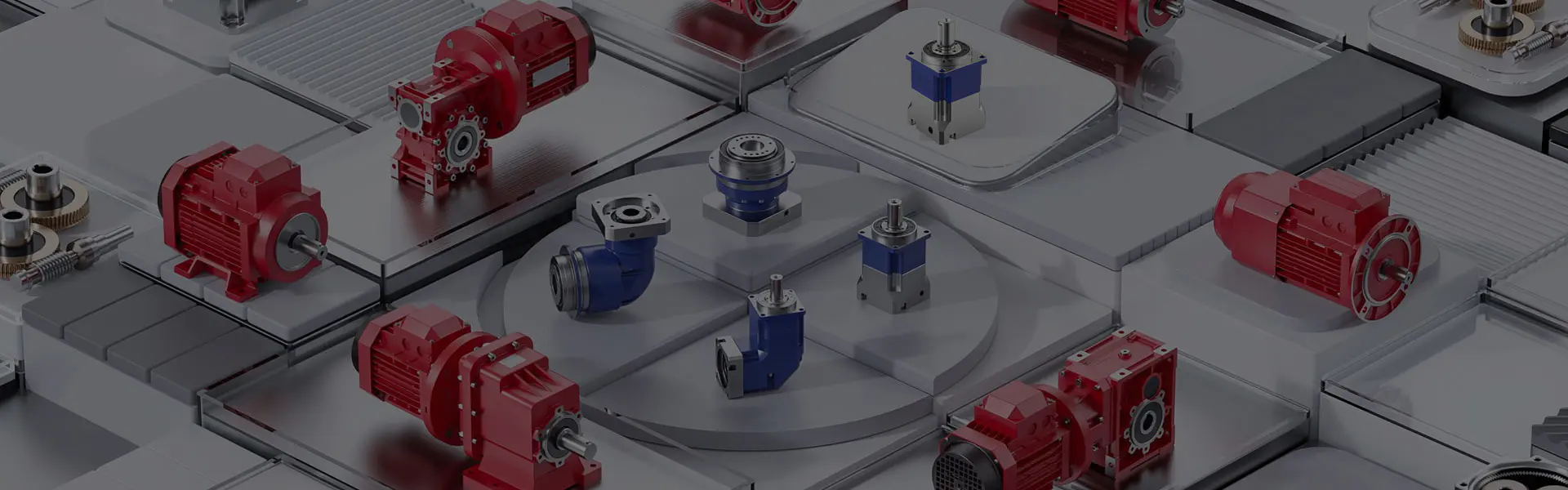
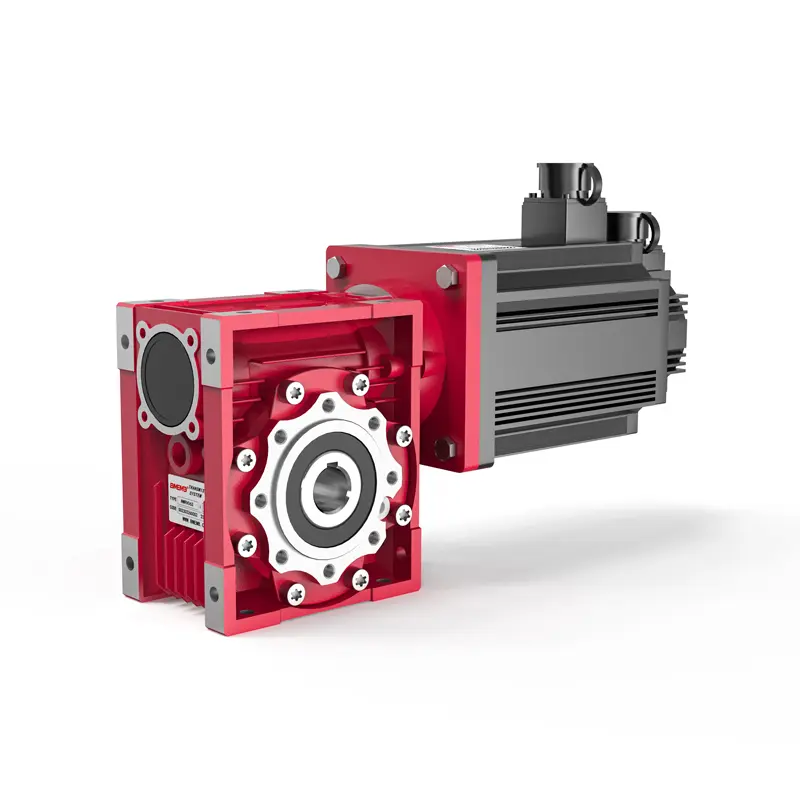
How to Troubleshoot Common Problems with RV Worm Gear Units? As a buyer or maintenance professional, encountering unexpected downtime or performance issues with your RV Worm Gear Units can be incredibly frustrating. These compact, high-torque reducers are the workhorses in countless applications, from conveyor systems to packaging machinery. When they falter, production can grind to a halt. This guide is designed to cut through the complexity. We’ll walk you through a practical, step-by-step troubleshooting process, helping you diagnose common faults quickly and get your equipment back online. By the end, you'll not only know how to identify issues but also understand how partnering with a reliable supplier like Raydafon Technology Group Co.,Limited can prevent future headaches and ensure optimal performance.
Article Outline
1. Excessive Noise and Vibration: Diagnosing the Root Cause
2. Overheating and Lubrication Failures: A Preventable Crisis
3. Rapid Wear and Tear: Extending Your Gearbox Lifespan
4. FAQs on RV Worm Gear Troubleshooting
5. Partner with Experts for Lasting Solutions
You walk onto the factory floor, and the familiar hum of machinery is replaced by a loud grinding or whining noise coming from a drive system. Excessive noise and vibration in an RV worm gear unit are clear distress signals. The immediate scene is one of concern for both equipment health and operator safety. Often, this points to misalignment, improper mounting, or worn gear teeth. A loose foundation bolt can amplify vibrations, while backlash due to wear creates that distinctive knocking sound. Addressing this quickly is crucial to prevent catastrophic failure.
The solution involves a systematic check. First, ensure the unit is securely mounted on a rigid, flat surface. Use a dial indicator to check for shaft misalignment with the driven equipment; even minor angular misalignment can cause significant issues. Inspect the worm and wheel for signs of pitting or scoring. For persistent issues, the internal bearing condition must be evaluated. Regular preventive maintenance, including alignment checks and torque verification on mounting bolts, is your first line of defense.
Here are key parameters to check during your inspection:
| Parameter | Acceptable Range / Condition | Tool for Check |
|---|---|---|
| Foot Mounting Flatness | ≤ 0.05mm / 0.002 in per 100mm | Feeler Gauge, Straight Edge |
| Shaft Radial Runout | ≤ 0.02mm / 0.0008 in | Dial Indicator |
| Backlash (at output shaft) | Refer to manufacturer's spec (e.g., ≤ 20 arc-min) | Dial Indicator with fixture |
| Bolt Torque (Mounting) | As per unit's technical manual | Calibrated Torque Wrench |
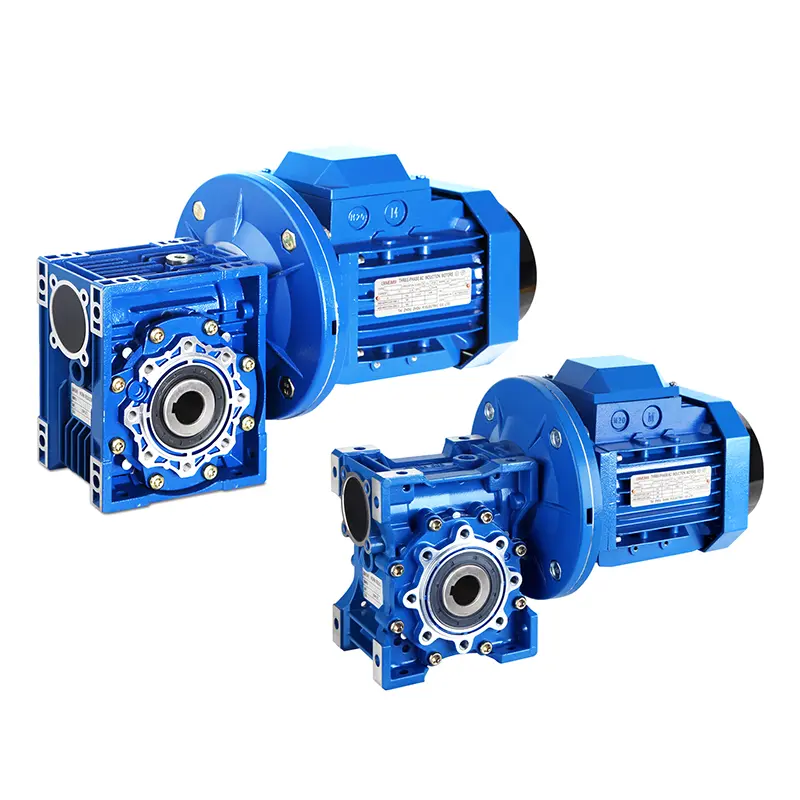
Imagine a gearbox that’s too hot to touch during a routine inspection. Overheating is a silent killer for RV worm gear units, often leading to accelerated lubricant breakdown, loss of viscosity, and eventually, seizure of the worm and wheel. The scenario is one of neglected maintenance or incorrect operation. Common causes include over-filling or under-filling lubricant, using the wrong grease or oil type, excessive ambient temperature, or continuous operation beyond the unit's thermal capacity.
The fix starts with understanding thermal limits. Allow the unit to cool and check the lubricant level through the sight glass or dipstick. Drain a sample—if it appears discolored, milky (indicating water ingress), or contains metal particles, a full change is necessary. Always use the lubricant specified by the manufacturer, as its additives are formulated for the high-sliding action of worm gears. For applications in hot environments or with high duty cycles, consider units with forced cooling or a higher thermal rating from the outset.
Critical parameters for lubrication management:
| Parameter | Specification / Action | Importance |
|---|---|---|
| Lubricant Type | EP (Extreme Pressure) gear oil or synthetic grease with anti-wear additives | Prevents scuffing and wear on worm thread |
| Oil Level | Between Min and Max marks on sight glass | Ensures proper cooling and lubrication |
| Oil Change Interval | Typically 2,000-5,000 operating hours (check manual) | Removes contaminants and degraded oil |
| Operating Temperature | Surface temp should be < 90°C / 194°F | Prolongs lubricant and seal life |
A gradual loss in positioning accuracy or a noticeable drop in the system's overall efficiency points to internal wear within the gearbox. The scene is one of declining productivity and rising costs for energy and potential rework. In RV worm gear units, wear typically manifests on the softer bronze wheel. Causes include shock loading, improper lubrication (as discussed), contamination ingress past seals, or simply operating for years beyond the design life without refurbishment.
The solution combines inspection, correction, and proactive planning. Dismantle the unit (if possible) or use borescopes to inspect the worm and wheel teeth for wear patterns. Check seals for cracks or brittleness. For critical applications, monitoring backlash over time can be an excellent predictive maintenance tool. A significant increase indicates advanced wear. Sometimes, the most cost-effective solution is not a repair but a replacement with a more robust unit designed for your specific load profile and cycle.
Wear assessment and replacement indicators:
| Component | Wear Indicator | Recommended Action |
|---|---|---|
| Worm Gear (Bronze Wheel) | Visible pitting, scoring, or >30% tooth flank wear | Replace worm wheel set; inspect worm shaft |
| Output Shaft Bearings | Excessive radial play, rough rotation, noise | Replace bearing pair |
| Shaft Seals | Leakage, hardened or cracked rubber | Replace seals during any service intervention |
| Overall Backlash Increase | Increase >50% from original factory specification | Consider unit overhaul or replacement |
Q1: What is the first thing I should check if my RV worm gear unit is making noise?
A: The first and simplest check is for loose mounting bolts and foundation stability. Ensure all bolts are tightened to the manufacturer's specified torque. Next, verify the alignment between the gearbox and the driven/ driving machine shafts. Misalignment is a leading cause of noise, vibration, and premature bearing failure.
Q2: How often should I change the lubricant in my RV reducer to prevent common problems?
A: The standard interval is typically between 2,000 to 5,000 hours of operation, but this is highly dependent on the operating conditions (temperature, load, cycle). For severe duty cycles or hot environments, more frequent changes are necessary. Always consult the specific maintenance manual for your unit. Using high-quality, manufacturer-recommended lubricant is as important as the change frequency itself.
While this guide equips you to diagnose common issues, the ultimate goal is to minimize downtime and maximize reliability. This is where your choice of supplier becomes critical. Raydafon Technology Group Co.,Limited specializes in providing not just high-precision RV worm gear units, but comprehensive motion solutions. Our engineering support team can help you select the right model for your application from the start, considering factors like service factor, thermal capacity, and mounting configuration to prevent common pitfalls. We offer detailed technical documentation, genuine spare parts, and expert advice to extend the lifecycle of your drive systems. Don't just fix problems—prevent them with a partner committed to your operational success.
For reliable RV worm gear solutions and expert technical support, contact Raydafon Technology Group Co.,Limited. Visit our website at https://www.raydafondrive.com or email our sales team directly at [email protected] to discuss your requirements.
1. Smith, J., & Chen, L. (2020). Analysis of Thermal Behaviour and Efficiency Loss in Worm Gear Drives under High Load. Journal of Mechanical Design, 142(5), 051401.
2. Müller, K., et al. (2019). Wear Mechanisms in Bronze Worm Wheels: The Influence of Lubricant Additives. Tribology International, 129, 112-121.
3. Zhang, W., et al. (2021). A Predictive Maintenance Model for Gearboxes Using Vibration Signal Analysis. Mechanical Systems and Signal Processing, 148, 107183.
4. Patel, R., & Jackson, T. (2018). Optimization of Worm Gear Geometry for Reduced Noise and Vibration. Proceedings of the Institution of Mechanical Engineers, Part C: Journal of Mechanical Engineering Science, 232(10), 1785-1798.
5. Garcia, M., et al. (2022). Experimental Study on the Failure Modes of RV Reducers in Robotic Applications. Robotics and Computer-Integrated Manufacturing, 73, 102247.
6. Kim, Y., & Lee, S. (2017). Effect of Misalignment on the Load Distribution and Life of Worm Gear Teeth. International Journal of Precision Engineering and Manufacturing, 18(3), 365-371.
7. Anderson, P., et al. (2019). Advanced Lubrication Strategies for High-Torque, Low-Speed Gearboxes. Lubricants, 7(3), 24.
8. Wang, F., et al. (2020). Dynamic Modeling and Backlash Analysis of RV Transmission Systems. Journal of Sound and Vibration, 468, 115088.
9. Jones, A. R. (2021). Practical Guide to the Selection and Maintenance of Industrial Gearboxes. Engineering & Technology Reference, IET Digital Library.
10. Schmidt, H., & Weber, C. (2018). Material Pairing and Surface Treatments for Enhanced Wear Resistance in Worm Gears. Wear, 408-409, 228-235.