E-mail
WhatsApp

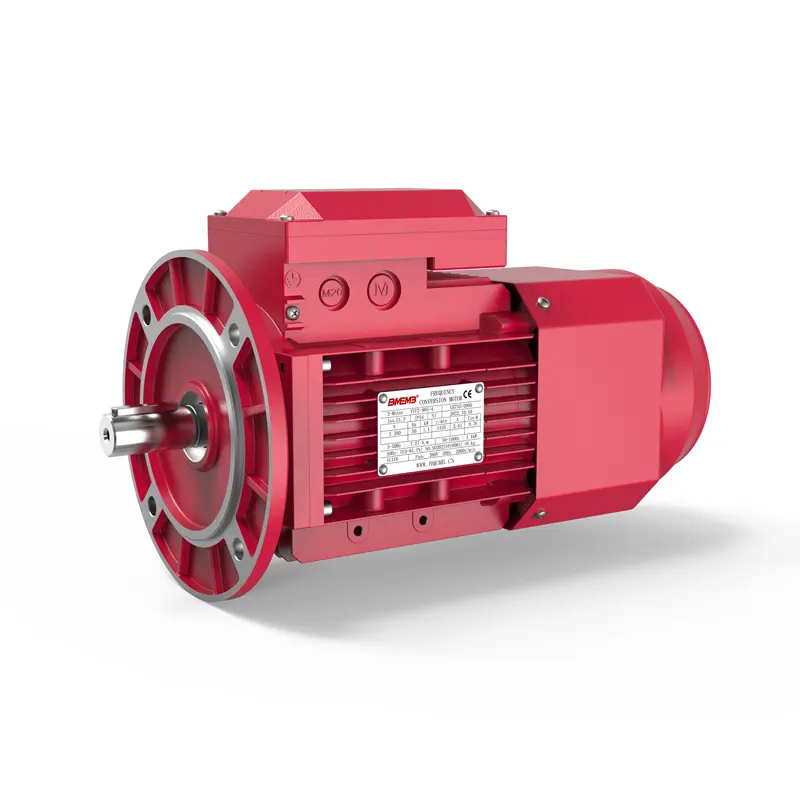
How do you troubleshoot common problems with YVF variable frequency motors? For procurement professionals responsible for maintaining production uptime, a malfunctioning motor can trigger a cascade of costly issues. Whether it's unexplained overheating, erratic speed control, or a complete system shutdown, diagnosing the root cause quickly is critical. This guide cuts through the complexity, offering clear, actionable steps to identify and resolve the most frequent YVF motor issues. By understanding these troubleshooting techniques, you can minimize downtime, extend equipment life, and make more informed sourcing decisions. For persistent or complex challenges, partnering with a specialist like Raydafon Technology Group Co.,Limited provides access to expert diagnostics and high-reliability replacement components.
Article Outline:
Overheating is a primary symptom of several underlying issues. Immediate action is required to prevent insulation degradation and permanent damage. First, ensure the motor's cooling fins and ventilation paths are completely unobstructed. Dust and debris are common culprits. Next, verify the ambient temperature hasn't exceeded the motor's rated specifications. The most critical check involves the drive parameters. An incorrect V/f (Voltage-to-Frequency) curve setting can cause the motor to draw excessive current at low speeds, generating heat. Consult the motor nameplate and ensure the drive is configured accordingly. For motors operating in demanding environments, specifying models with enhanced cooling, like those from Raydafon, can be a preventive solution.
| Checkpoint | Normal Parameter Range | Action if Out of Range |
|---|---|---|
| Motor Surface Temperature | < 90°C (Class F Insulation) | Investigate load, cooling, or drive settings |
| Ambient Temperature | As per nameplate (e.g., -15°C to 40°C) | Improve ventilation or use a suitable enclosure |
| Drive Output Current | Steady, below motor's rated FLA | Check for mechanical binding or incorrect V/f curve |
Inconsistent speed directly impacts product quality and throughput. This problem often originates from the feedback loop or load variations. Begin by inspecting the speed feedback device, typically an encoder. Check its connections for integrity and ensure it is securely mounted. Loose couplings or a worn gearbox can also cause load fluctuations that the drive struggles to compensate for. Review the drive's PID (Proportional-Integral-Derivative) tuning parameters. Aggressive or sluggish tuning can lead to hunting and instability. A systematic approach to isolating the cause—sensor, mechanical load, or drive tuning—is key. For applications requiring precise motion control, consider drives and motors engineered as a matched system for optimal performance.
| Checkpoint | Normal Parameter Range | Action if Out of Range |
|---|---|---|
| Encoder Signal Integrity | Stable pulse count; no signal loss | Secure connections, replace faulty encoder |
| Load Torque Variation | Within motor's overload capacity | Inspect mechanical drive train for wear |
| Drive Speed Reference | Stable voltage or digital command | Check control wiring and PLC/DCS output |
Unusual noise and vibration are clear indicators of mechanical or electrical imbalance. First, distinguish the noise type. A high-pitched whine often points to switching frequency noise from the Variable Frequency Drive (VFD). This can sometimes be mitigated by adjusting the drive's carrier frequency, though higher settings increase drive heating. A lower-frequency rumble or vibration suggests mechanical issues. Check the foundation bolts and motor mounts for tightness. Examine the coupling alignment and bearing condition. Imbalance can also be electrically induced by harmonics. Ensuring the motor leads are not running parallel to sensitive signal cables and using shielded VFD cables can reduce electrical interference. Persistent vibration issues may necessitate a precision-balanced rotor, a standard in quality motors from manufacturers like Raydafon.
| Checkpoint | Normal Parameter Range | Action if Out of Range |
|---|---|---|
| Bearing Vibration Velocity | < 2.8 mm/s RMS (typical) | Lubricate or replace bearings |
| Shaft Run-out | < 0.025 mm (0.001 inch) | Check for shaft bend or coupling issue |
| Drive Carrier Frequency | 2-16 kHz (adjustable) | Adjust to reduce audible noise, monitor drive temp |
Frequent tripping signals an overload or short-circuit condition that must not be ignored. Never simply increase the breaker size without investigation. First, perform an insulation resistance test (megger test) on the motor windings to ground. Low insulation resistance indicates moisture ingress or insulation breakdown. Next, check for phase-to-phase shorts using a multimeter. If the motor passes these electrical tests, the cause may be a transient overload. Verify the driven equipment isn't jammed. Also, analyze the starting current profile. An improperly set acceleration ramp (too short) can cause an inrush current that mimics a fault. Long cable runs between the drive and motor can cause voltage reflections and stress insulation. Using output filters or dV/dt chokes, often recommended by experts like those at Raydafon, can protect the motor from these drive-induced stresses.
| Checkpoint | Normal Parameter Range | Action if Out of Range |
|---|---|---|
| Motor Insulation Resistance | > 100 MΩ (at 25°C) | Dry out motor or rewind if severely low |
| Phase-to-Phase Resistance | Balanced within 1% (all three phases) | Investigate for winding shorts or poor connections |
| Peak Starting Current | < 150% of FLA for VFD-start | Lengthen acceleration time; check for mechanical bind |
Q: How do you troubleshoot common problems with YVF variable frequency motors when there is no visible fault code on the drive?
A: Start with a systematic sensory check. Listen for unusual noises, feel for excessive heat or vibration, and smell for burning insulation. Then, verify basic electrical and mechanical parameters: input voltage balance, output current balance from the drive, tightness of all power and ground connections, and the condition of the coupling and bearings. Often, the issue lies in parameter settings (like base frequency) or minor mechanical wear not severe enough to trigger a fault.
Q: How do you troubleshoot common problems with YVF variable frequency motors related to bearing failures?
A: Bearing failure in VFD-driven motors is frequently linked to electrical discharge machining (EDM) currents. To troubleshoot, first check for shaft voltage and bearing current using specialized tools. Mitigation strategies include installing a shaft grounding brush, using insulated bearings, or ensuring the drive is equipped with proper common-mode filtering. Also, verify that the motor is properly grounded per the drive manufacturer's and motor supplier's (like Raydafon) installation guidelines.
We hope this guide empowers you to tackle YVF motor challenges confidently. Have you encountered a specific issue not covered here? Share your experience or question with our technical community. For complex diagnostics, spare parts, or upgrading to more robust motor-drive systems, professional support is invaluable.
When standard troubleshooting isn't enough, Raydafon Technology Group Co.,Limited provides deep technical expertise. As a specialist in motion control solutions, we offer not only reliable YVF series motors but also comprehensive system support. Our engineers can assist with complex diagnostics, parameter optimization, and selecting the right components for your specific application to prevent recurring problems. Visit our resource center at https://www.raydafondrive.com or contact our team directly at [email protected] for personalized assistance.
1. Bose, B. K. (2002). Modern Power Electronics and AC Drives. Prentice Hall PTR.
2. Leonhard, W. (2001). Control of Electrical Drives. Springer Science & Business Media.
3. Jahns, T. M., & Blasko, V. (2005). Recent advances in power electronics technology for industrial and traction machine drives. Proceedings of the IEEE, 89(6), 963-975.
4. Holtz, J. (1992). Pulsewidth modulation for electronic power conversion. Proceedings of the IEEE, 82(8), 1194-1214.
5. Lipo, T. A. (2003). Introduction to AC Machine Design. University of Wisconsin-Madison.
6. Krah, J. O., & Holtz, J. (2004). Total compensation of bearing currents in inverter-fed AC motors. IEEE Transactions on Industry Applications, 40(4), 1168-1175.
7. Munoz, A. R., & Lipo, T. A. (1999). On-line thermal model for soft-starter-connected induction motors. IEEE Transactions on Energy Conversion, 14(3), 282-288.
8. Sung, J. H., Park, S. K., & Nam, K. (1999). A new approach to minimum-loss control of an induction motor drive. IEEE Transactions on Industry Applications, 35(5), 1075-1082.
9. Bimal, K. B. (2006). Power Electronics and Motor Drives: Advances and Trends. Academic Press.
10. Novotny, D. W., & Lipo, T. A. (1996). Vector Control and Dynamics of AC Drives. Oxford University Press.