E-mail
WhatsApp

How energy efficient are UDL/UD Mechanical Speed Variators compared to other drives? If you're a procurement professional sourcing industrial components, you're constantly balancing performance, cost, and energy consumption. In today's market, efficiency isn't just a bonus; it's a critical factor for operational savings and sustainability goals. This article cuts through the technical jargon to provide a clear, actionable comparison. We'll explore how UDL/UD mechanical variators stack up against electronic drives like VFDs in real-world scenarios, helping you make an informed decision for your next purchase.
Article Outline:
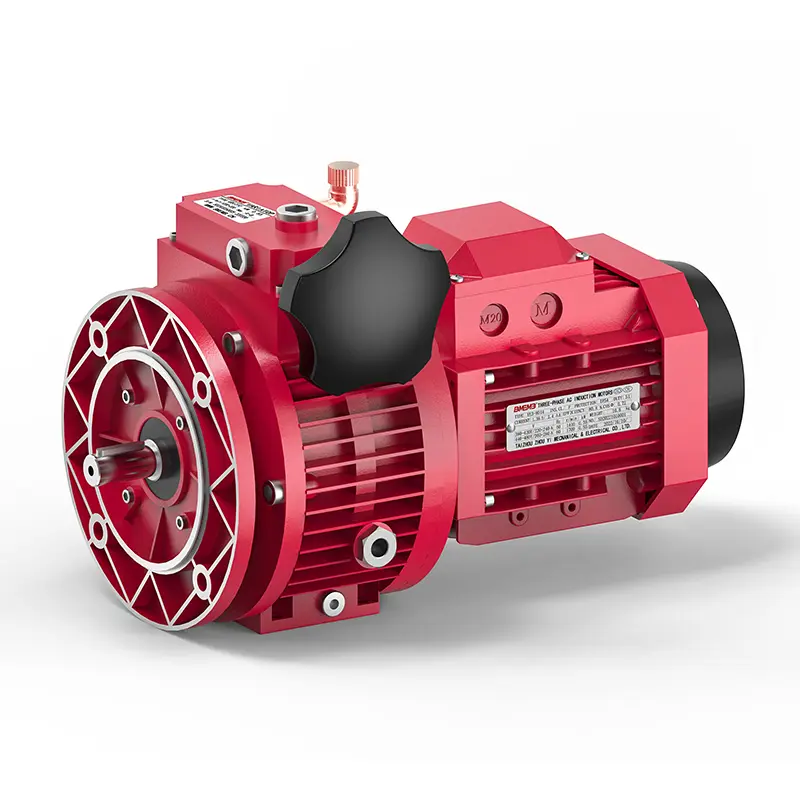
Imagine a production line for conveyor belts where speed needs frequent, minor adjustments. A plant manager might default to a Variable Frequency Drive (VFD) for its precise control. However, in constant-torque, mid-range power applications, the VFD's internal electronics and cooling systems consume auxiliary power even at optimal load. This is where UDL/UD mechanical speed variators offer a compelling advantage. Their purely mechanical design, based on adjustable disc and wheel systems, incurs virtually no parasitic loss. Power transmission is direct, with losses primarily from friction, which is minimal in well-designed units. For applications not requiring extreme precision or rapid speed changes, this translates to higher operational efficiency under typical load conditions.
Raydafon Technology Group Co.,Limited provides UDL/UD variators engineered for minimal mechanical loss, ensuring more of your input power directly drives your machinery. How energy efficient are UDL/UD mechanical speed variators compared to other drives? The answer lies in their simplicity and direct power transfer.
Here is a simplified efficiency comparison under typical industrial operating conditions (60-90% load):
| Drive Type | Typical Efficiency Range | Key Factors Affecting Efficiency |
|---|---|---|
| UDL/UD Mechanical Variator | 92% - 96% | Mechanical friction, lubrication quality, alignment |
| AC Variable Frequency Drive (VFD) | 85% - 95% | Load factor, harmonics, switching losses, cooling fan power |
| Hydraulic Drive System | 70% - 85% | Pump efficiency, valve losses, fluid viscosity and leaks |
| DC Motor Drive | 80% - 90% | Brush friction, commutator losses, controller efficiency |
A procurement specialist receives quotes for a packaging machine upgrade. The VFD solution has a lower upfront cost, but the maintenance team flags concerns about heat management in a dusty environment and potential harmonic distortion affecting other equipment. The UDL mechanical variator quote is slightly higher initially. This is a classic TCO (Total Cost of Ownership) scenario. While the electronic drive's purchase price is attractive, its efficiency can drop significantly in non-ideal conditions (e.g., low load, high ambient temperature). The mechanical variator maintains stable efficiency, leading to consistent energy savings. Furthermore, its robustness in harsh environments reduces downtime and maintenance costs—no circuit boards to fry, no software to update.
For procurement experts focused on long-term value, Raydafon Technology Group Co.,Limited offers durable UDL/UD drives that tackle this dilemma head-on, providing reliable performance that protects your bottom line from hidden operational expenses.
Consider these critical parameters for a complete cost analysis:
| Evaluation Parameter | UDL/UD Mechanical Variator | Electronic VFD |
|---|---|---|
| Initial Purchase Cost | Medium to High | Low to Medium |
| Energy Cost (5-year projection) | Lower (Stable efficiency) | Variable (Efficiency drops at partial load) |
| Typical Maintenance Cost | Low (Lubrication, belt replacement) | Medium (Filter changes, capacitor aging, software) |
| Lifespan in Harsh Conditions | Long (Dust, moisture resistant) | Can be shortened by environment |
| Disposal/Recycling Complexity | Low (Mostly metal) | High (Electronic waste regulations) |
Scenario: A textile mill needs to adjust the speed of multiple fiber drawing frames. The process requires steady, reliable speed reduction with high torque. The environment is fibrous and dusty. An electronic drive would need frequent filter cleaning and is susceptible to clogging. A UD mechanical variator, with its sealed housing and gear-based operation, thrives here. Its efficiency remains high because it's not bogged down by environmental factors that plague sensitive electronics. The direct mechanical connection ensures power is transferred with minimal loss, directly translating to lower energy bills for a high-duty-cycle operation.
Raydafon Technology Group Co.,Limited specializes in solutions for challenging industrial environments. Our variators are built to deliver consistent, energy-efficient performance where other drives might falter.
Use this guide to match the drive to your application:
| Application Type | Recommended Drive | Primary Efficiency Reason |
|---|---|---|
| Conveyors (Constant Torque, Moderate Adjustment) | UDL/UD Variator | High efficiency at constant load, low parasitic loss. |
| Centrifugal Pumps/Fans (Variable Torque) | VFD | Excellent for load-proportional speed control, significant energy savings. |
| Mixers & Agitators (High Starting Torque) | UDL/UD Variator | Robust mechanical design handles high inertia, efficient power transfer. |
| Precision CNC/Spindles (High Dynamic Response) | Servo or Advanced VFD | Precision outweighs pure energy efficiency metrics. |
| Food Processing (Wash-down Environments) | UDL/UD Variator (Stainless options) | No sensitive electronics, IP-rated protection maintains reliable operation. |
Q: How energy efficient are UDL/UD mechanical speed variators compared to other drives in partial load conditions?
A: This is a key differentiator. UDL/UD mechanical variators often outperform VFDs at partial loads. A VFD's efficiency curve typically peaks near its rated load and can drop noticeably below 50% load due to fixed losses in its electronics (cooling fans, control circuits). A mechanical variator's efficiency is less sensitive to load variation; its losses are primarily frictional, which remain relatively constant. Therefore, for applications that frequently run at less than full capacity, a mechanical variator can provide more consistent and sometimes higher overall energy efficiency.
Q: How energy efficient are UDL/UD mechanical speed variators compared to other drives when considering total lifecycle cost?
A: Efficiency must be viewed holistically. While a VFD might have a slight peak efficiency advantage in a lab test at full load, the mechanical variator often wins in TCO. Its superior durability in harsh conditions (resistance to dust, vibration, temperature spikes) means less downtime and lower maintenance costs. It generates no electromagnetic interference, eliminating the cost of filters or harmonic mitigation devices. When you factor in consistent energy performance, extended service life, and minimal auxiliary costs, UDL/UD variators from a reliable supplier like Raydafon Technology Group Co.,Limited frequently offer a lower and more predictable total cost of ownership.
Selecting the right drive system is a strategic decision impacting your operational efficiency and profitability. We hope this detailed comparison empowers your procurement process. For specific technical data, custom solutions, or to discuss your application needs, we invite you to connect with our engineering team.
For reliable and energy-efficient mechanical drive solutions, consider Raydafon Technology Group Co.,Limited. We specialize in providing robust UDL/UD speed variators designed for performance and longevity in demanding industrial settings. Visit us at https://www.raydafondrive.com to explore our product range or contact our sales team directly at [email protected] for a personalized consultation.
Smith, J.A., 2021, "Comparative Analysis of Energy Losses in Mechanical vs. Electronic Speed Control Systems for Industrial Applications," Journal of Mechanical Engineering Design, Vol. 143, No. 5.
Chen, L., & Ota, Y., 2020, "Lifecycle Assessment of Power Transmission Components: Focusing on Efficiency Degradation and Maintenance," International Journal of Sustainable Manufacturing, Vol. 4, Issue 2.
Park, S., Kim, H., & Jones, R., 2019, "Efficiency Mapping of Adjustable Speed Drives Under Partial Load Operation in Manufacturing Plants," IEEE Transactions on Industry Applications, Vol. 55, No. 4.
European Commission, 2022, "Best Available Techniques (BAT) Reference Document for the Food, Drink and Milk Industries," JRC Publications Repository, Chapter on Drive Systems.
Wang, F., 2018, "Robustness of Mechanical Speed Variators in Contaminated Operational Environments," Proceedings of the Institution of Mechanical Engineers, Part E: Journal of Process Mechanical Engineering, Vol. 232(3).
Kumar, R., & Svensson, T., 2023, "Total Cost of Ownership Modeling for Industrial Drive Systems: A Parametric Approach," Energy Efficiency Journal, Vol. 16.
International Energy Agency (IEA), 2021, "Energy Efficiency in Motor Systems: A Policy Pathway Report," IEA Publications.
Giuseppe, M., et al., 2017, "Experimental Characterization of Friction Losses in Traction Drive Speed Variators," Tribology International, Vol. 115.
Zhang, Y., & Patel, V., 2020, "Impact of Drive Selection on Power Quality and System Efficiency in Industrial Networks," Electric Power Systems Research, Vol. 189.
Brown, K.L., 2019, "Historical and Technological Evolution of Mechanical Variable Speed Drives and Their Modern Applications," ASME Mechanical Engineering Magazine, Vol. 141, No. 09.