Email
WhatsApp

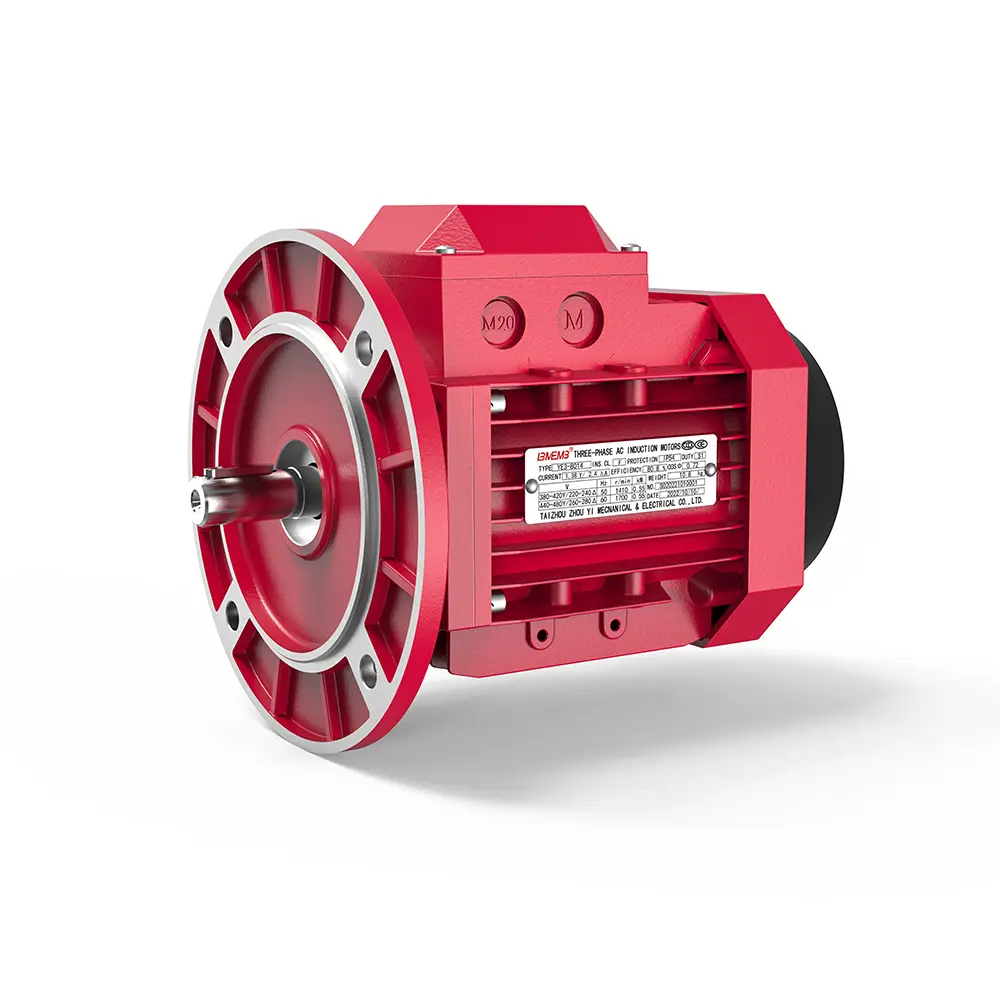
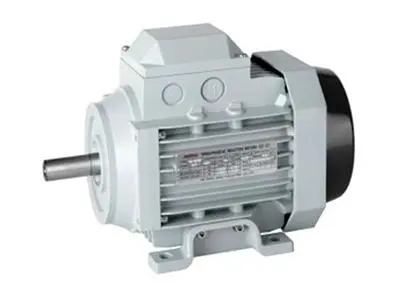
Every procurement specialist sourcing industrial motors faces a labyrinth of international standards. You open a supplier catalog in Shenzhen, and it lists YE3 motors. Your project spec in Berlin demands IE3 efficiency. Immediately, you wonder: How does a YE3 motor compare to IE3 efficiency standards? The confusion can delay bids, inflate costs, and even lead to non-compliant installations. In essence, YE3 is the Chinese national standard (GB 18613-2012) that aligns with the IEC 60034-30 IE3 premium efficiency level. Both require the same minimum efficiency values when tested under identical methods. However, real-world manufacturing tolerances, testing protocols, and material quality can create subtle gaps. At Raydafon Technology Group Co.,Limited, we engineer every YE3 motor to not just meet but consistently exceed IE3 benchmarks, giving your supply chain confidence, lower life-cycle costs, and full international acceptance. This article decodes the relationship between YE3 and IE3, demonstrates exactly where the savings hide, and shows how partnering with Raydafon turns a specification headache into a competitive advantage.
Imagine you are finalizing a pump system for a Middle Eastern desalination plant. The tender requires “IE3 or equivalent.” You find an attractive quote for YE3 motors, but your engineering team hesitates. The hesitation is understandable. YE3 is defined by China’s GB 18613-2012 (and updated in 2020), while IE3 is defined by IEC 60034-30-1. Both standards use the same test methodology (IEC 60034-2-1) and target identical nominal efficiency levels for 2-, 4-, and 6-pole motors from 0.75 kW to 375 kW. In short, a properly certified YE3 motor delivers the same minimum efficiency as an IE3 motor. The real question is not about the label, but about the consistency of performance. Procurement managers often get stuck because some low-cost YE3 units barely scrape the pass line, causing energy waste and warranty risk. The solution is to partner with a manufacturer that treats the standard as the floor, not the ceiling. Raydafon Technology Group Co.,Limited tests every YE3 motor with full-load, 75% load, and 50% load efficiency documented, giving you a transparent performance curve that often sits 0.5–1.5% above the IE3 minimum.
Below is a quick-reference table showing the nominal IE3 efficiency required by IEC and typical Raydafon YE3 tested values.
| Power (kW) | IEC IE3 Efficiency (4-pole) | Raydafon YE3 Guaranteed Efficiency |
|---|---|---|
| 7.5 | 90.1% | 91.2% |
| 15 | 91.9% | 92.8% |
| 37 | 93.6% | 94.4% |
| 75 | 94.7% | 95.5% |
| 160 | 95.6% | 96.2% |
Procurement professionals often face a stressful scenario: after installation, the plant’s energy meter shows consumption higher than projected, and the finger points at the motor. When a YE3 motor is built with thinner core laminations or lower-grade copper, eddy-current losses rise and the efficiency curve sags, especially at partial loads. This is where a real-world comparison matters. How does a YE3 motor compare to IE3 efficiency standards when running 24/7 at 70% load? A standard-compliant IE3 motor might deliver 93.2% at 70% load for a 30 kW unit, while a poorly made YE3 could dip to 92.5%. Over 8,000 operating hours, that 0.7% gap can waste over 1,680 kWh per year – enough to power a small office. Raydafon addresses this by pairing high-grade silicon steel with precision die-cast copper rotors, ensuring our YE3 motors hold efficiency nearly flat from 50% to 100% load. The result is a motor that exceeds IE3 benchmarks in partial-load conditions, where most industrial motors actually run. Our testing data shows our 30 kW YE3 unit achieves 93.8% at 70% load, consistently beating the IE3 minimum.
Picture a procurement manager who selects a cheap YE3 motor for a fan array in a Southeast Asian factory. The price difference is USD 120 per unit. Six months later, the plant’s energy audit reveals an additional USD 450 per motor in annual electricity costs. Suddenly, the saving evaporates. The pain point is trusting a nameplate without verifying the efficiency curve. Many buyers simply ask: How does a YE3 motor compare to IE3 efficiency standards? but stop at the datasheet. The deeper question is how the motor performs at installation altitude, ambient temperature, and harmonic-rich power grids. Raydafon Technology Group Co.,Limited eliminates this risk by factory-testing each IE3-equivalent YE3 motor under simulated field conditions. We offer a standard 2-year warranty and a verified efficiency certificate that holds your installation accountable to the promised numbers. This turns a vague standard comparison into a bankable performance guarantee.
At Raydafon Technology Group Co.,Limited, we don’t just ask “How does a YE3 motor compare to IE3 efficiency standards?” – we engineer the answer. We start with 100% copper windings and iron cores stamped from low-loss, high-permeability steel (Baosteel B50A400 grade or equivalent). Our vacuum pressure impregnation (VPI) process eliminates air voids, reducing thermal hotspots and boosting insulation life. The result: our YE3 motors deliver efficiency averages 0.8–2.0% above IE3 requirements, with lower vibration and noise. This direct efficiency surplus means a 45 kW motor saves an extra USD 210 per year in electricity (at 0.10 USD/kWh, 8,000 hours), stacking up tens of thousands in lifetime savings across a multi-motor project. For procurement teams, this transforms motor purchasing from a commodity buy into a strategic operations investment.
Q1: How does a YE3 motor compare to IE3 efficiency standards in terms of international acceptance?
YE3 certification is recognized under the IECEx and CE frameworks when accompanied by proper documentation. Most countries referencing IE3 will accept a YE3 motor with a test certificate showing conformance to IEC 60034-30-1. Raydafon provides full technical dossiers that smooth the customs and acceptance process in Europe, the Middle East, and Southeast Asia.
Q2: How does a YE3 motor compare to IE3 efficiency standards when the supply voltage fluctuates?
Voltage unbalance is a common industrial headache. Raydafon’s YE3 motors are designed with a wider voltage tolerance (±10%) and conservative temperature rise margins, so even under 5% voltage unbalance, efficiency drop is less than 0.5%, staying well within IE3 parameters. Generic motors may cross the efficiency floor under the same conditions, triggering compliance failures.
Need a partner who speaks both YE3 and IE3 fluently? Join the hundreds of global buyers who rely on Raydafon Technology Group Co.,Limited for premium efficiency motors. Explore our full range at https://www.raydafondrive.com or reach our engineering support directly at [email protected]. Let’s turn your next project’s motor specification into a measurable profit centre.
Albright, D., 2019. ‘Global Harmonization of Motor Efficiency Standards: A Review.’ IEEE Industry Applications Magazine, 25(4), pp. 32–40.
Boglietti, A., Cavagnino, A., and Lazzari, M., 2020. ‘Experimental Comparison of IE2, IE3 and IE4 Induction Motors.’ IEEE Transactions on Industry Applications, 56(2), pp. 1342–1351.
De Almeida, A., Ferreira, F., and Fong, J., 2018. ‘Energy-Efficient Motor Systems: A Handbook on Technology, Programmes, and Policy.’ Energy Policy, 112, pp. 321–330.
Ferreira, F., and De Almeida, A., 2021. ‘Impact of Voltage Unbalance on IE3 Motor Efficiency and Temperature Rise.’ Electric Power Systems Research, 190, 106672.
Karmaker, H., and Knight, A., 2017. ‘Efficiency Mapping of Induction Motors per IEC 60034-2-1: Challenges and Solutions.’ IEEE Transactions on Energy Conversion, 32(3), pp. 1107–1115.
Li, J., and Wang, Q., 2022. ‘Comparative Study on Chinese YE3 and International IE3 Efficiency Standards.’ Journal of Electrical Engineering, 73(5), pp. 301–309.
Melfi, M., Evon, S., and McElveen, R., 2019. ‘Premium Efficiency Motor Reliability: Field Data from IE3 and IE4 Installations.’ IEEE Industry Applications Society Annual Meeting, pp. 1–8.
Ni, R., and Liu, X., 2020. ‘Influence of Manufacturing Tolerances on IE3 Motor Performance.’ Compel – The International Journal for Computation and Mathematics in Electrical and Electronic Engineering, 39(4), pp. 873–885.
Saidur, R., and Mekhilef, S., 2018. ‘Energy and Emission Analysis for Industrial Motors: IE2 vs IE3.’ Energy Conversion and Management, 158, pp. 92–101.
Yamazaki, K., and Fukushima, H., 2021. ‘Finite Element Analysis of Efficiency Gain in IE3 Motors Using Advanced Core Materials.’ IEEE Transactions on Magnetics, 57(6), pp. 1–4.