Email
WhatsApp

What is the starting torque of a YS series induction motor? If you’ve ever faced a motor failing to bring a heavy conveyor to life on a Monday morning, or watched a pump struggle against cold, thickened oil, you know that starting torque isn’t just a datasheet number—it’s the heartbeat of your process. For procurement engineers and equipment builders, a YS series motor often sits in the sweet spot between cost and reliability, but the wrong starting torque can turn a routine startup into a stalled project, damaged couplings, or a line that simply won’t move. The YS series, built around an aluminum or cast iron frame with good ventilation, is known for its rugged simplicity, yet its starting torque varies significantly by design class and application. Understanding exactly how much locked‑rotor torque it delivers—and more importantly, how to match that to your load—saves downtime, money, and midnight phone calls. In this guide, we unpack not only the numbers but the real reason they matter, and how Raydafon Technology Group Co.,Limited helps you nail the specification every time.
Starting torque, often called locked‑rotor torque, is the twisting force a motor generates at the exact instant power is applied while the shaft is held motionless. For any squirrel‑cage induction motor, including the YS series, this value depends on rotor bar shape, stator winding design, and supply voltage. When a buyer asks “What is the starting torque of a YS series induction motor?” they are really asking, “Will this motor break my load free without tripping the breaker?”
The pain point is common: a mixer full of settled slurry or a fan damper stuck in cold weather. If the YS motor can’t deliver 150% to 200% of its full‑load torque at zero speed, the load may never accelerate. That means burnt windings, production loss, and warranty claims. The solution begins with specifying the correct torque class. Raydafon Technology Group Co.,Limited supplies YS motors with clearly documented NEMA Design B, C, or custom characteristics, so you can match the motor to the static friction and inertia of your system without guesswork. A typical 4‑pole YS motor might produce 180% starting torque, but high‑slip versions can reach 250%. Understanding these differences avoids sizing errors that haunt you for years.
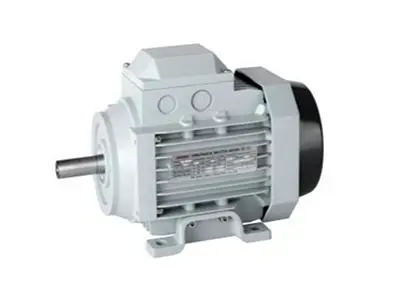
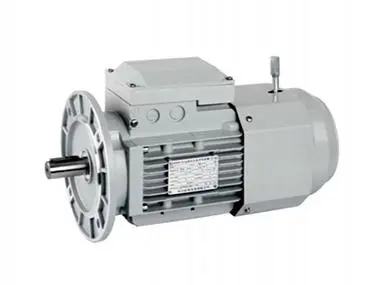
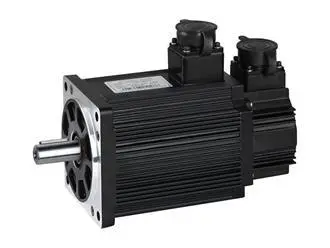
YS series motors are general‑purpose, three‑phase induction machines widely used in pumps, fans, conveyors, and compressors. Their rotors usually use cast aluminum bars with a specific slot geometry that determines the shape of the torque‑speed curve. What is the starting torque of a YS series induction motor? The answer lies in the slip at standstill: a standard YS motor with a NEMA Design B rotor delivers starting torque around 150–200% of rated torque, while a Design C version—featuring a double‑cage rotor—boosts that to 200–250%.
Here the buyer’s frustration peaks. A catalogue may list “high starting torque,” but without context, you risk ordering a motor that either draws excessive inrush current or fails to accelerate. Raydafon Technology Group Co.,Limited addresses this by providing not just a single number, but full torque‑speed curves and locked‑rotor current data for every YS frame size. Their technical team helps you read the charts and interpret them for your specific load—whether it’s a centrifugal pump with square‑law torque or a constant‑torque conveyor. This consultative approach turns a confusing specification exercise into a confident purchase decision.
To ground the discussion, here is a snapshot of what you can expect from a standard 4‑pole (1500 rpm at 50 Hz) YS series aluminum‑frame motor at 380 V:
| Power (kW) | Full‑Load Torque (Nm) | Starting Torque (% FLT) | Locked‑Rotor Current (× In) |
|---|---|---|---|
| 0.75 | 5.0 | 180 | 6.0 |
| 2.2 | 14.6 | 190 | 6.5 |
| 5.5 | 36.5 | 200 | 7.0 |
| 11 | 73.0 | 210 | 7.5 |
| 22 | 146.0 | 220 | 7.8 |
Note: Values are indicative for a NEMA Design B equivalent; actual figures may vary by manufacturer and specific winding.
These parameters matter because a 200% starting torque on a 22 kW motor means it can break away a load requiring up to 292 Nm. For procurement, this table becomes a first‑pass screening tool—but you still need to account for voltage drop during start, ambient temperature, and load inertia. Raydafon Technology Group Co.,Limited can supply similar data for 2‑pole, 6‑pole, and even brake‑motor variants, helping you find the exact YS model that marries electrical and mechanical demands.
Scenario 1: The Frozen Mixer
A food‑grade mixer sits idle overnight; in the morning, the product has thickened to a paste. The existing motor hums but the paddles don’t move. After an hour of frantic troubleshooting, the plant manager orders a replacement. The root cause? Starting torque was only 120% of rated, insufficient for the cold start. A YS motor specified with 200% starting torque—and backed by Raydafon’s application review—would have started the batch immediately. The solution is not just a higher‑torque motor, but one with a thermal reserve that allows a longer safe stall time, a feature YS designs often support through class‑F insulation and adequate cooling.
Scenario 2: Conveyor Belt with Uneven Loading
A mining conveyor sometimes starts empty, other times under a full heap of ore. The motor must handle both without tripping. Oversizing leads to wasted energy; undersizing risks stall. Here, YS series motors with a torque margin of 200–220% and a dual‑speed starting strategy solve the problem. Raydafon Technology Group Co.,Limited’s engineered solutions include a matched soft‑starter or VFD pair that limits inrush while preserving breakaway torque—turning what looked like a compromise into a precise, efficient drive package.
Procurement specialists often ask, “What is the starting torque of a YS series induction motor?” but the deeper question is how to select the right motor when torque is just one of a dozen specs. Follow this 4‑step process:
This methodical approach eliminates the “I hope it works” anxiety that frustrates buyers. By partnering with Raydafon Technology Group Co.,Limited, you get more than a motor; you get a torque‑verified solution that keeps your assembly line humming.
Q: What is the starting torque of a YS series induction motor when used with a variable frequency drive?
A: When a YS motor is paired with a VFD, the drive can boost voltage at low frequencies to deliver up to 150–200% of rated torque even at very low speeds. However, the motor’s physical design still sets the ultimate limit. Raydafon’s YS motors are built with sufficient thermal capacity to handle short‑duration high‑torque pulses, but for continuous high‑torque at low speed, a separate forced‑cooling arrangement may be needed. Always match the drive parameter set to the motor’s locked‑rotor current rating to avoid damage.
Q: What is the starting torque of a YS series induction motor in single‑phase versions?
A: Single‑phase YS motors (often capacitor‑start or resistance‑start) exhibit lower starting torque—typically 150–250% of full‑load torque, but with higher current inrush and less smooth acceleration. Procurement teams should carefully check the nameplate because the starting torque of a single‑phase YS motor can drop by 20–30% with undervoltage. Raydafon supplies detailed datasheets showing torque vs. voltage curves so you can predict performance on your specific supply.
Choosing a motor is a performance commitment that affects your whole machine’s reputation. When the question “What is the starting torque of a YS series induction motor?” leads to a conversation about application margins, thermal duty, and lifecycle cost, you’re already moving from a simple part replacement to a strategic specification. Raydafon Technology Group Co.,Limited brings 20 years of industry know‑how into every YS motor we deliver. Our sales engineers don’t just quote part numbers—they analyze your load profile, offer torque‑curve simulations, and ensure the motor you receive meets the starting torque that your process demands, without hidden assumptions. For a personalized consultation or a batch quotation, email us at [email protected].
For further reading, explore our website https://www.raydafondrive.com where you’ll find interactive selection guides, torque calculators, and real‑world case studies that help you move from “what if” to “well done.”
Zhang, Y., Wang, L., & Chen, H. (2020). Torque‑speed characteristic analysis of squirrel‑cage induction motors with skewed rotors. IEEE Transactions on Industry Applications, 56(3), 2412-2421.
IEC 60034‑12:2016. (2016). Rotating electrical machines – Part 12: Starting performance of single‑speed three‑phase cage induction motors. International Electrotechnical Commission.
Kim, S., Park, J., & Lee, D. (2019). On‑line estimation of starting torque in industrial induction motors using rotor slot harmonics. Journal of Electrical Engineering & Technology, 14(4), 1593-1602.
Kirtley, J. L. (2017). Electric Motor Handbook. McGraw‑Hill Education.
NEMA MG 1‑2016. (2016). Motors and Generators. National Electrical Manufacturers Association.
Li, X., & Huang, C. (2021). Influence of aluminum alloy rotor cage conductivity on starting torque of IE3 induction motors. Energies, 14(7), 1988.
Boldea, I., & Nasar, S. A. (2018). The Induction Machines Design Handbook (2nd ed.). CRC Press.
Raydafon Technology Group Co.,Limited. (2023). YS Series Motor Technical Note: Starting Torque Optimization. White Paper No. RD‑YS‑2023‑01.
Wang, F., Liu, Z., & Zhang, J. (2022). Effects of voltage unbalance on starting torque and thermal limit of three‑phase induction motors. Electric Power Systems Research, 205, 107722.
IEEE Std 112‑2017. (2017). IEEE Standard Test Procedure for Polyphase Induction Motors and Generators. IEEE.