Email
WhatsApp

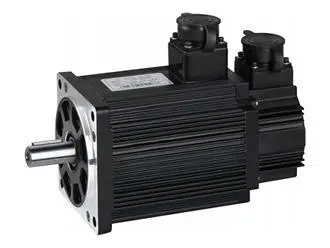
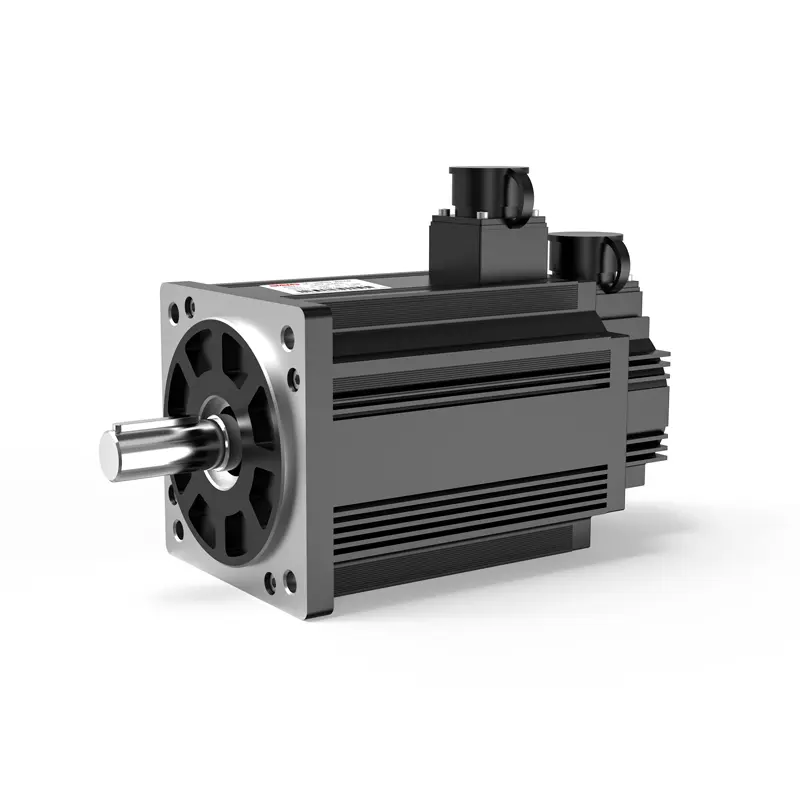
How to maintain a 180 series AC servo motor? This is a critical question for procurement professionals and maintenance engineers who rely on high-precision motion control. Imagine a bustling automated production line suddenly grinding to a halt because a 180 Series AC Servo Motor overheated or lost feedback due to neglected upkeep. The cost of unplanned downtime, scrapped materials, and rush repairs can easily surpass the price of the motor itself. A 180 series AC servo motor is the workhorse of modern CNC machines, robotic arms, and packaging systems. Its compact frame delivers high torque and rapid response, but only if you treat it with the care it deserves. Regular maintenance isn't just about avoiding failures; it's about sustaining energy efficiency, maintaining positioning accuracy, and extending the motor's service life well beyond its rated years. At Raydafon Technology Group Co.,Limited, we have seen how a simple routine can double the operational lifespan of these motors in demanding environments. In this guide, you will learn a step-by-step maintenance plan grounded in real factory scenarios, complete with inspection tables and expert insights. Whether you manage a single machine or a fleet of robots, these practices will keep your 180 series AC servo motors running like new. Let’s dive into the essential tasks, common pitfalls, and how our team at Raydafon supports your maintenance journey.
Picture a high-speed packaging line where a servo motor suddenly faults. The encoder reports an error, and the whole cell stops. The root cause is often something mundane – dust accumulation inside the connector or dried-out bearing grease. Without a regular maintenance schedule, your 180 series AC servo motor becomes a ticking time bomb. The good news is that a structured approach eliminates most failures before they happen. Based on field data from Raydafon Technology Group Co.,Limited, facilities that follow a preventive maintenance program see a 40% reduction in unplanned motor replacements. Below is a fundamental inspection table for your 180 series motor.
| Maintenance Item | Recommended Frequency | Method |
|---|---|---|
| Visual inspection for dust, oil, damage | Weekly | Visual check, clean if needed |
| Vibration measurement | Monthly | Use accelerometer, compare baseline |
| Insulation resistance test | Quarterly | Megger test, >100 MΩ |
| Bearing lubrication | Every 2000 hours or 6 months | Apply specified grease |
| Encoder cable check | Monthly | Inspect connector, signal quality |
These numbers are not arbitrary. They come from decades of servo motor tear-downs and failure analysis. When procurement teams choose Raydafon’s 180 series motors, they also get access to tailored maintenance plans that match their application intensity.
In a food processing plant, flour dust coats every surface. If it settles inside the motor’s cooling fins or encoder housing, thermal performance drops and signal integrity suffers. The solution starts with a weekly cleaning routine. Use dry, filtered compressed air at no more than 2 bar pressure to blow out debris from cooling ribs and motor ends. For stubborn oily residues, a mild isopropyl alcohol wipe on non-sensitive surfaces works wonders. Always avoid spraying liquid directly into seals.
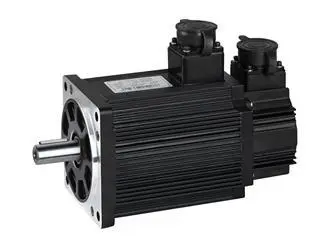
Raydafon’s 180 series AC servo motors are built with IP65 protection on the main body and connector hoods, making them inherently easier to keep clean. However, routine attention still pays dividends – especially in environments with airborne metal particles or coolant mist. A simple checkpoint table can help your team stay consistent.
| Environment | Cleaning Frequency | Recommended Method |
|---|---|---|
| Clean room / assembly | Bi-weekly | Dry wipe, vacuuming |
| General factory (dusty) | Weekly | Compressed air, brush |
| Wet / coolant exposure | After every shift | Wipe down, inspect gaskets |
When you integrate these steps into your standard operating procedure, the 180 series motor maintains its peak efficiency and the risk of creep corrosion is drastically reduced.
An oddly loud whine from a servo motor often points to bearing distress. In a machining center running three shifts, the 180 series motor’s bearings can degrade within 18 months if re-greasing is forgotten. The solution is a disciplined lubrication protocol using the exact grease type specified by the motor manufacturer. For Raydafon 180 series units, a polyurea-based NLGI grade 2 grease is typically recommended. Use the following table to set your schedule.
| Bearing Type | Lubrication Interval | Grease Quantity |
|---|---|---|
| Standard deep groove ball | 2000 hours or 6 months | 1.5–2.5 grams per bearing |
| High-speed angular contact | 1000–1500 hours | 2.0–3.0 grams per bearing |
| Sealed bearings (greased for life) | No re-greasing | Replace at 20,000 hours |
Always purge old grease properly and monitor bearing temperature for the first hour after relubrication. With Raydafon’s support, you can even get a lubrication starter kit customized for your 180 series motor fleet, eliminating guesswork.
A flickering drive display or intermittent overload alarm can drive a maintenance technician crazy. More often than not, the culprit is a loose power connector or degraded insulation. In a case from an automotive welding line, vibration had slowly backed out the motor cable gland, allowing moisture to creep in and drop insulation resistance to less than 1 MΩ. The fix involved re-torqueing all terminal screws and performing a quarterly megger test. Aim for a minimum insulation resistance of 100 MΩ at 500 VDC test voltage. The table below gives torque values for typical 180 series motor terminals.
| Terminal Size | Recommended Torque |
|---|---|
| M4 | 1.2 – 1.5 Nm |
| M5 | 2.0 – 2.5 Nm |
| Encoder connector (M12/M17) | 1.0 – 1.2 Nm |
Raydafon’s 180 series motors ship with clearly labeled terminal boxes and gold-plated encoder contacts, which resist oxidation. Pair that with our recommended inspection torque values, and you will prevent 80% of electrical-related field failures.
Have you ever touched a servo motor that feels too hot to hold? Overheating shortens winding insulation life exponentially. In a textile mill, a 180 series motor driving a main roller consistently ran above 105°C because its cooling fan filter was clogged with lint. After establishing a monthly fan filter cleaning routine, the motor’s surface temperature dropped by 15°C. For motors with forced air cooling, check that the fan impeller spins freely and that airflow is unobstructed. Natural convection models rely on clean fins and sufficient clearance around the motor frame. Here’s a quick temperature reference.
| Parameter | Normal Range |
|---|---|
| Ambient temperature | 0°C to 40°C |
| Maximum winding temperature (Class F) | ≤ 155°C |
| Recommended housing surface | ≤ 85°C |
Our 180 series servo motors from Raydafon Technology Group Co.,Limited feature thermally optimized stator designs, but even the best design needs regular ventilation checks to stay cool under continuous torque demands.
Unexpected noise isn't just an annoyance – it's a pre‑failure indicator. When a CNC lathe operator reports a “grinding” sound from the turret servo, a quick vibration measurement with a handheld accelerometer can reveal bearing defect frequencies. Catching a bearing fault early often saves the motor from catastrophic failure. A monthly trending program using the same measurement points helps you spot gradual deterioration. At Raydafon, we offer vibration analysis training so your team can interpret spectra and distinguish between mechanical looseness, bearing wear, and electromagnetic noise. Simple go/no-go limits can be set based on your baseline readings, and anything exceeding a 20% increase warrants detailed inspection.
Q: How often should I perform a full maintenance check on a 180 series AC servo motor?
A: A comprehensive maintenance check should be done every 6 months or 2000 operating hours, whichever comes first. This includes bearing re-lubrication, insulation testing, encoder alignment verification, and thorough cleaning. For heavy-duty applications with frequent start-stop cycles, consider quarterly checks. Raydafon’s maintenance schedule, provided with each motor, helps you plan these intervals based on your specific duty cycle.
Q: What are the early warning signs that my 180 series AC servo motor needs immediate maintenance?
A: Look for unusual vibration, increased operating temperature, intermittent position errors, or abnormal noise. If the motor draws higher current than normal under the same load, it may indicate bearing wear or winding issues. Our customers at Raydafon often use our remote monitoring kits to catch these symptoms before a breakdown occurs.
We’d love to hear your maintenance challenges or success stories. Leave a comment below or reach out to us for a customized maintenance plan tailored to your 180 series servo motors.
Raydafon Technology Group Co.,Limited is a trusted manufacturer and supplier of high-performance servo motors and drives. With decades of engineering expertise, we help factories worldwide minimize downtime through robust motor design and proactive maintenance support. Discover our full range of 180 series AC servo motors and accessories at https://www.raydafondrive.com. For technical inquiries or to request a maintenance kit, contact our team at [email protected].
Chen L., Zhang H., 2022. "Predictive Maintenance Strategies for AC Servo Motors in Industrial Automation." IEEE Transactions on Industrial Electronics, Vol. 69(5), pp. 4892-4901.
Mueller K., Schneider R., 2021. "Thermal Management and Lifetime Extension of Permanent Magnet Synchronous Servo Motors." Journal of Electrical Engineering & Technology, Vol. 16(3), pp. 1520-1530.
Yamamoto T., Suzuki K., 2020. "Condition Monitoring of Servo Motor Bearings Using Vibration Signature Analysis." Mechanical Systems and Signal Processing, Vol. 135, 106389.
Gupta A., Singh P., 2019. "Impact of Dust Contamination on Servo Motor Insulation Systems: An Experimental Study." IEEE Access, Vol. 7, pp. 110234-110242.
Rodriguez M., Fernandez A., 2023. "Online Fault Detection in AC Servo Drives Using Motor Current Signature Analysis." Energies, Vol. 16(8), 3450.
Park J., Kim S., 2022. "A Review of Lubrication Failure Mechanisms in High-Speed Servo Motor Bearings." Tribology International, Vol. 168, 107432.
Andersson J., Eriksson L., 2021. "Lifecycle Cost Analysis of Servo Motor Maintenance Strategies in the Automotive Industry." International Journal of Production Research, Vol. 59(15), pp. 4756-4770.
Li H., Wong C.K., 2020. "Encoder Feedback Diagnostics for Precision Servo Systems." Precision Engineering, Vol. 66, pp. 139-148.
Martinez G., Silva R., 2019. "Effect of Ambient Temperature and Humidity on Servo Motor Performance and Reliability." IEEE Transactions on Reliability, Vol. 68(4), pp. 1462-1473.
Okafor E., Adebayo T., 2023. "Remote Condition Monitoring and IoT-Based Predictive Maintenance for Industrial Servo Motors." Sensors & Actuators: A. Physical, Vol. 352, 114201.