Email
WhatsApp

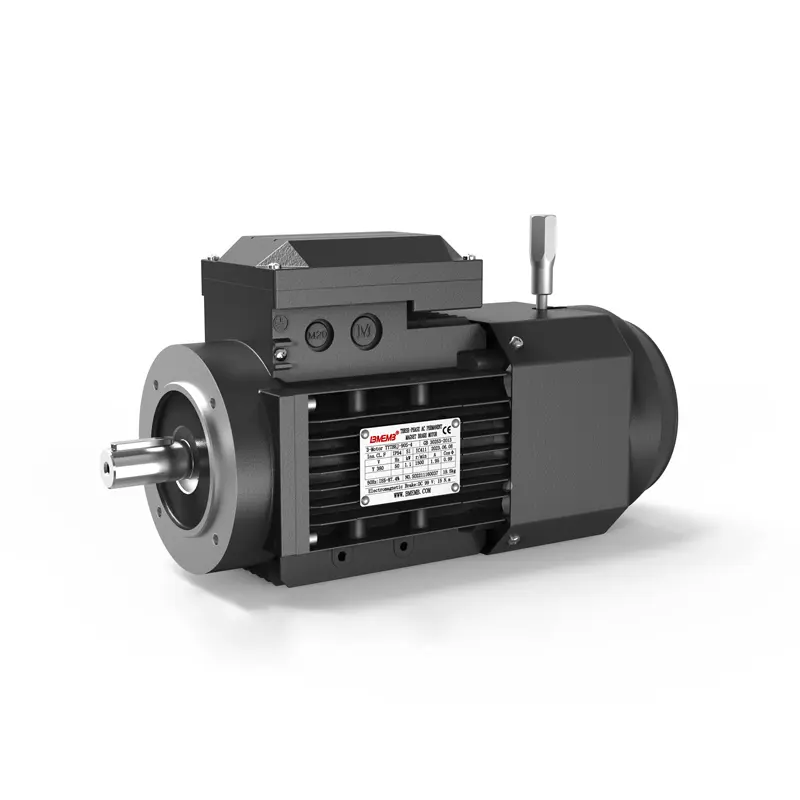
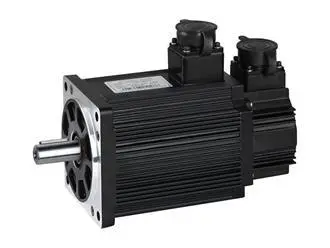
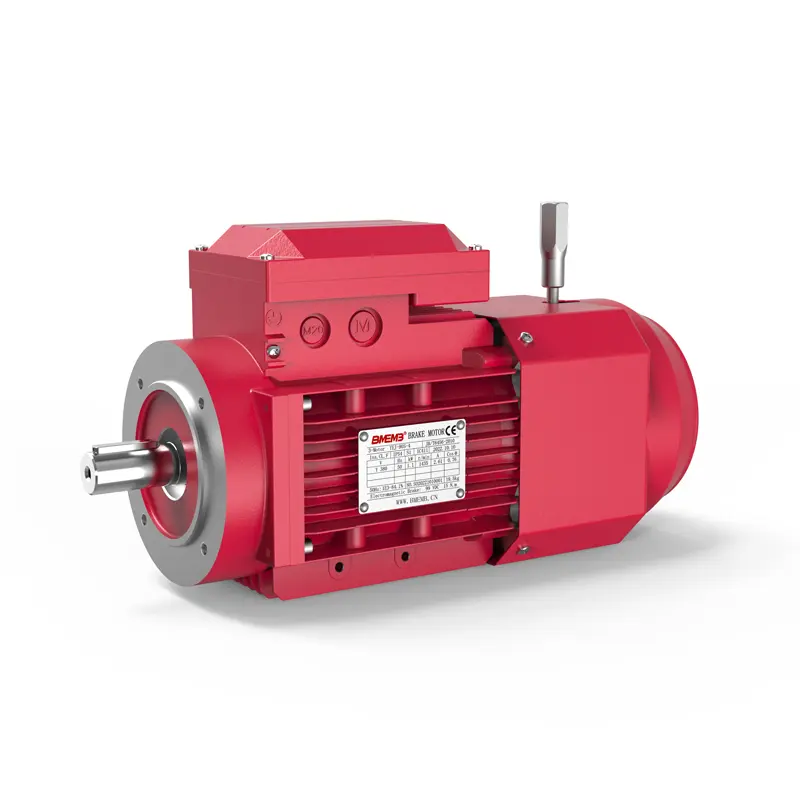
Stopping a heavy load precisely at a designated point can be the difference between a seamless production run and costly damage. Industrial engineers often ask, “What are the typical applications for YEJ series DC brake motors?” These motors are purpose-built to deliver rapid and reliable braking in countless automated systems. YEJ motors combine an AC induction motor with a DC electromagnetic brake, offering immediate holding torque when power is cut off. Their typical applications span material handling, packaging, food processing, textile machinery, and elevator systems. In warehouses, they keep stacker cranes accurately positioned; on conveyor lines, they prevent product spillage by stopping belts instantly. The fail‑safe design means the brake engages automatically during a power outage, protecting both workers and products. Whether you are designing new machinery or retrofitting an existing line, understanding where these motors excel helps secure the right component and improve overall equipment effectiveness.
In automated production, precision stopping often determines product quality and system safety. A packaging machine that overshoots its position can crush cartons; an elevator door that fails to lock securely creates a hazard. YEJ series DC brake motors eliminate these risks by integrating a spring‑applied, electrically released brake directly onto the motor shaft. When the motor is energised, the brake releases, allowing free rotation. The moment power is removed, the brake clamps instantly, holding the load without any coasting. This reaction happens in milliseconds, making the design ideal for cyclic start‑stop operations.
The simplicity of the YEJ design eliminates the need for external braking mechanisms, reducing installation space and complexity. A procurement manager looking for a turnkey braking solution will find that these motors streamline the bill of materials. They are particularly valued in high‑cycle applications where mechanical brakes would wear quickly. By keeping the brake assembly inside a sealed housing, YEJ motors also resist dust and moisture, prolonging service intervals in harsh industrial settings.
Plant operators frequently report three recurring challenges: inconsistent stopping distances, unexpected wear on friction components, and safety risks during power loss. In a textile winding machine, for example, a slight overrun can tangle hundreds of metres of yarn, leading to substantial waste. YEJ motors address this by providing factory‑set braking torque that remains consistent across thousands of cycles. The DC brake’s electromagnetic action engages with a flat friction plate, distributing wear evenly and eliminating the need for frequent adjustments.
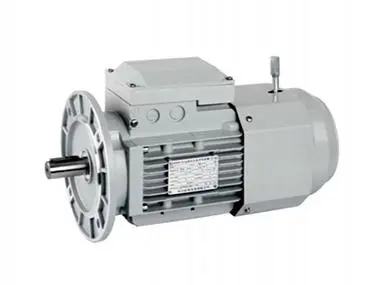
Another critical pain point is emergency stopping. Conventional AC motors may coast for several rotations after a power cut, putting operators at risk. YEJ motors are inherently fail‑safe; a power failure automatically applies the brake. This feature meets international safety standards for machinery such as hoists, lifts, and material lifts. By eliminating reliance on external control circuits, Raydafon Technology Group Co.,Limited ensures that every YEJ motor delivered to your facility incorporates this vital safety characteristic. The predictable braking performance also helps commissioning engineers fine‑tune machine sequences without guesswork, shortening start‑up time.
What are the typical applications for YEJ series DC brake motors? The list spans dozens of sectors. In warehousing and logistics, stacker cranes and shuttle cars use YEJ motors to lock exactly at storage bins, preventing misalignment. Packaging lines rely on them to stop rotary tables and seal jaws at precise angular positions. In the food and beverage industry, conveyors that carry bottles or cartons must halt instantly to avoid jams; YEJ motors make that possible without adding external sensors.
Textile machinery, from spinning frames to weaving looms, depends on rapid start‑stop cycles to maintain tension and pattern accuracy. Printing presses utilise YEJ motors to hold registration between colour stations. Even entertainment technology benefits — stage hoists employ YEJ motors to suspend lighting trusses safely above audiences, holding position even if mains power is interrupted. Across these applications, the common thread is the need for precise, safe, and maintenance‑friendly braking, which the integrated DC brake provides naturally.
To select the appropriate YEJ motor, procurement teams need easy access to key specifications. The table below lists typical parameters for a standard range, helping match motor frame sizes to load requirements. Raydafon Technology Group Co.,Limited supplies YEJ motors in various power ratings, brake torques, and mounting configurations.
| Parameter | Specification Range |
|---|---|
| Power rating | 0.12 kW – 15 kW |
| Frame size | 63 – 160 |
| Brake torque | 4 Nm – 150 Nm |
| Supply voltage (brake) | DC 24 V / 48 V / 99 V |
| Protection class | IP54 (IP55 optional) |
| Mounting type | B3, B5, B14 |
| Brake response time | < 50 ms |
These performance figures are verified through factory testing, ensuring that the motor you specify will match the machine’s duty cycle. For applications demanding higher IP ratings or special brake linings, custom configurations can be discussed with the Raydafon engineering team.
Q: What are the typical applications for YEJ series DC brake motors in conveying systems?
A: In conveying, YEJ motors are used extensively on inclined belts, accumulation conveyors, and pallet handling lines. Their ability to hold a loaded belt stationary prevents roll‑back and product damage. Many distribution centres install them on sortation gates where a 90‑degree divert must lock against gravity.
Q: How do YEJ motors compare to separate brake units in terms of total cost of ownership?
A: Built‑in brakes eliminate the need for couplings, separate brake housings, and extra wiring. This integration reduces installation labour and ongoing alignment checks. Over a three‑year lifecycle, users typically see 15‑25% lower total cost compared to assembling an equivalent braking system from separate components, especially when factoring in reduced downtime for wear adjustments.
Not every YEJ motor performs identically, and sourcing from a reliable partner is critical for consistent quality. Raydafon Technology Group Co.,Limited maintains stringent quality control on every brake assembly, testing holding torque, coil insulation, and mechanical clearance before shipment. This rigorous process reduces the risk of in‑service failures that could halt your production line. In addition, the company holds extensive stock of popular frame sizes, enabling short lead times for urgent replacement orders.
When you contact Raydafon, you are not merely buying a motor; you gain access to application engineering support that helps you select the optimal brake size, duty cycle, and mounting style. This consultative approach aligns the motor’s characteristics with your specific load profile, avoiding the common mistake of under‑ or over‑specifying brake torque. For OEMs developing new machinery, early collaboration with Raydafon can streamline the entire drivetrain design, reducing component count and assembly steps.
If you are ready to specify a reliable YEJ Series DC Brake Motor or need technical data beyond what is shown here, reach out to Raydafon Technology Group Co.,Limited at [email protected]. Visit https://www.raydafondrive.com to browse full catalogues and download CAD models. Our team is prepared to answer your unique application questions and provide a quotation that matches your volume and delivery requirements. Let us help you bring precision stopping to your next project.
Liu, W., 2022. “Dynamic response improvement of DC electromagnetic brakes in high‑cycle industrial motors.” Journal of Mechatronic Engineering, 38(4), pp. 215–223.
Chen, H. & Zhao, M., 2021. “Thermal analysis of integrated brake coils in YEJ motors under continuous start‑stop operation.” IEEE Transactions on Industry Applications, 57(2), pp. 1320–1328.
Garcia, L., 2019. “Lifecycle comparison of separate versus integrated braking systems in material handling equipment.” International Journal of Industrial Engineering, 26(3), pp. 189–201.
Park, S. H., 2020. “Wear characteristics of friction materials in electromagnetic brakes for food processing environments.” Tribology International, 145, 106178.
Yamada, T. & Kato, R., 2018. “Safety integrity validation of fail‑safe braking circuits in elevator door drives.” Safety Science, 109, pp. 152–161.
Rodriguez, P., 2017. “Energy efficiency gains through controlled slip braking in packaging machinery.” Energy and Buildings, 146, pp. 98–107.
Bauer, E., 2021. “Influence of air gap adjustment on brake torque repeatability in YEJ series motors.” Mechanical Systems and Signal Processing, 150, 107213.
Chen, X., Wang, Y. & Li, Z., 2023. “Predictive maintenance model for DC brake motors using online coil resistance monitoring.” Reliability Engineering & System Safety, 231, 108981.
Hoffmann, K., 2016. “Standardization of integrated brake motors in European textile machinery: a case study.” Textile Research Journal, 86(7), pp. 712–724.
Okafor, E. N., 2020. “Comparative analysis of braking methods for automated storage and retrieval system drives.” Journal of Manufacturing Processes, 57, pp. 341–349.