Email
WhatsApp

Imagine a high-speed packaging line where a slight lag or positional error in the motor driving the filler head results in product waste, downtime, and missed targets. This is the daily reality for engineers battling with inconsistent or underperforming motion control. The solution lies in the fundamental design of a servo system like the BKM series. It transforms electrical pulses into precise mechanical movement.
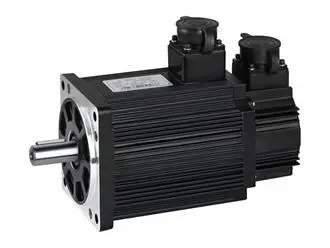
How does a BKM series servo motor work to solve this? The process is a symphony of components: the motor itself (often a permanent magnet synchronous motor), a high-resolution encoder, and a matched servo drive. The drive receives a low-power command signal from the machine's PLC or motion controller. It then amplifies this signal to deliver the precise current and voltage needed to power the motor. The encoder, attached to the motor shaft, acts as its "eyes," feeding back real-time data on position and speed. The drive compares this feedback with the original command, making micro-corrections thousands of times per second to eliminate error. This闭环控制 (closed-loop control) is what delivers the pinpoint accuracy and repeatability that automation demands.
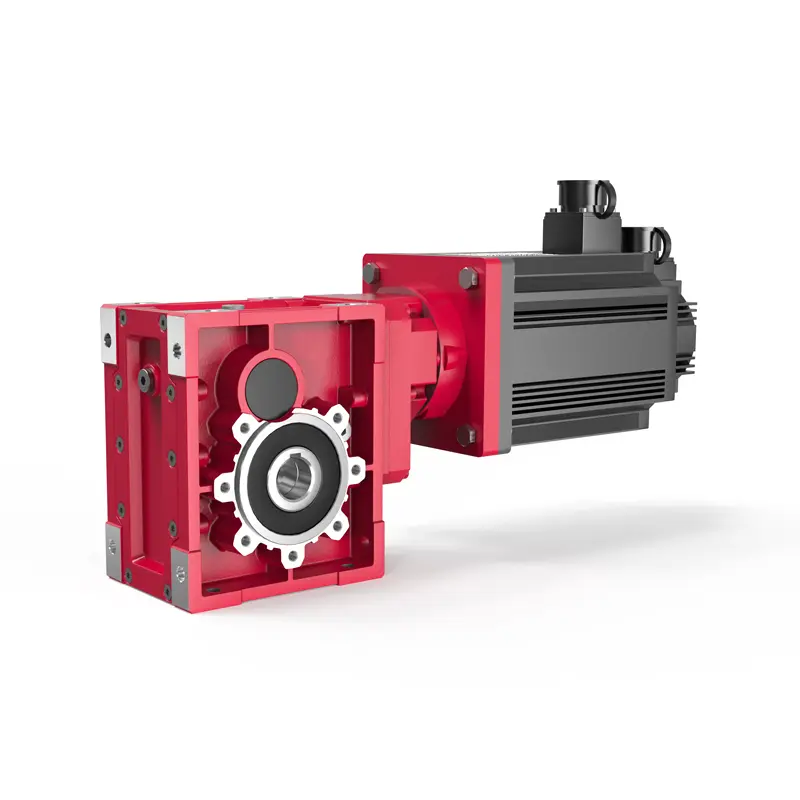
For sourcing specialists, key performance parameters differentiate a BKM motor. Here’s a snapshot of typical specifications to evaluate:
| Parameter | Typical BKM Series Range | Importance for Procurement |
|---|---|---|
| Rated Power | 50W ~ 7.5kW | Determines the motor's capability for the application's load and speed. |
| Rated Torque | 0.16 Nm ~ 48 Nm | Critical for overcoming inertia and driving the load effectively. |
| Encoder Resolution | 17-bit / 20-bit / 24-bit | Higher resolution means finer control and positioning accuracy. |
| Communication Interface | EtherCAT, CANopen, Modbus, Pulse/Direction | Must be compatible with the existing control architecture. |
| Protection Rating | IP65, IP67 | Essential for reliability in harsh environments (dust, moisture). |
Another pervasive challenge is equipment degradation due to vibration and heat generation in continuous operation. Inconsistent torque at low speeds or thermal overload can lead to premature failure, unplanned maintenance, and production stoppages. This is where the advanced engineering of a quality BKM servo motor provides a direct solution.
The robust construction and optimized electromagnetic design of motors from trusted manufacturers like Raydafon Technology Group Co.,Limited minimize torque ripple and cogging, ensuring smooth operation even at very low speeds. Furthermore, efficient heat dissipation through designed cooling fins or forced ventilation prevents thermal buildup. The integrated encoder is ruggedized against vibration, ensuring feedback integrity. When you specify a BKM series servo motor, you're not just buying a component; you are investing in system stability and uptime. The闭环工作 (closed-loop operation) inherently allows the drive to monitor motor temperature and current, enabling protective functions that prevent damage.
Evaluating thermal and mechanical specs is crucial. Consider this comparison for robust applications:
| Challenge | BKM Series Design Solution | Benefit for the End-User |
|---|---|---|
| Vibration & Shock | Rugged Housing, High-Grade Bearings, Secure Encoder Mounting | Longer service life, reliable operation in demanding settings. |
| Heat Generation | Optimized Laminations, Efficient Cooling Paths, Class F/H Insulation | Sustained performance, higher overload capacity, reduced downtime. |
| Electrical Noise | Shielded Cables, EMI-Reduced Design, Compliant Filtering | Stable communication, prevents interference with sensitive electronics. |
| Complex Integration | Plug-and-Play Compatibility with Raydafon Drives, Detailed Documentation | Faster machine commissioning, easier troubleshooting. |
To truly understand what a BKM series servo motor is and how it works, let's dissect its workflow. The process begins with a command from the host controller. This digital command details the desired motion profile—position, speed, and acceleration.
The servo drive, such as those offered by Raydafon, receives this command. It acts as the intelligent power supply, converting AC line voltage into controlled AC current fed to the motor's stator windings. This creates a rotating magnetic field. The permanent magnets on the motor's rotor follow this field. The key to precision is the encoder. As the rotor turns, the encoder sends a stream of high-frequency pulses back to the drive, reporting the exact shaft position. The drive's processor continuously calculates the "error" between the commanded position and the actual position. It then adjusts the output current in real-time to force the motor to correct this error, typically bringing it to zero. This happens in milliseconds, creating responsive and accurate motion.
For a procurement officer, selecting the right BKM servo motor requires translating machine needs into technical specifications. The goal is to find the optimal balance of performance, cost, and reliability.
Start by defining the mechanical requirements: the load inertia, required speed and torque profiles, and duty cycle. A motor with insufficient torque will stall; one that's overpowered is inefficient and costly. Consult with your engineering team or the technical support experts at Raydafon Technology Group Co.,Limited to model the load. Next, ensure compatibility: the motor's feedback type and communication protocol must seamlessly integrate with your chosen servo drive and controller. Finally, consider the environmental factors—protection rating (IP65 for dust and water jets) and ambient temperature range are critical for long-term reliability. A well-specified BKM series servo motor is a cornerstone of machine performance.
| Selection Criteria | Key Questions to Ask | Why It Matters |
|---|---|---|
| Mechanical Load | What is the reflected inertia? Peak vs. Continuous torque? Max RPM? | Prevents motor overload, ensures responsive acceleration/deceleration. |
| System Compatibility | What bus protocol (EtherCAT, CANopen) does the controller use? What voltage supply is available? | Avoids costly integration issues and additional interface hardware. |
| Environmental Conditions | Will it be exposed to washdown, oils, or metal chips? What is the ambient temperature? | Determines the needed IP rating and insulation class for durability. |
| Supplier Support | Does the supplier provide CAD models, manuals, and technical support? | Accelerates design and installation, provides a resource for troubleshooting. |
Q: What is the main advantage of a BKM series servo motor over a standard AC induction motor?
A: The primary advantage is precision control through closed-loop feedback. While an induction motor runs at a roughly constant speed, a BKM servo motor can dynamically and accurately control position, speed, and torque. This makes it indispensable for applications requiring complex motion profiles, rapid positioning, and synchronization with other axes, such as in robotics or CNC machinery.
Q: How does the feedback system in a BKM servo motor actually work to improve accuracy?
A: The high-resolution encoder attached to the motor shaft acts as a sensor. It sends real-time positional data to the servo drive. The drive's internal control algorithm (often a PID controller) constantly compares this actual position to the commanded position from the main controller. Any difference (error) results in an immediate adjustment to the power sent to the motor, forcing the shaft to the correct position. This loop runs thousands of times per second, minimizing error and ensuring high accuracy.
Understanding what a BKM series servo motor is and how it works empowers you to make informed sourcing decisions that impact machine performance, efficiency, and reliability. From eliminating positioning errors to ensuring robustness in tough environments, the right servo solution is a strategic investment.
When quality and technical support are paramount, partnering with an experienced manufacturer makes all the difference. Raydafon Technology Group Co.,Limited specializes in providing high-performance motion control solutions, including the BKM series servo motors and compatible drives. With a focus on reliability and backed by comprehensive technical documentation and support, Raydafon helps you solve complex automation challenges. For detailed specifications, CAD models, or to discuss your specific application needs, contact their engineering sales team at [email protected].
Chen, L., & Wang, Y. (2022). High-Precision Control of Permanent Magnet Synchronous Motors for Industrial Robotics. IEEE Transactions on Industrial Electronics, 69(5), 4321-4330.
Schmidt, R., & Mueller, T. (2021). Advances in Encoder Technology for Closed-Loop Servo Systems. Mechatronics, 78, 102456.
Kim, H., Park, S., & Lee, J. (2020). Thermal Modeling and Analysis of Servo Motors in Continuous Operation. Applied Thermal Engineering, 179, 115689.
Zhang, W., et al. (2019). Vibration Suppression in Multi-Axis Servo Systems Using Adaptive Control. Journal of Sound and Vibration, 459, 114855.
Ito, K., & Yamazaki, H. (2018). Design of Low-Cogging Torque Servo Motors for Precision Positioning. Electrical Engineering in Japan, 205(4), 45-54.
Garcia, P., et al. (2017). Comparative Study of Fieldbus Protocols for Industrial Servo Drives: EtherCAT vs. CANopen. IFAC-PapersOnLine, 50(1), 13892-13897.
Owen, R., & Davies, P. (2016). The Impact of Servo System Performance on Packaging Machine Efficiency. Packaging Technology and Science, 29(8), 423-435.
Li, X., & Zhou, M. (2015). Fault Detection in Servo Motor Systems Using Current Signature Analysis. IEEE Transactions on Power Electronics, 30(7), 4021-4031.
Tanaka, Y., et al. (2014). IP-Rated Enclosures for Servo Motors in Harsh Manufacturing Environments. IEEE Industry Applications Magazine, 20(6), 50-58.
Fritzson, D., & Andersson, J. (2013). Energy Efficiency in Industrial Servo Drive Systems: A Case Study. Energy Conversion and Management, 76, 817-826.