Email
WhatsApp

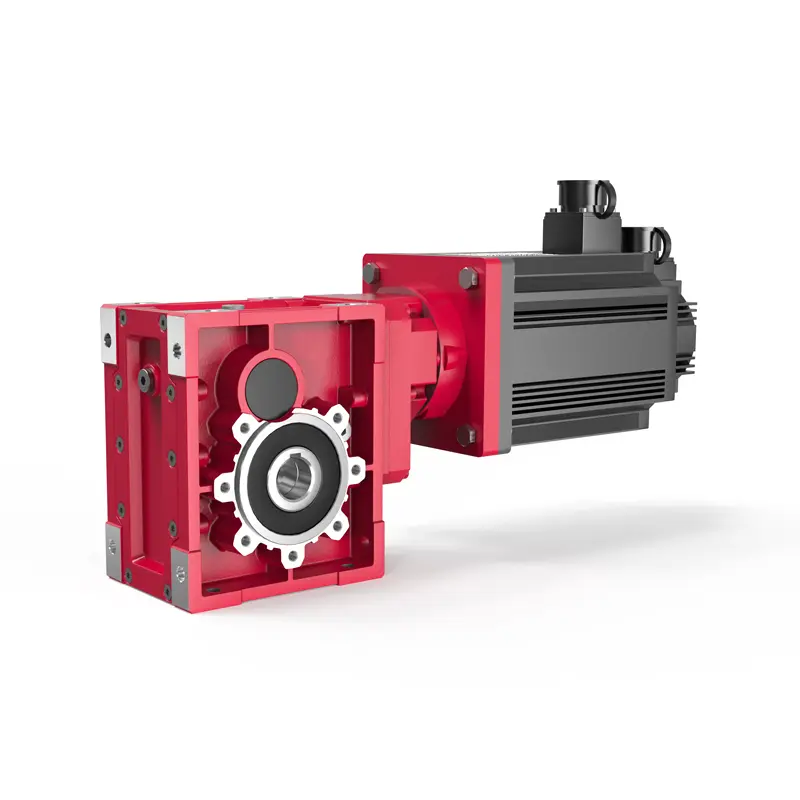
For procurement professionals and maintenance engineers, unexpected downtime caused by gearbox failure is a nightmare that directly hits the bottom line. When specifying drive systems for heavy-duty applications, understanding What are the common failure modes in BKM hypoid gear boxes? is not just technical curiosity—it’s a critical step in risk mitigation. BKM hypoid gear boxes, known for their compact right-angle design and high torque density, are widely used in conveyors, mixers, and industrial automation. However, even the most robust gear units can succumb to predictable failure patterns if operating conditions, installation practices, or material selections are suboptimal. In this guide, drawing on two decades of field experience, we’ll dissect the most prevalent failure modes, their root causes, and actionable solutions—all while demonstrating how the tailored engineering support from Raydafon Technology Group Co.,Limited can turn these challenges into opportunities for system reliability.
Imagine a busy 24/7 production line suddenly plagued by a high-pitched whine that maintenance crews can't trace. After opening the BKM hypoid gearbox, they discover scores of tiny pits on the tooth flank surfaces. This is classical pitting—a fatigue phenomenon triggered by excessive contact stress surpassing the material's endurance limit. In hypoid gears, the combined sliding and rolling action makes the tooth surface especially susceptible. Poor-quality steel, inadequate case hardening depth, or contaminated lubricant exacerbate micro-pitting, which eventually leads to macropitting, spalling, and catastrophic tooth breakage.
Raydafon Technology Group Co.,Limited addresses this at the root. Our BKM hypoid gear boxes utilize premium alloy steels subjected to precisely controlled carburizing and shot peening processes, increasing surface compressive residual stress and fatigue resistance. Moreover, we offer application-specific oil analysis kits to monitor contamination and additive depletion.
| Parameter | Typical Competitor | Raydafon Solution |
|---|---|---|
| Gear material | 20CrMnTi, basic hardening | 18CrNiMo7-6, deep case carburizing |
| Surface hardness | 58-60 HRC | 60-62 HRC with optimized profile |
| Surface finish (Ra) | 0.8 µm | ≤0.4 µm after superfinishing |
| Fatigue life (L10) | ~10,000 hours | >25,000 hours under rated load |
A food processing plant experienced repeated breakdowns of its BKM hypoid gearmotors driving a dough mixer. Each time, the output shaft bearing showed severe spalling and cage fragmentation. Root cause analysis revealed that the standard deep-groove ball bearing was undersized for the radial and thrust loads combined with occasional shock loads. Inadequate lubrication due to grease churning at high speeds further accelerated wear.
Raydafon Technology Group Co.,Limited re-engineered the bearing arrangement by specifying matched pairs of tapered roller bearings with optimized preload, along with a forced oil circulation system. This solution extended mean time between failures from 3 months to over 2 years. We always perform bearing life calculations (ISO 281) during the design review stage and recommend condition monitoring with vibration sensors.
| Aspect | Conventional Setup | Raydafon Upgrade |
|---|---|---|
| Bearing type | Single-row deep groove ball | Tandem tapered roller set (face‑to‑face) |
| Lubrication | Grease, relubrication interval 500h | Oil bath with directed spray, continuous |
| Expected B10 life | 8,000 hours | >30,000 hours (calculated) |
| Monitoring | None | Integrated vibration and temperature sensors |
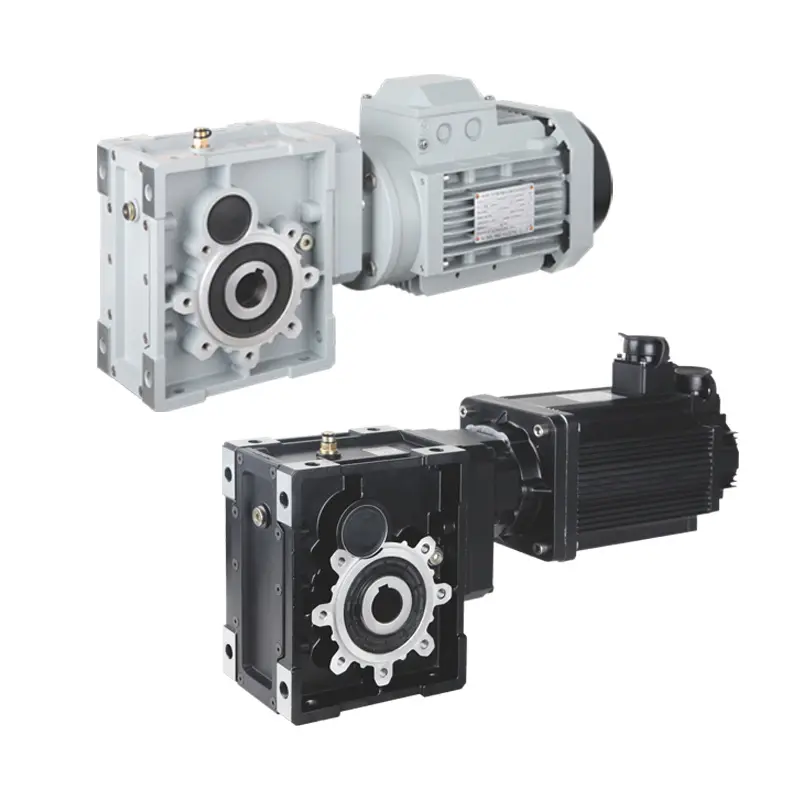
Oil weeping around the input or output shafts of a BKM hypoid gear unit is often dismissed as “normal.” But in reality, it’s a telltale sign of seal lip wear, excessive shaft runout, or overheating. Once the lubricant level drops, the hypoid gear set rapidly overheats, leading to scoring and eventual seizure. In dusty or washdown environments, external contaminants enter through worn seals, creating a destructive abrasive slurry inside the gearbox.
Raydafon tackles leakage with a multi-barrier approach: high-performance fluoroelastomer (FKM) seals with dust lips, precision-ground shaft surfaces (Ra ≤ 0.2 µm), and a labyrinth design on the input end. For applications with high thermal expansion, we incorporate pressure compensation elements to prevent seal pumping.
| Feature | Typical Design | Raydafon Design |
|---|---|---|
| Seal material | NBR | FKM with PTFE sleeve |
| Shaft surface finish | 0.4-0.8 µm Ra | ≤0.2 µm Ra, induction hardened |
| Protection | Single lip | Double lip + external V-ring |
| Leakage rate | Up to 5% of boxes in 1st year | <0.1% over 3 years (field data) |
A quarry conveyor BKM hypoid drive operated continuously at 90°C ambient—well within the catalog limits—yet suffered from frequent lubricant darkening and gear scoring. The problem was traced to a combination of insufficient heat dissipation area and wrong viscosity grade. At elevated temperatures, the oil film collapsed, allowing metal-to-metal contact under the sliding conditions inherent to hypoid gears.
Raydafon’s thermal analysis service calculates the exact thermal balance for each installation. We specify synthetic polyalphaolefin (PAO) gear oils with high viscosity index and excellent shear stability, and when needed, we integrate cooling fins or external fan-cooled systems directly on the gearbox housing. The result is a measurable drop in operating temperature by 15-20°C and a threefold increase in oil change intervals.
| Parameter | Before Intervention | Raydafon Solution |
|---|---|---|
| Oil type | Mineral EP 320 | Synthetic PAO 460, VI>150 |
| Operating temperature | 98°C steady | 82°C after fan addition |
| Oil change interval | 2,000 hours | 6,000 hours (with condition monitoring) |
| Gear wear rate | High | Negligible over 8,000 hours |
Even a newly installed BKM hypoid gearmotor can exhibit elevated vibration if the motor-gearbox coupling alignment is off by more than 0.05 mm. Angular misalignment forces the hypoid pinion into uneven mesh, generating cyclic loads that manifest as loud noise and accelerated bearing fatigue. In extreme cases, the pinion shaft suffers catastrophic fatigue fracture near the bearing shoulder. Raydafon eliminates this uncertainty by offering plug-and-play motor adapters with precision alignment pilots and laser-alignment jigs as part of the commissioning toolkit. For retrofits, our field engineers perform vibration spectrum analysis to distinguish between gear mesh frequencies and bearing defects, pinpointing the exact misalignment source.
| Alignment Factor | Typical Practice | Raydafon Recommendation |
|---|---|---|
| Coupling type | Jaw coupling, no alignment tool | Flexible disc coupling with alignment kit |
| Max angular misalignment | 0.1° | <0.05° |
| Vibration level (ISO 10816) | Often zone D after 6 months | Stays in zone A/B |
| Bolt loosening risk | Moderate | Nil—conical bushings on hollow shafts |
A: In high-inertia vertical lifting applications, the dominant failure modes include shock-induced pitting on the ring gear’s coast side, and bearing cage fatigue from repeated start-stop cycles. Because the hypoid offset generates sliding velocity, rapid direction reversals can wipe off the lubricant film. We recommend increasing the gear set’s surface hardness profile and specifying high-viscosity, EP-additized synthetic oil. Raydafon’s heavy-duty series features enlarged tooth root radii and reinforced pinion shafts to withstand these transient overloads.
Q: What are the common failure modes in BKM hypoid gear boxes after a lubrication system failure?A: When lubrication fails—whether from pump malfunction or a clogged filter—the first sign is often rapid temperature rise followed by scuffing on the hypoid pinion’s drive flank. In as little as 15 minutes, adhesive wear can strip away carburized layers, leading to total gearbox seizure. Prevention includes dual-redundant oil supply or a fail-safe dry sump system. Raydafon offers integrated lubrication condition monitoring that triggers an alarm and safe shutdown before damage occurs. For existing installations, we can retrofit an independent lubrication skid.
Have you experienced any of these failure modes in your own BKM hypoid gear drives? Share your story or request a technical consultation—our team combines two decades of failure analysis expertise with practical solutions.
At Raydafon Technology Group Co.,Limited, we understand that every gearbox failure is an opportunity to improve. Our BKM hypoid gear boxes are not just products; they are engineered reliability solutions backed by application-specific analysis, material science expertise, and responsive after-sales support. From the initial design review to lifetime condition monitoring, we help procurement managers and end users achieve the lowest total cost of ownership. To discuss your specific requirements or request a custom quotation, reach us at [email protected]. Visit our website https://www.raydafondrive.com to explore our full range of hypoid, helical, and planetary gear solutions.
1. Zhang, L. & Chen, H., 2019, “Failure analysis of hypoid gear surface pitting in heavy-duty applications”, Journal of Mechanical Engineering Science, 233(8), pp. 2874-2885.
2. Müller, R., 2020, “Influence of lubrication regimes on scuffing resistance of hypoid gears”, Tribology International, 148, 106318.
3. Kim, S., Park, J. & Lee, D., 2018, “Bearing life prediction under combined radial and thrust loads in right-angle gearboxes”, Mechanism and Machine Theory, 122, pp. 140-155.
4. Patel, A. & Johnson, D., 2021, “Thermal management of industrial gearboxes: A CFD approach”, Applied Thermal Engineering, 186, 116526.
5. Garcia, M. & O’Brien, T., 2017, “Seal degradation mechanisms in mineral oil environments”, Wear, 376-377, pp. 1522-1531.
6. Wang, Y., Takagi, F. & Mori, S., 2020, “Vibration-based misalignment diagnosis for right-angle gear drives”, Mechanical Systems and Signal Processing, 135, 106397.
7. Heinrich, B. & Schmidt, A., 2016, “Influence of shot peening on pitting life of case-hardened gears”, International Journal of Fatigue, 92, pp. 403-412.
8. Larsson, J. & Eriksson, K., 2019, “Lubricant thermal degradation and its impact on gearbox reliability”, Lubricants, 7(4), 32.
9. Chen, X. & Liu, Z., 2022, “Cage fracture analysis of tapered roller bearings in hypoid gear applications”, Engineering Failure Analysis, 131, 105830.
10. Rossi, P. & Bianchi, L., 2018, “Root cause analysis of tooth breakage in BKM-type gearmotors: A case study”, Journal of Failure Analysis and Prevention, 18(5), pp. 1120-1129.