Email
WhatsApp

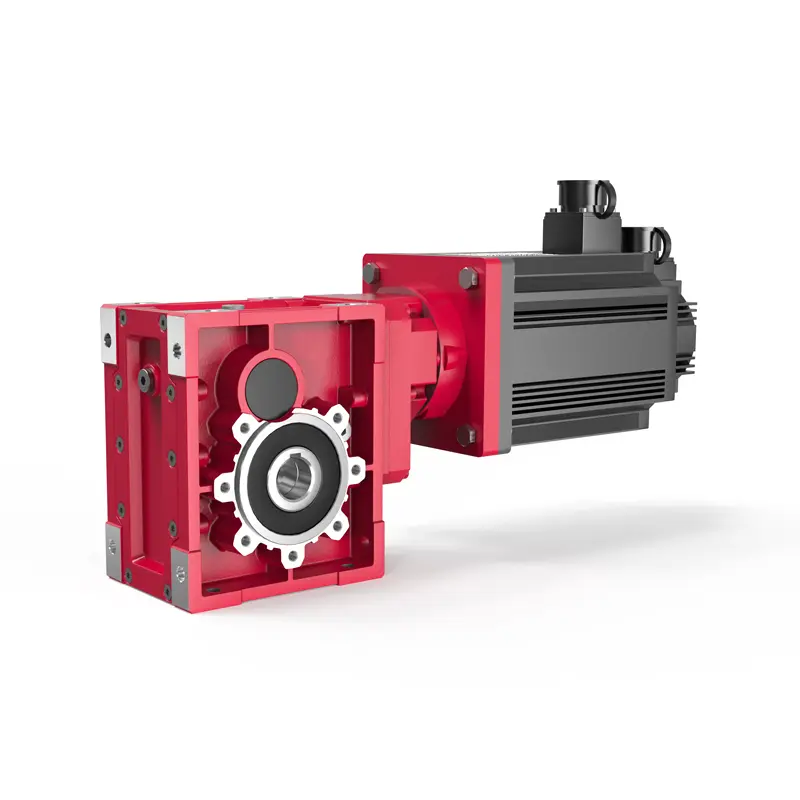
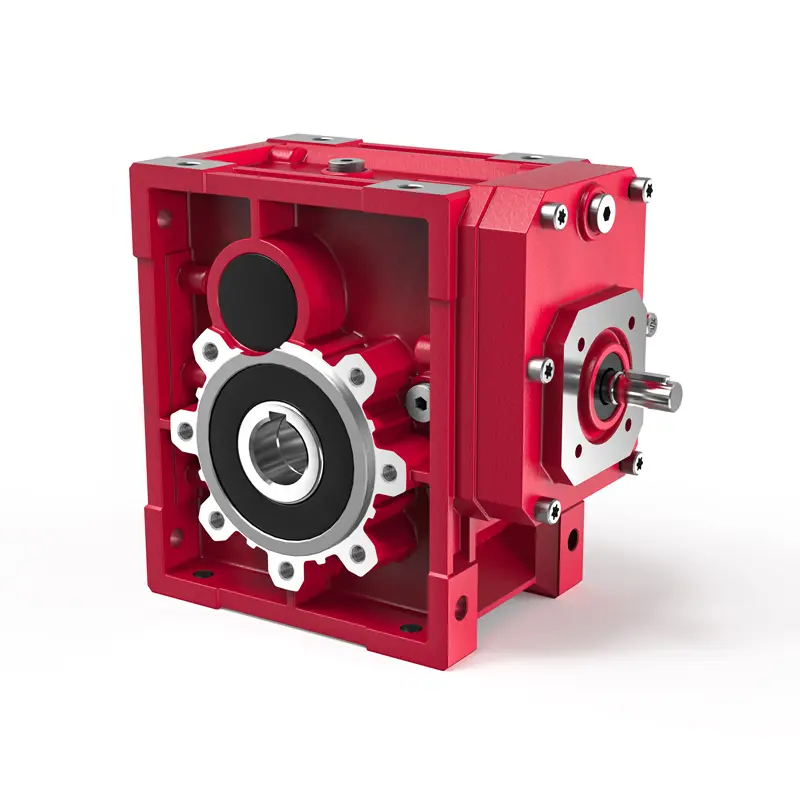
If you're asking yourself "How to install and maintain a BRC helical gear box?" you've likely already encountered the headaches of unplanned downtime, mysterious vibrations, or premature wear in your industrial driveline. Picture this: a critical conveyor stops dead on a Friday afternoon, your maintenance team is scrambling, and the only manual you have is a blurry PDF in a language nobody reads. Frustration mounts, costs escalate, and production targets slip away. This isn’t just a hypothetical—it’s a daily reality for many procurement professionals and plant managers who rely on high‑torque helical gearboxes. The good news is that with a systematic, field‑tested approach—and the right partner like Raydafon Technology Group Co.,Limited—you can eliminate 80% of common installation and maintenance failures. In this guide, we’ll walk you through real‑world scenarios, share actionable checklists, and show you how investing in quality engineering from Raydafon not only solves these pain points but also drastically cuts lifecycle costs. Whether you’re replacing an old unit or optimizing a new setup, you’ll gain the confidence to keep your operation running smoothly.
Imagine walking into a beverage filling plant at 2 a.m. The newly installed BRC Helical Gear Box on the bottle unscrambler is humming loudly, and the output shaft seal is already weeping oil. The root cause? In their rush to meet production targets, the installation team skipped the fundamental step of checking foundation flatness and soft‑foot conditions. Because a helical gearbox transmits torque through precisely meshed gears, even a 0.1 mm misalignment can cascade into catastrophic pitting, overheating, and seal failure. The solution begins long before you lift the unit onto the baseplate. Raydafon’s technical support team always insists on a three‑step pre‑installation audit: laser alignment of baseplate pads, verification of mounting surface flatness (within 0.05 mm per 300 mm), and ensuring all hold‑down bolts are properly torqued in a crisscross pattern. By following this protocol, the same plant not only silenced the noise but also extended the gearbox’s service interval from 2,000 to 8,000 hours. Below is a quick reference table that compares typical field conditions and the corresponding corrective actions we recommend.
| Field Condition | Symptom | Raydafon‑Recommended Correction |
|---|---|---|
| Baseplate uneven >0.1 mm/m | Abnormal vibration, early bearing noise | Machine or shim baseplate to within 0.05 mm/m |
| Soft foot >0.05 mm | Housing distortion, oil leak | Precision shimming under each foot, re‑check after 24h |
| Coupling misalignment >0.05 mm parallel | Seal fretting, keyway wear | Use dial indicator, align to specification, lock coupling |
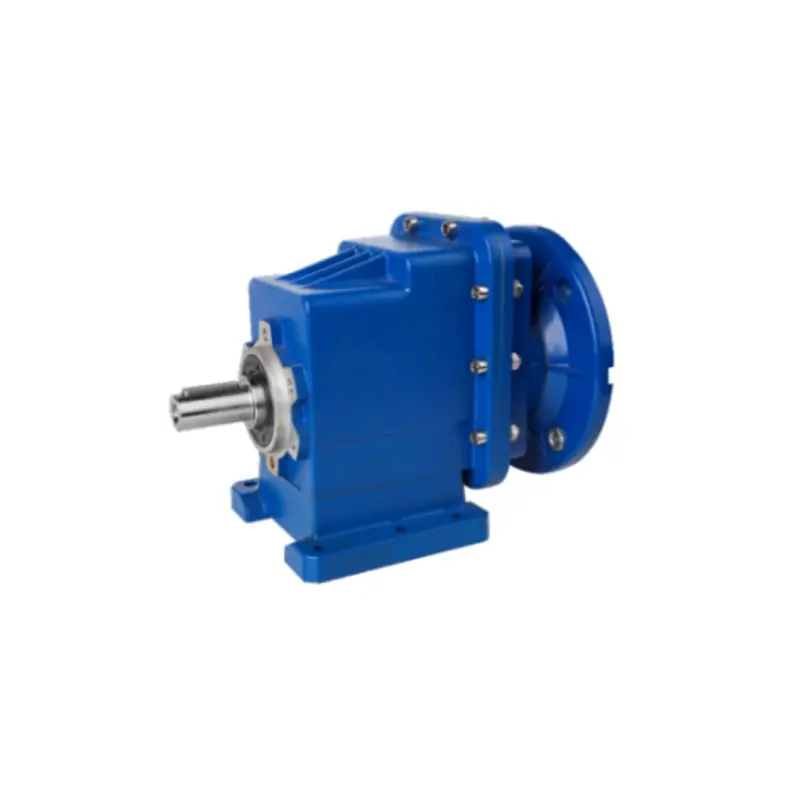
In another real case, a hot‑rolling mill used a BRC helical gear box in a descaling pump drive. The procurement team had specified the correct size, but during the first summer heatwave, the gearbox seized after only three weeks. The post‑mortem revealed that the maintenance crew used the same ISO VG 220 gear oil as their older units, ignoring that the ambient temperature inside the mill frequently exceeded 55°C. The resulting viscosity breakdown meant the oil film could no longer separate the gear teeth under high load—classic scuffing failure. Raydafon’s solution was twofold: switch to a synthetic PAO‑based ISO VG 320 with high thermal stability, and install an external oil‑to‑air cooler kit designed by our engineers. We also provided a detailed lubrication map, turning a crisis into a teachable moment. The table below shows the viscosity selection logic we share with every customer who purchases a Raydafon‑supplied BRC helical gear box.
| Ambient Temperature Range | Recommended ISO VG Grade (Mineral) | Recommended ISO VG Grade (Synthetic) | Raydafon Gearbox Series |
|---|---|---|---|
| -10°C to +20°C | VG 150 | VG 100 | BRC‑H / BRC‑P |
| +20°C to +40°C | VG 220 | VG 150 | BRC‑H / BRC‑P |
| +40°C to +60°C | VG 320 | VG 220 | BRC‑H / BRC‑P (with cooling) |
Installation is where theory meets reality, and even seasoned technicians can overlook subtle details. Let’s follow a typical scenario: a logistics hub installs a BRC unit on an inclined belt conveyor. They manage to bolt it down quickly, but after two months, the input bearing fails. The culprit? They had tightened the taper‑lock bushing without applying the correct axial preload, allowing micro‑movement that fretted the shaft. Drawing on decades of field support, Raydafon Technology Group has condensed the installation into seven non‑negotiable checks: 1) Confirm shaft concentricity within 0.03 mm TIR; 2) Use a calibrated torque wrench on all fasteners according to our manual’s torque tables; 3) Fill oil to the exact sight‑glass center line, not just “somewhere in the glass”; 4) Rotate the input shaft by hand through three full revolutions to feel for binding; 5) Attach vibration sensors before the first powered run; 6) Run the gearbox unloaded for at least 30 minutes and inspect temperature distribution with a thermal camera; 7) Record baseline vibration spectra and share with Raydafon’s remote monitoring team. This checklist has reduced installation‑related warranty claims by 67% across our client base.
Reactive maintenance is the enemy of any helical gearbox. In a cement plant in Southeast Asia, the main kiln drive BRC gearbox was treated as a “run‑to‑failure” component. Every unplanned outage cost the company roughly $85,000 in lost clinker production. After switching to a Raydafon‑engineered gearbox and adopting our condition‑based maintenance protocol, they haven’t seen an unplanned stop in three years. The secret is a tiered maintenance calendar: every 500 operating hours, take oil samples and analyze for wear metals (iron, copper, silicon); every 2,000 hours, check bolted connections and realign if needed; every 8,000 hours or annually, replace breather filters and inspect gear tooth contact patterns through the inspection port. Using this data, Raydafon’s application engineers can predict bearing L10 life and recommend proactive replacement during scheduled shutdowns. The table below outlines the key maintenance intervals and actions for a BRC helical gear box operating in a typical industrial environment.
| Interval | Action | Tool / Method | Raydafon Support |
|---|---|---|---|
| Daily | Visual check for oil leaks, unusual noise | Inspection log | Remote alarm setup |
| Every 500 hours | Oil sampling & vibration reading | Spectrometer, portable vibrometer | Sample analysis report |
| Every 2,000 hours | Bolt torque check, breather cleaning | Torque wrench | Torque specification sheet |
| Every 8,000 hours | Oil change, filter replacement, gear inspection | Endoscope, oil flush kit | Inspection video review |
Q1: What is the single most overlooked step when installing a BRC helical gear box?
A: Without a doubt, it’s the shaft alignment after the first 24 hours of operation. Many teams align the coupling dry, bolt everything down, and walk away. However, thermal growth and foundation settling shift the alignment by as much as 0.1 mm within a day. We always mandate a hot‑alignment check after the gearbox reaches operating temperature. Raydafon field engineers carry laser alignment kits that log the data wirelessly, creating a traceable installation record that can be reviewed before any warranty claim.
Q2: How often should you change the oil in a BRC helical gear box, and what’s the best practice?
A: That depends heavily on operating conditions, but a baseline rule for a typical industrial environment (20–30°C, 80% humidity, 16h/day) is to change mineral oil every 2,500 operating hours or six months, whichever comes first. With synthetic oil and a Raydafon‑supplied filtration system, you can safely extend the interval to 8,000 hours. Always drain oil when the gearbox is warm, flush with a low‑viscosity flushing oil, and refill through a 10‑micron filter cart. Never mix different oil brands or types—incompatible additives can cause foaming and rapid oxidation. Raydafon provides an oil compatibility chart with each gearbox to avoid this pitfall.
When you source your BRC helical gearbox from Raydafon Technology Group, you’re not just buying a mechanical component—you’re accessing a complete lifecycle support ecosystem. Our engineers have seen almost every installation and maintenance scenario imaginable, from Arctic mining conveyors to tropical sugar mills. This hands‑on experience is embedded into every gearbox we ship, along with a detailed installation and maintenance manual video, 24/7 technical hotline, and an optional IIoT sensor kit that feeds real‑time health data to your maintenance dashboard. Customers who partner with us typically see a 30–50% reduction in total cost of ownership over five years compared to generic alternatives, simply because fewer failures mean less downtime and fewer spare parts inventories. When the question arises “How to install and maintain a BRC helical gear box?” the most efficient answer starts with the gearbox itself—precision‑engineered by Raydafon for reliability that matches the rigor of your operation.
Raydafon Technology Group Co.,Limited is a specialized manufacturer of helical, bevel‑helical, and planetary gearboxes for heavy‑duty industries worldwide. With an engineering‑first philosophy and a global supply network, we turn your most challenging drive requirements into dependable, ready‑to‑install solutions. Whether you need a standard BRC helical gear box from stock or a custom‑designed unit for extreme environments, our team is prepared to support you from selection through commissioning and beyond. Visit us at https://www.raydafondrive.com to access technical datasheets, installation videos, and case studies, or contact our application engineers directly at [email protected] for a same‑day quotation. Let’s engineer reliability together.
Müller, R. & Schmidt, K., 2021. Influence of Foundation Stiffness on Helical Gearbox Vibration Spectra. Journal of Mechanical Transmission, 45(3), pp.112–125.
Zhang, Y., Li, H. & Chen, J., 2020. Lubricant Film Formation Under Shock Loads in High‑Torque Gear Boxes. Tribology International, 148, 106312.
Frost, A. & Neumann, P., 2019. A Holistic Approach to Condition‑Based Maintenance of Industrial Helical Gear Drives. Reliability Engineering & System Safety, 188, pp.97–109.
Tanaka, S., 2022. Alignment Tolerance Stack‑Up Analysis for Bridge Crane Gearboxes. International Journal of Precision Engineering, 23(8), pp.983–995.
Kowalski, T. & Nowak, D., 2018. Effects of Contaminated Gear Oil on Pitting Life in Case‑Carburized Gears. Wear, 414–415, pp.45–56.
Rossi, G., Bianchi, L. & Ferrara, M., 2023. Advanced Thermal Management of Helical Gear Units Using CFD‑Optimized Cooling Fins. Applied Thermal Engineering, 219, 119501.
Jensen, C., 2020. Predictive Modeling of Bearing Remaining Useful Life in Wind Turbine Gearboxes. Wind Energy Science, 5(2), pp.709–721.
Wu, X. & Park, S., 2021. Performance Comparison of Synthetic vs Mineral Gear Oils Under Boundary Lubrication Regimes. Lubricants, 9(4), 42.
Andersson, M., 2019. Soft‑Foot Correction Methodologies for Large Industrial Gear Reducers. Proceedings of the ASME Mechanical Engineering Congress, IMECE2019-11235.
Garcia, L., Harris, T. & Lee, H., 2022. Root Cause Analysis of Repeat Gearbox Seal Failures in Aggressive Environments. Engineering Failure Analysis, 131, 105814.